

| Abuja | Sept. 26, 2025
Stakeholders in Nigeria’s disability community have called on banks and other financial institutions to establish special service desks for Persons with Disabilities (PWDs), particularly women, to improve their access to microcredit facilities and economic opportunities.
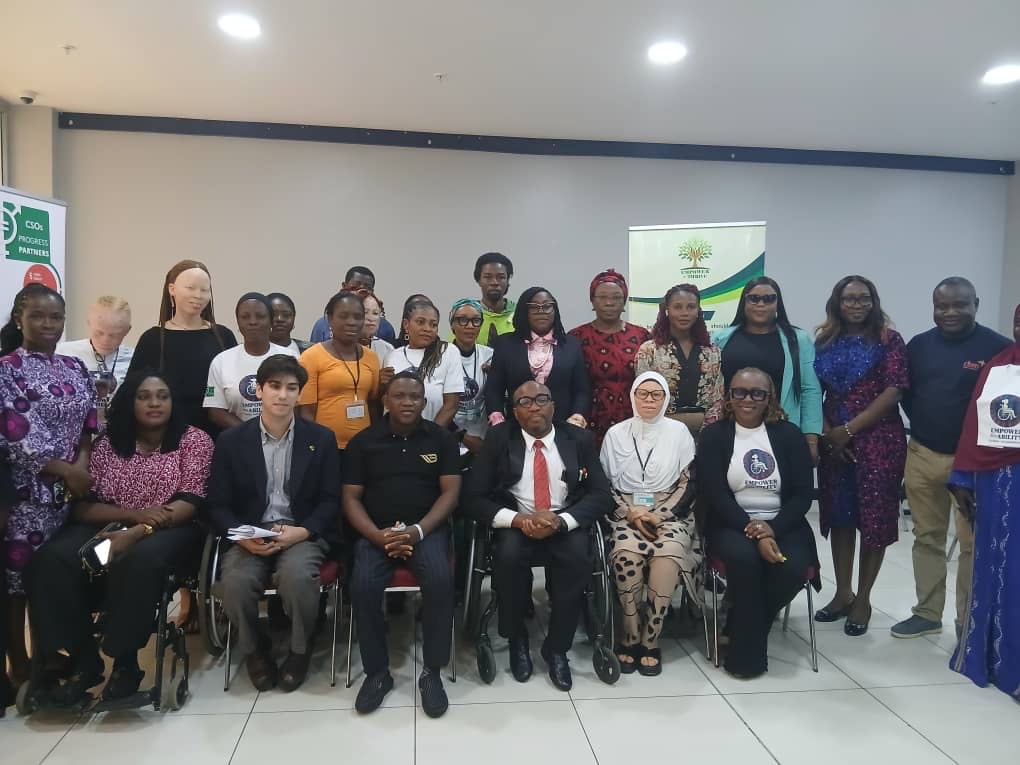
The demand was made at a high-level policy dialogue on “Disability-Inclusive Economic Empowerment” convened by the Empower To Thrive Development Initiative (ETTDI) in Abuja. The dialogue formed part of the activities of ETTDI’s Empower Her Ability Project, funded by the French Embassy.
The dialogue brought together government officials, disability rights advocates, civil society organizations, and representatives of financial institutions to chart a clear path towards removing barriers that prevent women with disabilities from participating fully in Nigeria’s economic life.
Why Special Desks Are Needed
Mrs. Esther Bature, Country Advocacy Coordinator for Sightsavers Foundation International, speaking during a panel session titled “Unlocking Finance, Markets and Skills for Women with Disabilities,” stressed the urgency of creating specialized banking units for PWDs.
She explained that women with disabilities often encounter obstacles in the general banking environment, where their unique needs are not adequately addressed.
“Such desks must be staffed with trained personnel who can directly engage persons who are blind, deaf, or have other disabilities—without forcing them to rely on third parties. This ensures privacy, dignity, and ease of access,” Bature said.
She noted that the absence of these inclusive services often discourages women with disabilities from pursuing loans or credit facilities, thereby locking them out of entrepreneurship opportunities.
JONAPWD and Federal Government Add Their Voices
Chioma Egede, an executive of the Joint National Association of Persons with Disabilities (JONAPWD), reiterated that the association would sustain its advocacy until banks and financial institutions dismantle barriers preventing PWDs from accessing credit.
She emphasized that beyond financial barriers, issues like physical inaccessibility of banking halls and inadequate communication methods must also be addressed.
Also lending his voice, Mohammed Isa, Senior Special Assistant to President Bola Ahmed Tinubu on Special Needs and Equal Opportunities, said women with disabilities face multiple and intersecting challenges, ranging from stereotypes to structural inequalities in Nigeria’s financial sector.
Represented by his Director of Media and Communications, Lanre Oloyede, Isa stressed the need for deliberate government policies, targeted interventions, and inclusive partnerships to correct these imbalances.
“These barriers are not just about finance. They are rooted in societal stereotypes and structural inequalities. Breaking them requires intentional policies and real partnerships,” he said.
Bridging the Gap Between Policy and Practice
In his opening remarks, Dr. Ima Chima, Executive Director of ETTDI, said the dialogue was designed to bridge the wide gap between policy and practice on financial inclusion for women with disabilities.
Chima, represented by Dr. Olusola Adeoye, Programmes Manager of the Empower Her Ability Project, explained that women with disabilities face double exclusion—first as women, and second as persons with disabilities.
“Out of Nigeria’s estimated 25 million persons with disabilities, women are particularly excluded from finance, skills training, and market access. We must change this narrative,” Chima said.
He stressed that Nigeria cannot unlock its full economic potential or achieve the Sustainable Development Goals (SDGs) without enabling women with disabilities to participate fully in entrepreneurship and economic activities.
“Inclusion is not charity—it is smart economics, social justice, and a national imperative,” Chima added.
Towards a Disability-Inclusive Economy
The dialogue featured robust conversations on how to develop practical policy recommendations to advance disability-inclusive finance, skills training, and entrepreneurship support. Participants agreed that the voices of women entrepreneurs with disabilities must guide the design of all interventions.
The deliberations will culminate in the Abuja Communique on Disability-Inclusive Economic Empowerment, a document that will set actionable commitments for government, financial institutions, and the private sector.
As part of the Empower Her Ability Project, 25 young women with disabilities, aged 18 to 40, will be trained within six months in entrepreneurship, financial management, and business planning. The project will also link them to markets, finance, and business support networks to help grow their enterprises.
Changing the Narrative
For too long, women with disabilities have been left on the margins of Nigeria’s economic space. Stakeholders at the policy dialogue made it clear that the time for token gestures is over. Practical steps such as special banking desks, trained staff, and inclusive financial policies are now seen as urgent priorities.
As one participant noted, “Economic empowerment for women with disabilities is not just about fairness—it’s about unleashing untapped potential that can help drive Nigeria’s development.”
With strong commitments from government actors, advocacy groups, and international partners, the call for disability-inclusive economic empowerment is gaining momentum. And if the promises from Abuja are followed by action, women with disabilities in Nigeria could soon find themselves not just included—but leading—within the nation’s entrepreneurial space.
Follow the The Qualitative Magazine channel on WhatsApp: https://whatsapp.com/channel/0029VanfIB50wajpjGi3JJ1G


