

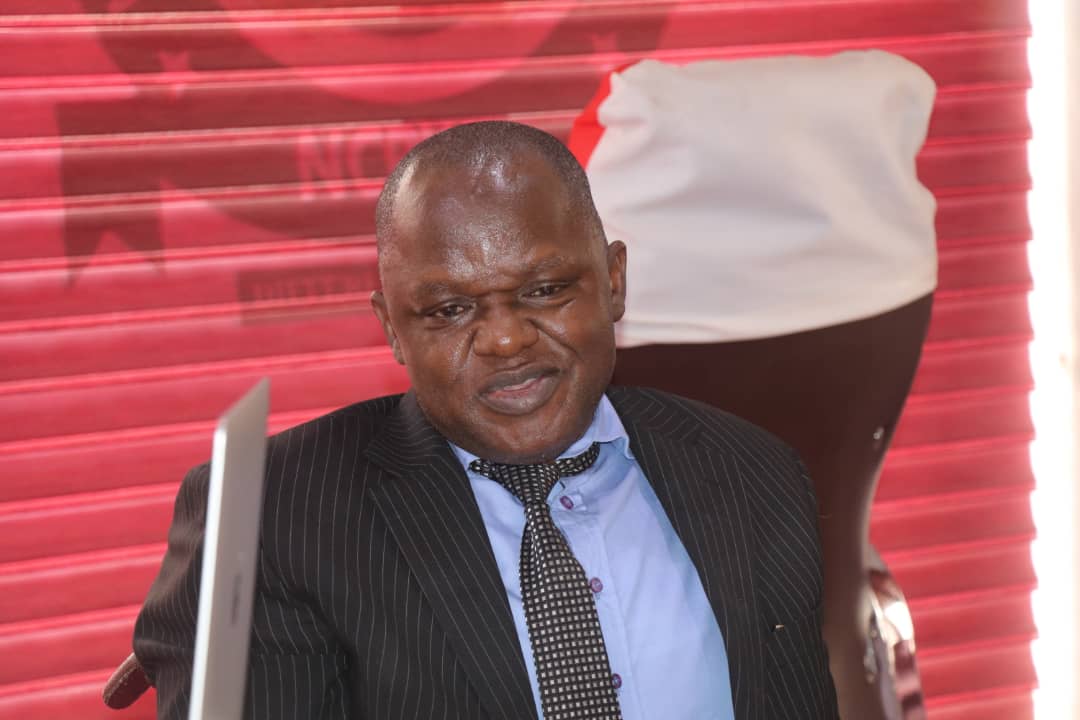
Enugu, Nigeria – The Executive Secretary of the National Commission for Persons with Disabilities (NCPWD), Hon. Ayuba Burki Gufwan, has called on Nigerians to unite in breaking the systemic barriers that continue to exclude millions of persons with disabilities (PWDs) from fully participating in society.
Gufwan made this passionate appeal during the 65th Annual General Conference of the Nigerian Bar Association (NBA), held at the International Conference Centre, Enugu. Addressing a cross-section of legal luminaries, policymakers, and advocates, he stressed that disability inclusion is not just a moral obligation but a constitutional and human rights issue that Nigeria must take seriously.
“Breaking the chains of exclusion requires a collective effort and a commitment to creating a more inclusive society. We must recognize that disability is not inability, and that persons with disabilities bring unique perspectives, skills, and experiences that can enrich our communities and workplaces,” Gufwan declared.
Barriers That Must Be Broken
Highlighting the stark realities confronting over 35.5 million Nigerians living with disabilities, the NCPWD boss noted that PWDs continue to face overwhelming obstacles in accessing education, healthcare, employment, and justice.
Despite the existence of the Discrimination Against Persons with Disabilities (Prohibition) Act 2018, he lamented that implementation remains slow and inadequate. Sections 1, 3, and 29 of the Act guarantee equal rights, access to public premises, and employment opportunities for persons with disabilities, yet these promises are far from reality.
According to him, exclusion is not only physical—through inaccessible infrastructure—but also social, economic, and attitudinal, fueled by stereotypes and stigma that diminish the potential of persons with disabilities.
A Call to Action
Gufwan challenged stakeholders—including government agencies, the private sector, civil society, and the legal community—to go beyond rhetoric and commit to practical steps that ensure inclusivity. These steps, he said, must include:
- Promoting accessible public spaces and materials that allow full participation.
- Challenging discriminatory attitudes and harmful stereotypes.
- Creating employment pathways that empower persons with disabilities economically.
- Advocating for policy reforms that mainstream disability rights in all sectors.
He further emphasized that the Commission is ready to partner with all stakeholders to actualize the vision of a Nigeria where disability rights are upheld, and no one is left behind.
Disability as a Value, Not a Burden
In his address, Gufwan sought to reshape perceptions, stressing that PWDs are not liabilities but assets to society.
“Persons with disabilities are innovators, problem-solvers, and leaders. When given equal opportunities, they contribute significantly to the growth and development of our nation. Recognizing their value is crucial to building a society that truly reflects justice, equity, and fairness,” he said.
The Bigger Picture
The NBA conference, which annually convenes thousands of lawyers and thought leaders across the country, provided an important platform for Gufwan’s message. His submission reinforced the growing global conversation on disability rights and Nigeria’s urgent need to implement frameworks that align with international standards, such as the United Nations Convention on the Rights of Persons with Disabilities (UNCRPD), which Nigeria has ratified.
With over 15% of the population living with disabilities, the NCPWD boss warned that continued exclusion would not only undermine human rights but also rob the nation of valuable talent and perspectives.
Looking Ahead
As conversations around inclusivity gain momentum, the NCPWD is positioning itself as a frontline advocate for disability rights in Nigeria. Gufwan reiterated the Commission’s unwavering commitment to ensuring that persons with disabilities are integrated into every aspect of national life.
His closing charge was clear: “The time to act is now. Disability inclusion is not optional—it is a necessity for the progress of our nation.”
Follow the The Qualitative Magazine channel on WhatsApp: https://whatsapp.com/channel/0029VanfIB50wajpjGi3JJ1G


