

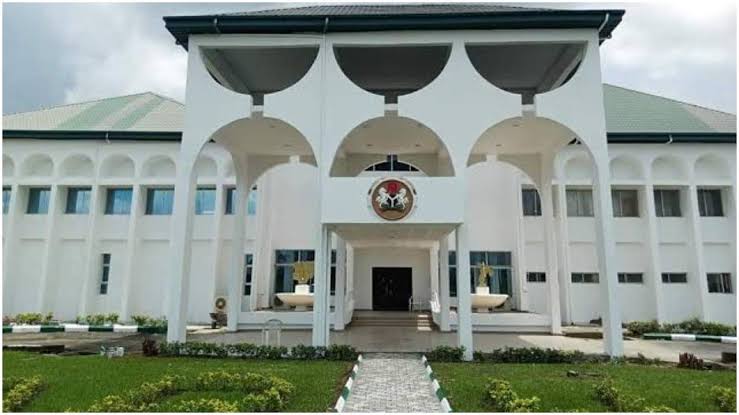
Umuahia, Abia State | July 28, 2025 — A wave of public concern has been ignited following the outright rejection of a proposed environmental bill by a leading civil society organization in Abia State. The Foundation for Environmental Rights, Advocacy & Development (FENRAD) has strongly opposed a controversial piece of legislation currently under consideration by the Abia State House of Assembly, calling for its immediate withdrawal and redrafting.
The proposed legislation, titled “A Bill for a Law to Establish the Abia State Polluters Pay Principle and Extended Producer Responsibilities and for Other Matters Connected Therewith,” has come under fire for what FENRAD describes as its regressive, ambiguous, and anti-people provisions. According to FENRAD, the bill, if passed in its current form, would unfairly shift the cost of environmental protection and waste management from large-scale industrial polluters to ordinary citizens and low-income communities — the very people already bearing the brunt of environmental degradation.
A Trojan Horse in Environmental Garb?
In a detailed press statement signed by its Executive Director, Comrade Nelson Nnanna Nwafor, FENRAD decried the bill as a classic case of “environmental injustice wrapped in legislative language.” The organization acknowledged the global relevance of the Polluter Pays Principle (PPP) and Extended Producer Responsibility (EPR) frameworks — both internationally accepted models for sustainable environmental practices — but expressed deep concern about the manner in which the Abia bill seeks to apply these principles.
“While we recognize the importance of environmental accountability and the global shift toward EPR and PPP, the current bill lacks transparency, public participation, and clarity. Worse still, it seems designed to criminalize the informal sector while sparing the major industrial polluters who should actually be held accountable,” said Comrade Nwafor.
Key Flaws in the Draft Law
FENRAD highlighted several critical gaps in the proposed legislation, presenting a well-articulated critique grounded in principles of social justice, public policy, and environmental governance.
1. Ambiguous Terminologies and Definitions:
The bill fails to define with legal precision who qualifies as a “polluter” or “producer.” This, FENRAD argues, opens the door to arbitrary enforcement that could disproportionately affect small businesses, market women, and low-income earners — people who generate waste but lack the resources or infrastructure to manage it.
2. Lack of Public Consultation and Stakeholder Input:
A major bone of contention is the absence of public engagement in the drafting of the bill. According to FENRAD, no town hall meetings, environmental impact assessments, or consultations with civil society groups were held prior to the bill’s presentation. This glaring omission undermines democratic process and excludes those who will be most affected.
3. Misapplication of Environmental Principles:
The principle of “polluter pays” is designed to hold corporate entities and large-scale industrial producers accountable for environmental harm. However, FENRAD believes this bill is an inversion of the principle, potentially criminalizing informal waste pickers, recyclers, and community members who are already struggling to survive amid systemic poverty.
4. Weak Institutional Framework for Enforcement:
Abia State, FENRAD notes, currently lacks the infrastructure and institutional mechanisms to effectively implement an EPR regime. Without proper oversight bodies, monitoring systems, and recycling industries in place, the bill could be misused by regulatory agents for arbitrary taxation, extortion, or harassment.
5. A Threat to Pro-Poor Environmental Governance:
Perhaps most alarmingly, FENRAD warned that the bill contradicts ongoing efforts to promote inclusive and equitable environmental governance. If passed, it risks becoming another burden for poor and vulnerable populations, exacerbating social inequality in a state already grappling with developmental challenges.
A Call for Rethink and Redirection
FENRAD is urging the Abia State House of Assembly to immediately withdraw the bill in its current form and embark on a more transparent, participatory, and just legislative process. The group is calling for:
- Public hearings and open consultations with environmental experts, community leaders, and informal sector representatives.
- Clear, just, and enforceable definitions within the law.
- A focus on holding real polluters — such as manufacturing companies, oil firms, and large-scale producers — accountable for their environmental footprints.
“Environmental laws must be rooted in equity, fairness, and sustainability,” the statement added. “Laws that fail to reflect these values become tools of oppression rather than instruments of protection.”
Environmental Rights and the Bigger Picture
FENRAD’s bold stance is part of a broader movement pushing for rights-based environmental governance in Nigeria. As climate change, pollution, and unsustainable urbanization continue to impact vulnerable communities, civil society organizations like FENRAD are insisting that governments at all levels center the people in their environmental strategies.
This intervention by FENRAD could serve as a critical turning point in how environmental policy is shaped not just in Abia State but across Nigeria — a country where environmental degradation is increasingly intersecting with issues of poverty, displacement, and public health.
FENRAD reiterated its commitment to monitoring legislative activities related to environmental justice and human rights in Abia State and beyond. The organization vowed to resist any attempt to use environmental policies as a veil for anti-poor and exclusionary governance.


