

By Agbo Christian Obiora
Abuja, Nigeria – July 2025
In the wake of the Global Disability Summit (GDS) 2025, two frontline disability rights organizations—Family-Centered Initiative for Challenged Persons (FACICP) and the Mimijane Foundation for Women and Children with Disabilities—have taken a bold step to ensure that Nigeria’s commitments at the summit do not remain on paper but are actively implemented.
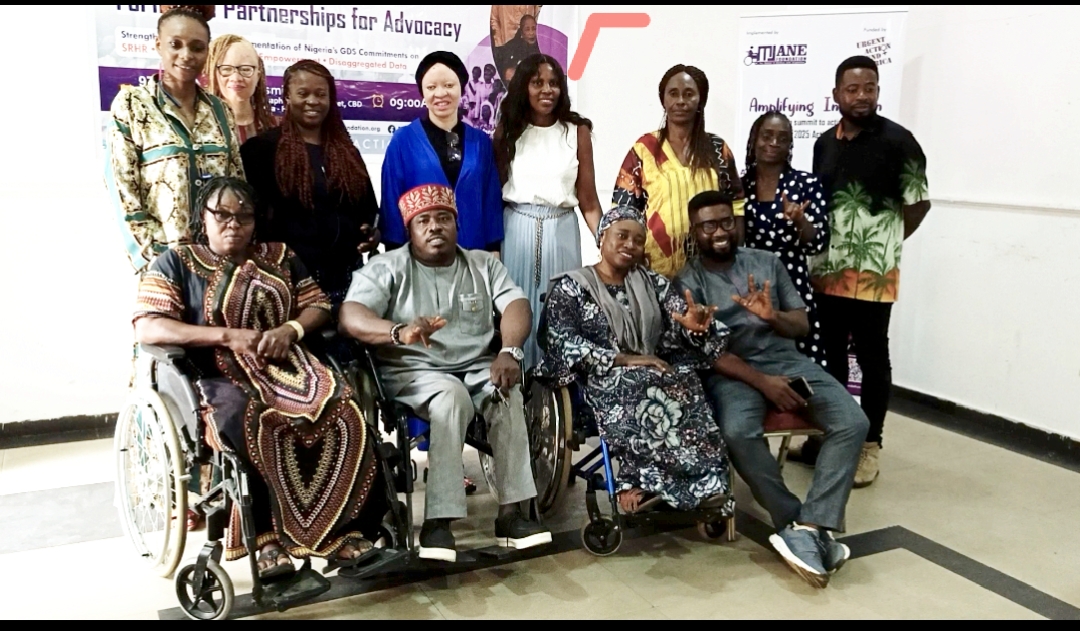
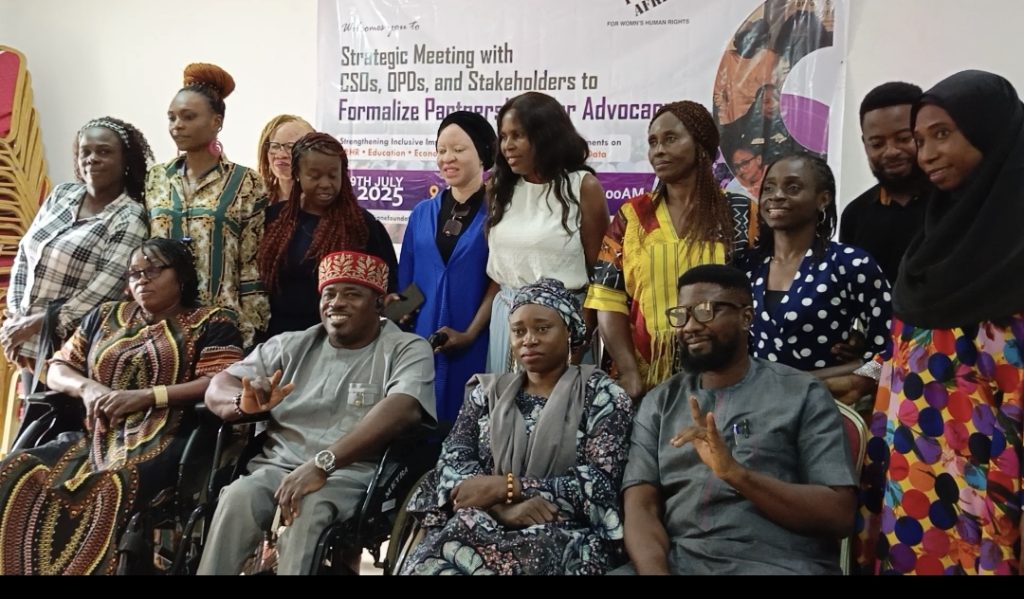
On Wednesday in Abuja, both organizations convened a high-level Strategic Stakeholders’ Meeting on Strengthening Inclusive Advocacy Partnerships Post-GDS 2025, drawing together a powerful coalition of voices from civil society organizations (CSOs), Organizations of Persons with Disabilities (OPDs), government representatives, and advocacy networks.
The convening, which was described by participants as timely and catalytic, aimed to formalize multi-stakeholder partnerships, align on national disability priorities, and co-develop an inclusive implementation strategy that keeps women and girls with disabilities at the center.
A Call to Action for Accountability and Collaboration
Delivering her opening remarks, Eno Sandra Uyebi, the Executive Director of FACICP, highlighted the importance of the gathering in shaping a new era of disability-inclusive governance in Nigeria.
“This strategic inception meeting was not convened for rhetoric. It is a crucial platform to foster stronger collaboration and accountability in the post-GDS 2025 phase,” Uyebi stated. “We are laying the groundwork for a united advocacy front that ensures no woman, girl, or child with a disability is left behind.”
She further noted that the meeting is part of a broader joint post-GDS engagement strategy between FACICP and Mimijane Foundation to ensure Nigeria walks the talk on its disability commitments made during the Global Disability Summit held in Berlin, Germany, on April 2–3, 2025.
Laying the Foundation for Inclusive Policy Influence
The stakeholders’ session was designed to provide more than a forum for discussion—it was a blueprint-building workshop. Participants collaboratively identified gaps, shared lessons from past advocacy experiences, and contributed to the development of a joint post-GDS advocacy framework. The framework is intended to guide national advocacy efforts and enhance policy influence around Nigeria’s GDS 2025 commitments.
There was a clear focus on ensuring the strategic direction adopted reflects the lived realities of persons with disabilities, particularly women and girls who often face compounded layers of discrimination.
“This session is pivotal to mapping out shared priorities and building an ecosystem of action that cuts across sectors,” Uyebi noted. “We are not just creating plans—we are building a sustainable advocacy movement driven by data, equity, and inclusion.”
Nigeria’s GDS 2025 Commitments Under Review
During the meeting, participants dissected and reflected on Nigeria’s core commitments made at the GDS 2025. These include:
📘 Inclusive Education
- Enacting the National Policy on Inclusive Education
- Training 10,000 inclusive education teachers
- Boosting budgetary allocations for disability-inclusive learning
🏥 Access to Health Services
- Disability-inclusive health workforce training
- Accessible public healthcare facilities
- Inclusive health insurance schemes for PWDs
💼 Economic Empowerment
- Enforcing 5% employment quota for PWDs
- Supporting PWD entrepreneurs with grants and tools
- Launching a National Disability Employment Strategy by 2026
🛡️ Social Protection
- Expanding disability-focused social protection programs
- Promoting inclusive cash transfer schemes
- Integrating disability data into welfare systems
⚖️ Legislation and Policy Implementation
- Full enforcement of the Discrimination Against Persons with Disabilities (Prohibition) Act, 2018
- Domestication of the Act in all 36 states
- Strengthening the NCPWD for oversight
🗳️ Participation and Representation
- Promoting PWD political participation
- Disability-inclusive political party structures
- Increased support for OPDs and grassroots disability organizations
📊 Data and Evidence
- Integrating the Washington Group Questions into surveys
- Ensuring data disaggregation by disability, gender, and location
🚨 Humanitarian Action
- Disability-inclusive emergency response systems
- Training humanitarian actors on accessibility and inclusion
Participants expressed deep concern over the historically slow pace of implementation of disability policies in Nigeria and stressed the importance of collective monitoring and pressure on duty bearers.
“These commitments are strong on paper,” one participant noted, “but unless we come together to demand action, they will remain promises unfulfilled.”
Toward a New Era of Advocacy
The Abuja convening concluded with a renewed sense of urgency and a shared commitment to amplify advocacy, build stronger coalitions, and demand accountability at every level of governance. FACICP and Mimijane Foundation pledged to serve as the coordinating engines of this movement, ensuring that every action taken post-GDS 2025 contributes to the full realization of the rights of persons with disabilities in Nigeria.
As the momentum builds, one message resonates clearly from the halls of Abuja: the time for token inclusion is over. What is needed now is strategic, gender-responsive, and rights-based implementation—and the disability community is ready to lead.
#GDS2025 #DisabilityInclusion #FACICP #MimijaneFoundation #PostGDSNigeria #NothingAboutUsWithoutUs #InclusiveGovernance #WomenWithDisabilities #DisabilityRightsNG #AccountabilityNow #StrongerTogether


