

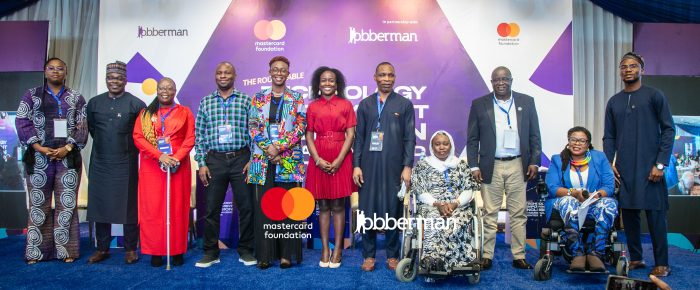
Abuja, Nigeria – In a bold move to redefine Nigeria’s digital economy through the lens of equity and opportunity, Jobberman Nigeria, in partnership with the Mastercard Foundation, convened a powerful roundtable event aimed at expanding digital employment access to Nigeria’s most marginalised groups.
Held under the banner of the Young Nigeria Works programme, the event titled “Technology and Employment Inclusion in Marginalised Contexts” took place on Thursday in Abuja, drawing a high-powered mix of stakeholders from government institutions, the private sector, civil society, digital platforms, and international development organisations. At the heart of the discussion was a shared commitment to removing the systemic barriers that hinder access to dignified digital work for groups such as persons with disabilities (PWDs), internally displaced persons (IDPs), and women in underserved communities.
A New Chapter in Inclusive Digital Growth
The event, coordinated by Jobberman Nigeria—a subsidiary of The African Talent Company (TATC)—was designed to do more than talk; it was about forging practical solutions. It became a launchpad for shaping employment platforms and labour market policies to be intentionally inclusive, accessible, and equitable.
Hilda Kabushenga Kragha, CEO of The African Talent Company, set the tone for the day in her opening remarks, declaring:
“Technology can and must be a force for inclusion, not division. As the world of work evolves, we must ensure that no one is left behind. Today’s conversations are not just about technology; they are about equity, access, and opportunity.”
Her statement resonated across the room as attendees from different sectors echoed the urgent need to reimagine the digital employment space in a way that reflects Nigeria’s diverse population.
Mastercard Foundation: Inclusion is the Core Agenda
Adding to the weight of the occasion, Rosy Fynn, Country Director of the Mastercard Foundation Nigeria, underscored the organisation’s long-term vision for inclusive economic development.
“This roundtable aligns with our mission to enable 30 million young Africans, particularly young women, to access dignified and fulfilling work by 2030,” Fynn said. “Inclusion is not a side conversation; it is the main agenda. We must design systems where marginalised groups are not just considered but centred.”
She further noted that the insights and commitments shared during the roundtable would feed into a forthcoming policy and practice brief, designed to shape employment programming, platform innovation, and national advocacy efforts. These outputs will also contribute directly to the broader Young Nigeria Works learning agenda, which is dedicated to scaling meaningful employment opportunities across Nigeria.
Presidency Lends Voice to Inclusion
In a strong endorsement of the initiative, the Senior Special Assistant to the President on Special Needs and Equal Opportunities, Mr. Mohammed Abba Isa, delivered a keynote address stressing the critical need for building inclusive digital ecosystems that extend economic dignity and employment equity to all Nigerians, regardless of physical ability or socioeconomic background.
“Inclusive employment is not charity—it is justice. We must break the cycle of exclusion by making sure that digital workspaces are accessible, affordable, and empowering for everyone, especially persons with disabilities and displaced populations,” he emphasized.
Launch of Groundbreaking Research
A key moment of the event was the presentation and validation of a landmark study titled “Technology and Employment Inclusion in Marginalised Contexts.” The research, commissioned as part of the Young Nigeria Works programme, explored how digital platforms—including job boards, gig and remote work platforms, and social media—can serve as gateways to employment for marginalised groups in Nigeria.
The findings laid bare the stark reality of labour market inequality:
- Nearly 9 out of 10 employers do not actively recruit from marginalised groups.
- 72% of employers make no structured effort toward inclusive hiring.
- Bias, skills gaps, and transport barriers remain major impediments.
- Yet, despite the odds, 55% of PWDs and 44% of displaced women have found work, largely through self-employment in creative, media, and agricultural sectors.
- Poor educational access compounds exclusion, with 85% of schools in Nigeria deemed unequipped to accommodate learners with disabilities.
However, the report also offers hope, noting the growing potential of digital tools and remote work models to dismantle barriers. It further recommends that employers be supported through subsidised inclusivity training and public recognition mechanisms to drive behavioural change.
Focused Breakout Sessions Yield Real Solutions
Breakout sessions provided space for tailored conversations focused on three critical demographics:
- Women in disadvantaged communities
- Persons with disabilities (PWDs)
- Internally displaced persons (IDPs)
These sessions enabled stakeholders to engage in honest dialogue and collaborative problem-solving, drawing on lived experiences, sectoral insights, and policy expertise. Key themes that emerged included the need for digital literacy programmes, affordable internet access, assistive technology, inclusive recruitment campaigns, and community-based job placement schemes.
Participants also advocated for multi-stakeholder coalitions that can champion inclusive employment at all levels— from local to national policy, from boardrooms to tech platforms.
A Clarion Call for Action
The Abuja roundtable was not just an event—it was a movement in the making. As Jobberman Nigeria and the Mastercard Foundation signal their readiness to collaborate with public and private sector actors, the message is clear: the time for inclusive employment is now.
The outcomes of the roundtable, including the validated research, breakout session findings, and proposed interventions, will feed into a broader ecosystem of change driven by the Young Nigeria Works programme. The initiative is focused on empowering Nigeria’s youth—particularly those in marginalised contexts—with the tools, skills, and opportunities they need to lead, innovate, and thrive in the digital economy.
Final Word
As Nigeria navigates a rapidly evolving digital landscape, initiatives like this serve as critical beacons of hope. With the combined effort of government agencies, tech platforms, civil society, and development partners, a new future is within reach—one where no one is excluded, and everyone has a seat at the digital employment table.


