

Abuja, Nigeria – May 15, 2025
In a major step toward building a truly inclusive and accessible capital city, the Federal Capital Territory Administration (FCTA) has reaffirmed its commitment to ensuring equal opportunities for all residents, especially Persons with Disabilities (PWDs). This resolve was echoed loudly at the closing of a transformative three-day workshop on rights-based approaches to disability-inclusive development, governance, and public policy, held in Abuja.
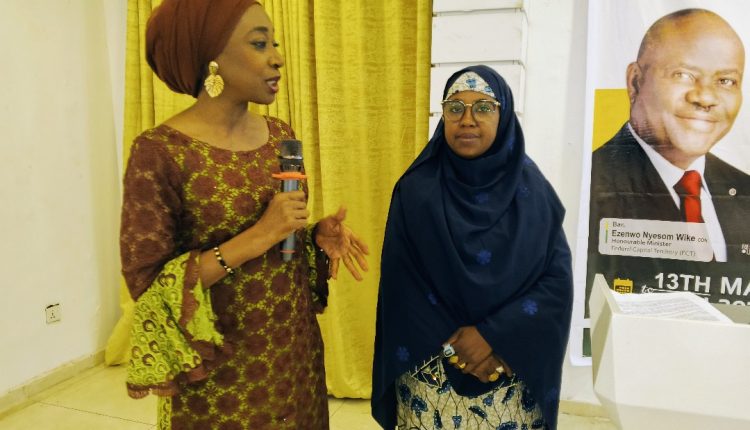
Speaking at the event, the FCT Minister of State, Dr. Mariya Mahmoud, declared that the administration is building a capital territory where no one is left behind. Represented by her Special Assistant on Social Investment, Hajiya Maijidda Kuku, the minister said the FCTA is committed to fully implementing the Discrimination Against Persons with Disabilities (Prohibition) Act of 2018, ensuring that inclusion becomes more than just policy—it becomes practice.
“We are working towards inclusive governance that reflects our collective humanity,” Mahmoud stated. “This workshop has not only sharpened our technical capacity but reignited our shared commitment to dismantling the barriers PWDs face in accessing equal opportunities.”
The minister challenged participants to move beyond dialogue and training by applying their newfound knowledge in their various spheres of influence.
“Let this not end as just another capacity-building event,” she urged. “Translate what you have learned into practical actions within your institutions. Let’s together build an FCT that mirrors the ideals of accessibility, equity, and true inclusion.”
Dr. Mahmoud also praised President Bola Ahmed Tinubu’s Renewed Hope Agenda, noting that it offers a bold national roadmap for inclusion, particularly for women and PWDs. She thanked the FCT Women Affairs Secretariat for championing the disability inclusion cause, and also extended appreciation to the World Bank for its continued support for social inclusion programmes in the territory.
From a Desk to a Movement
In a powerful message of evolution and progress, Dr. Adedayo Benjamins-Laniyi, the Mandate Secretary of the FCT Women Affairs Secretariat, described how the once-modest disability desk at the secretariat had now grown into a full-fledged disability action platform.
“What began as a desk has now become a movement,” she declared. “This workshop is a springboard for full domestication and implementation of the United Nations Conventions on the Rights of Persons with Disabilities and Nigeria’s own disability law.”
Benjamins-Laniyi noted that the workshop, organized with the support of the World Bank, had laid the foundation for a collaborative framework that will drive disability inclusion across all levels of governance in the FCT.
The new structure is expected to integrate various stakeholders including the FCT Social Development Secretariat, women’s groups, youth organizations, CSOs, religious and traditional leaders, media, and wives of area council chairmen, ensuring that inclusion reaches every corner of the capital.
“We are putting together a superstructure—a multi-sectoral task force that reaches from the FCTA headquarters to the smallest community,” she explained. “This will become a disability convention platform in the FCT—an alliance of government, communities, CSOs, and development partners, unified by one goal: leaving no one behind.”
A Model for the Nation
According to Benjamins-Laniyi, this inclusive governance model, rooted in grassroots engagement, will ensure the disability rights law is not just domesticated but fully operationalized in the everyday realities of citizens—urban and rural alike.
She emphasized that the Renewed Hope Agenda must not remain a political catchphrase but should translate into deliberate policies and actions that empower those often left on the margins.
“This agenda is a call to action,” she said. “It reflects an intentional political will to reach every household, every community, every ward—ensuring that persons with disabilities are not just seen, but heard, recognized, respected, and integrated.”
With the momentum generated by the workshop and growing partnerships across sectors, the FCTA’s approach could serve as a national model for inclusive governance.
As the curtains fall on the event, the message from Abuja is clear: the era of tokenism is over. Inclusion is no longer a favour—it is a right. And the FCT is leading the way.


