

Abuja, Nigeria — March 19, 2025
In a bold step towards bridging the gap between disability inclusion and Nigeria’s clean energy transition, the National Commission for Persons with Disabilities (NCPWD) is spearheading efforts to ensure persons with disabilities (PWDs) are no longer sidelined in the country’s renewable energy sector.
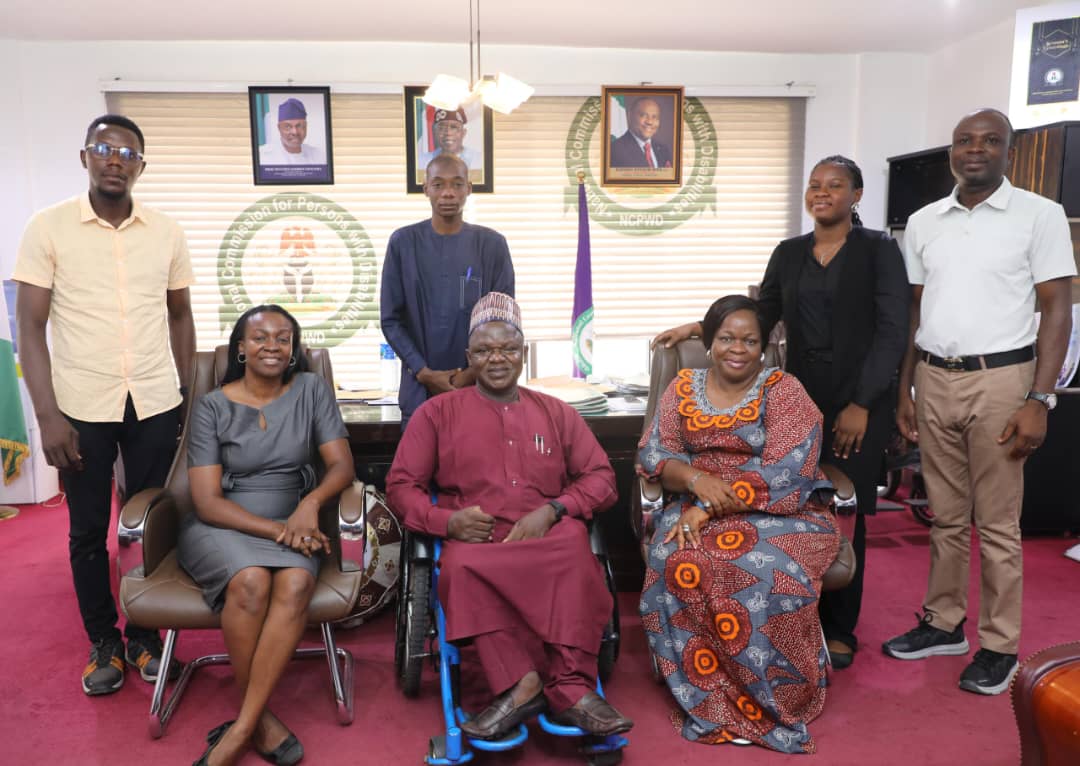
This drive was brought to the fore during a high-level strategic meeting at the Commission’s headquarters in Abuja, where the Executive Secretary of NCPWD, Hon. Ayuba Gufwan, hosted the Vice President of the Renewable Energy & Energy Efficiency Associations Alliance (REEEA-A), Anita Adeyemi.
The meeting, hailed as a game-changer, emphasized the urgent need to make the burgeoning renewable energy sector in Nigeria inclusive, accessible, and empowering for the over 30 million Nigerians living with disabilities.
PWDs Missing in Climate Action Conversations
In her remarks, Anita Adeyemi painted a stark picture of the underrepresentation of PWDs in the renewable energy ecosystem. She lamented that, despite the global push for sustainable energy solutions and Nigeria’s accelerated efforts towards clean energy adoption, PWDs are often left out of policy dialogues, implementation strategies, and economic opportunities within the sector.
“In most climate action and renewable energy discussions, persons with disabilities are either absent or given no defined roles,” Adeyemi stated. “This lack of inclusion not only undermines the principle of leaving no one behind but also deprives the clean energy sector of valuable contributions from a vibrant segment of the population.”
She stressed that the transition to renewable energy should be a tool for empowerment, not exclusion, urging stakeholders to reimagine the sector through a disability-inclusive lens.
NCPWD’s Commitment to Clean Energy Inclusion
Responding, Hon. Ayuba Gufwan reaffirmed NCPWD’s unwavering commitment to ensuring that the disability community benefits from Nigeria’s green transition. He described the meeting as the beginning of a long-overdue collaboration aimed at dismantling the barriers preventing PWDs from participating in the renewable energy value chain.
“This partnership with REEEA-A is not just timely—it is transformative,” Gufwan said. “We envision a future where persons with disabilities are not only consumers of renewable energy but also key players in its production, distribution, and innovation.”
Highlighting key areas of collaboration, Gufwan announced that NCPWD will take active steps to integrate disability concerns into national renewable energy policies and programs. Among the immediate outcomes of the meeting are:
- NCPWD’s participation in major upcoming renewable energy conferences, including the prestigious Brazil Climate Action Summit, where disability inclusion will be tabled as a priority.
- A joint nationwide assessment to identify and address the clean energy needs of PWDs across various disability clusters, ensuring tailored solutions for different categories of disabilities.
- Collaborative skills acquisition programs focused on equipping PWDs with technical know-how in solar energy installation, maintenance, and entrepreneurship, unlocking new avenues for employment and self-reliance.
- Advocacy for PWD inclusion in existing government-backed renewable energy initiatives, particularly those managed by the Rural Electrification Agency (REA) and similar bodies.
Renewable Energy as a Catalyst for Disability Empowerment
Gufwan further stressed that renewable energy can serve as a powerful tool for socio-economic empowerment if inclusivity is prioritized from the outset.
“The renewable energy sector holds immense promise—not just for environmental sustainability but also as an engine for poverty reduction and job creation,” he noted. “However, if PWDs are left behind, we risk perpetuating inequality. It is our collective responsibility to make this transition inclusive, accessible, and beneficial to all.”
He called on all relevant stakeholders—government agencies, development partners, private sector investors, and civil society—to mainstream disability inclusion into all renewable energy projects, policies, and dialogues.
Setting the Tone for Inclusive Development
The strategic engagement between NCPWD and REEEA-A has been widely applauded by disability rights advocates and renewable energy stakeholders alike, who see it as a watershed moment in Nigeria’s quest for sustainable and inclusive development.
It reflects a growing recognition that addressing climate change and energy poverty cannot succeed without including marginalized groups, particularly persons with disabilities, who often face additional barriers in accessing energy services and economic opportunities.
As Nigeria moves towards achieving its ambitious clean energy targets, the message from Hon. Ayuba Gufwan and Anita Adeyemi is clear: True progress leaves no one behind.
About NCPWD
The National Commission for Persons with Disabilities (NCPWD) is Nigeria’s foremost government agency responsible for promoting the rights, welfare, and inclusion of persons with disabilities in all facets of national life. Under the leadership of Hon. Ayuba Gufwan, the Commission has consistently advocated for the integration of PWDs into key sectors, including education, healthcare, governance, and now, renewable energy.


