Tuesday, December 16, 2025
Home Blog Page 7

ABIA DISABILITY COMMISSION TO DISTRIBUTE FREE SUNSCREEN TO PERSONS WITH ALBINISM

0

Initiative Aims to Protect Against Skin Cancer and Promote Inclusion

In a landmark move to promote the health, safety, and inclusion of Persons with Albinism (PWAs), the Abia State Disability Commission has unveiled plans to distribute free sunscreen lotions across the state. The initiative, according to the Commission, seeks to protect beneficiaries from the harmful effects of ultraviolet rays and reduce the high risk of skin cancer prevalent among persons with albinism.

Chairman of the Abia State Disability Commission, Mr. David Anyaele, made this known during a one-day Albinism Medical Sensitisation Programme held at the School for the Blind, Afara, Umuahia. The event, themed “Meeting the Needs of Persons with Albinism through Medical Model”, was organised by the Abia State Chapter of the Albinism Association of Nigeria (AAN).

Speaking during the sensitisation, Anyaele described the sunscreen distribution as a demonstration of the state government’s commitment under Governor Alex Otti’s administration to enhance the well-being of all Persons with Disabilities (PWDs), particularly those living with albinism.

“The Commission will provide four packs of sunscreen lotion to each participant. This is to ensure that members of the Albinism community have protective cream to shield their skin from the scorching sun and prevent skin cancer,” Anyaele stated.

He further disclosed that the AAN chairman would propose a suitable date for the official distribution of the lotions, adding that the Commission would also provide transportation stipends for beneficiaries traveling to collect their items.

While assuring continued government support, Anyaele urged Persons with Albinism not to depend solely on the government for solutions to their challenges but to take active roles in awareness creation, advocacy, and self-development.

“The government understands the serious health implications of excessive exposure to sun rays, which often leads to skin cancer, loss of sight, and difficulty in participating in social and educational activities. We also recognise the economic hardship faced by many PWAs due to limited employment opportunities and poverty,” he added.

The Disability Commission, he revealed, has already built the capacity of the 17 Local Government Area Chairmen and Permanent Secretaries across Ministries, Departments, and Agencies (MDAs) on disability inclusion, implementation of the Abia State Disability Law, and disability budgeting.

In continuation of its disability mainstreaming efforts, the Commission is also engaging officials from the Health and Education Departments across the 17 LGAs on inclusive service delivery. Notably, this effort includes the active participation of Ms. Ijeoma Okoronkwo, a member of the Commission’s Board and a representative of the Albinism Cluster.

According to Anyaele, the Abia State Disability Commission has also provided financial support to all disability clusters, including the AAN, to help them commemorate their respective international awareness days and run advocacy campaigns.

He commended the leadership of the AAN for organising the sensitisation event, describing it as a timely intervention to raise awareness about the health, social, and economic realities faced by persons with albinism.

“I must commend the Albinism Association of Nigeria for this initiative. It’s through awareness like this that we can correct long-held misconceptions and break the myths surrounding albinism,” he said.

Anyaele decried the continued discrimination and stigma that persons with albinism face across Africa, citing examples of countries such as Tanzania where PWAs have been subjected to ritual killings and violent attacks due to harmful traditional beliefs.

“In some African countries, persons with albinism are still regarded as endangered species. In Tanzania, for instance, they are often hunted for ritual purposes. In Nigeria, they may not face such extreme violence, but they suffer mockery, bullying, exclusion, isolation, stigma, and denial of opportunities,” he lamented.

He stressed that members of the Albinism community in Nigeria must rise to the challenge of leadership in awareness creation, helping to correct misconceptions, advocate for their rights, and educate the public about albinism as a genetic condition—not a curse or taboo.

Anyaele further highlighted the role of disability laws at both federal and state levels in protecting the rights of PWDs, calling on all disability clusters to participate actively in promoting the effective implementation of these laws.

“Our strength lies in unity and knowledge. Persons with Albinism must not only depend on government interventions but must also drive their own narrative through advocacy, leadership, and knowledge acquisition,” he concluded.

The sensitisation programme was attended by representatives of the disability community, medical professionals, and government officials, who lauded the initiative as a major step toward inclusive health care and social protection for persons with albinism in Abia State.

As the Abia State Disability Commission prepares for the sunscreen distribution, the move is being widely praised as a model of practical disability inclusion—one that prioritises not only accessibility but also health and dignity for all.

NCPWD, EATIP PARTNER TO PROMOTE INCLUSIVITY FOR CHILDREN AND YOUNG ADULTS WITH DISABILITIES

0

— Gufwan calls for collective action to break barriers of discrimination and exclusion

In a renewed drive toward advancing inclusive education and eliminating barriers faced by persons with disabilities, the National Commission for Persons with Disabilities (NCPWD) has pledged to collaborate with Empowering Abilities Through Inclusive Pages (EATIP) — an initiative of the YieldUp Development Initiative (YDI) — to promote inclusivity and educational accessibility for children and young adults with disabilities across Nigeria.

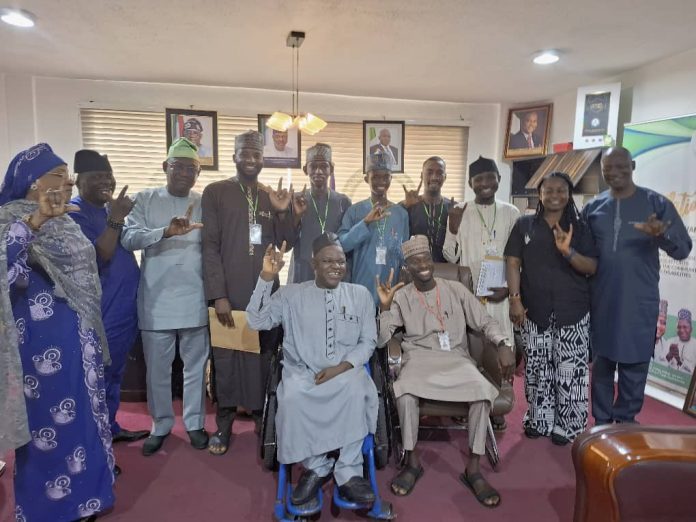
The partnership was sealed on Thursday, October 16, 2025, when delegates from EATIP, led by disability advocate and Executive Director of YieldUp Development Initiative, Praise Akobo, paid a courtesy visit to the Commission’s headquarters in Abuja. The meeting centered on strengthening efforts to ensure that children and youths with disabilities have access to inclusive educational resources, assistive materials, and platforms that empower them to thrive.

The Empowering Abilities Through Inclusive Pages (EATIP) project is supported by the Youth Empowerment Fund (YEF), in collaboration with the School for the Blind and Zamarr Institute, Jabi, Abuja. The initiative seeks to promote inclusive reading, creativity, and access to learning materials for children with disabilities, particularly those in underserved schools and communities.

Speaking during the visit, Hon. Ayuba Burki Gufwan, Executive Secretary of the NCPWD, commended the efforts of the organization, describing their initiative as timely, transformative, and aligned with the Commission’s mandate to advance the rights and welfare of persons with disabilities.

“The task of pulling members of the disability community out of the shackles of deprivation, marginalization, discrimination, and stigmatization is a collective responsibility. With over 35.5 million persons with disabilities in Nigeria, this is not a task for the Commission alone but one that requires the active involvement and support of every Nigerian,” Gufwan said.

He praised the YieldUp Development Initiative’s commitment to education and inclusion, particularly in providing Braille books, mobility aids, and assistive devices for children with disabilities, noting that such interventions address the very heart of the challenges confronting the disability community.

YieldUp Development Initiative, under the leadership of Praise Akobo, has been at the forefront of bridging the gaps in discrimination and illiteracy through a multi-dimensional approach built on Education, Creativity, Advocacy, Technology, and Therapy (ECAT). The organization’s efforts are focused on improving accessibility and inclusion for children with disabilities while combating stigma and exclusion in schools — issues that persist despite Nigeria’s Inclusive Education Policy and the Discrimination Against Persons with Disabilities (Prohibition) Act of 2018.

According to Akobo, the organization is currently introducing a Universal Design for Learning (UDL) — a flexible learning framework that accommodates diverse learning needs and disabilities. The initiative, already yielding success in Benue State, is set to be replicated in Abuja to expand its impact on special needs education and teacher training.

Part of the discussions during the visit included plans for the launch of a new book titled “Awakening Possibilities in Disabilities”, which the group intends to publish upon the Commission’s approval. The book, designed to promote awareness and positive representation of persons with disabilities, will also be produced in Braille format to ensure accessibility for visually impaired readers.

To achieve this, the organization sought technical support from NCPWD, particularly in the provision of assistive devices and the printing of Braille copies of the book.

Responding, Hon. Gufwan assured the delegation of the Commission’s readiness to provide the necessary guidance and support to ensure that their laudable objectives are realized.

“We deeply appreciate your commitment and dedication to the disability cause. The Commission stands ready to collaborate with you to achieve the shared vision of empowering abilities and promoting inclusivity for all,” he stated.

He further called on all Nigerians — across professions, institutions, and communities — to join hands in building an inclusive nation that celebrates diversity and leaves no one behind.

“Let us make Nigeria the most inclusive country in the world. Every child, regardless of disability, deserves to learn, dream, and succeed,” Gufwan added.

The high point of the visit was the presentation of the document ‘Abilities Through Inclusive Pages’ to the Executive Secretary of the NCPWD by the EATIP delegation, symbolizing a shared commitment to advancing disability inclusion through education, advocacy, and collaboration.

The partnership between NCPWD and EATIP underscores a growing recognition of the importance of inclusive education as a cornerstone for empowerment and equality. As the Commission continues to champion initiatives that remove barriers to learning and participation, collaborations such as this are expected to strengthen the bridge toward a more inclusive and equitable Nigeria.

GUFWAN PLEDGES STRONG SUPPORT FOR STUDENTS WITH DISABILITIES ACROSS NIGERIA

0

— NCPWD set to partner African students on inclusive education and empowerment

The Executive Secretary of the National Commission for Persons with Disabilities (NCPWD), Hon. Ayuba Gufwan, has once again demonstrated his unwavering passion for inclusion, equality, and education as he promised the Commission’s full support for students with disabilities across Nigerian universities.

Hon. Gufwan gave this assurance when he received a delegation from the Africa Students Union Club, Federal University of Gusau, who paid a courtesy visit to the Commission’s headquarters in Abuja on Thursday, October 16, 2025.

The Africa Students Union Club, a youth-driven initiative inspired by the ideals of the African Union, is devoted to promoting unity, leadership, and inclusivity among students across African campuses. The visit, which was described by observers as “timely and visionary,” centered on strengthening collaboration between the Commission and student leaders to advance inclusive education for learners with disabilities.

Addressing the delegation, Hon. Gufwan commended the student leaders for their courage and foresight in prioritizing disability inclusion within their campus activities. He lauded their proactive approach to recognizing the rights and needs of persons with disabilities within their university community, describing their visit as “a bold step in the right direction.”

“Your visit and commitment to promoting disability inclusion within your campus communities show that the younger generation is ready to drive positive change,” Gufwan stated.
“The Commission is open to partnerships that will enhance access to inclusive education and empower students with disabilities to thrive academically and socially.”

The NCPWD boss, who himself is a strong advocate for equal educational opportunities for persons with disabilities, emphasized that inclusive education remains one of the Commission’s top priorities. According to him, education is the foundation for empowerment and national development, and no nation can truly progress if a section of its citizens—especially persons with disabilities—is excluded from learning opportunities.

He noted that the Commission is working tirelessly to ensure that students with disabilities in tertiary institutions across the country have access to assistive devices, learning materials, and inclusive environments that enable them to reach their full potential.

Speaking earlier, the Chairman of the Africa Students Union Club, Comrade Aminu Isa, expressed the Union’s admiration for the leadership of Hon. Gufwan and the Commission’s impact in promoting disability inclusion across Nigeria. He explained that the Union’s visit was to seek collaboration with NCPWD in advancing their shared goal of ensuring that students with disabilities enjoy equal access to education and campus life.

Comrade Isa outlined several key areas where the Union seeks support and partnership from the Commission. These include:

  • Awareness and sensitization programmes to promote empathy, inclusion, and accessibility across university campuses.
  • Provision of wheelchairs and mobility aids to enhance independent movement for students with physical disabilities.
  • Access to Braille learning materials and Braille machines to support visually impaired students in their studies.
  • Supply of assistive hearing devices to help students with hearing impairments participate effectively in classroom discussions.
  • Capacity building workshops to train student leaders and volunteers on disability rights, inclusive leadership, and peer support systems.

According to him, the Union’s vision aligns with the Commission’s mandate to promote equal opportunities for all, adding that “this partnership will serve as a beacon of hope for students with special needs across Nigerian campuses.”

Hon. Gufwan warmly welcomed the proposals, assuring the visiting team that the NCPWD would work closely with student-led organizations to implement sustainable initiatives that benefit persons with disabilities in higher institutions.

“This synergy represents a meaningful partnership that will empower students with disabilities and strengthen our collective mission of building an inclusive Nigeria—one where every individual has the opportunity to learn, grow, and contribute regardless of their disability,” he added.

The visit ended on a high note, with both parties agreeing to begin a joint framework that will outline specific areas of collaboration between NCPWD and the Africa Students Union Club. The initiative is expected to drive a new wave of disability-inclusive leadership, learning environments, and social participation within Nigerian universities.

The meeting also reflects a growing recognition among young people that true leadership involves empathy, accessibility, and inclusion—values that the NCPWD under Hon. Gufwan’s leadership continues to promote vigorously across all sectors.

As Nigeria prepares for a more inclusive educational future, partnerships such as this between the NCPWD and student bodies offer renewed hope that persons with disabilities will not just be seen but heard, supported, and empowered to reach their dreams.

ROTARY INTERNATIONAL VISITS NCPWD AHEAD OF WORLD POLIO DAY 2025 — GUFWAN REAFFIRMS COMMITMENT TO POLIO SURVIVORS’ EMPOWERMENT

0

In a remarkable show of solidarity and commitment to disability inclusion, the National Commission for Persons with Disabilities (NCPWD), on Wednesday, received a delegation from Rotary International under the auspices of the National PolioPlus Committee (NNPPC), ahead of the global commemoration of World Polio Day 2025, which comes up on October 24.

The visit, led by Mrs. Grace Sadiku, popularly known as Mama Polio, who serves as the Kaduna State Polio Field Coordinator and a representative of the Office of the National PolioPlus Chair, was aimed at strengthening partnership with the Commission and other relevant stakeholders in sustaining Nigeria’s polio-free status while promoting the welfare and inclusion of polio survivors across the country.

Rotary’s Continued Commitment to a Polio-Free World

In her remarks, Mrs. Sadiku lauded the leadership of the Executive Secretary of NCPWD, Hon. Ayuba Gufwan, describing him as a symbol of hope and resilience for millions of Nigerians who have survived polio.

She praised Gufwan’s lifelong commitment to disability advocacy and empowerment, noting that his story as a polio survivor who rose to national leadership continues to inspire both persons with disabilities and the wider society.

“Rotary International remains steadfast in its mission to ensure that polio is completely eradicated from the world and that those who have survived the disease live dignified, empowered, and inclusive lives,” Mrs. Sadiku emphasized.

She further extended a formal invitation to the NCPWD to participate in the national celebration of World Polio Day 2025, describing it as an important platform to highlight progress, share success stories, and renew global resolve toward total eradication of the disease.

Gufwan: ‘There is Ability in Disability’

Responding warmly to the Rotary delegation, Hon. Ayuba Gufwan, who also serves as the Chief Executive Officer of Wheelchairs for Nigeria, expressed appreciation to Rotary International for its decades-long humanitarian service and transformative impact in the lives of persons affected by polio.

He recalled Rotary’s immense contribution to global health through its “End Polio Now” campaign, describing the organization as a true partner in humanity and a strong ally in the disability inclusion movement.

“If the government, organizations, and society at large continue to provide strong support systems, polio survivors will not only become self-reliant but will also contribute meaningfully to national development,” Gufwan stated.

He also invoked the legacy of Franklin D. Roosevelt, the 32nd President of the United States, who was himself a polio survivor yet led his nation with unmatched courage, intellect, and foresight. According to Gufwan, Roosevelt’s life is a shining example that “disability does not define one’s destiny — there is ability in disability.”

NCPWD and Rotary: Building Bridges for Inclusion

Gufwan reaffirmed the Commission’s commitment to deepening collaboration with Rotary International and other stakeholders to advance the empowerment and inclusion of polio survivors.

He stressed that the Commission is determined to ensure that every person with a disability — especially those affected by polio — has access to education, livelihood, healthcare, and equal opportunities.

“As a survivor of polio myself, I understand the challenges, but I also understand the strength that comes with overcoming them. Together with partners like Rotary, we can ensure that no one is left behind,” he said.

World Polio Day 2025: A National Call to Action

The forthcoming World Polio Day 2025 will be marked with high-level engagements, public enlightenment campaigns, medical outreaches, and community sensitization activities across Nigeria. The event will not only highlight the country’s success story in eliminating polio but will also serve as a call to action to sustain progress and empower survivors through inclusive policies and programs.

With Nigeria maintaining its polio-free certification, the focus has now shifted to post-eradication sustainability — ensuring that survivors are empowered and that no child ever experiences the scourge of polio again.

As the NCPWD continues to lead efforts in promoting disability rights and inclusion, its partnership with Rotary International stands as a beacon of hope and a powerful reminder that true victory over polio goes beyond eradication — it is about giving survivors the chance to live fully, contribute to society, and thrive with dignity.

Hundreds of Blind Persons March in Abuja to Mark 2025 International White Cane and Safety Day

0
0-0x0-0-0-{}-0-0#

Theme: “Vision Beyond Sight — Independence, Resilience, and Achievement of the Blind”

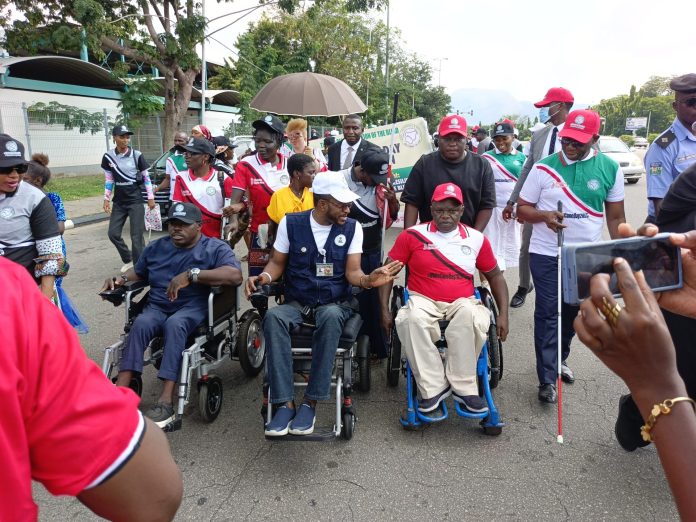
Abuja, Nigeria — In a powerful display of unity and determination, hundreds of blind persons under the auspices of the Nigeria Association of the Blind (NAB) took to the streets of Abuja on Wednesday, October 15, 2025, to commemorate the International White Cane and Safety Day. The awareness march, which began at the Eagle Square, culminated at the National Women Development Center, where participants, advocates, and dignitaries gathered to celebrate the resilience and achievements of blind individuals across Nigeria.

The event drew the presence of several high-profile personalities who have continued to champion disability inclusion in Nigeria. Among them were the Executive Secretary of the National Commission for Persons with Disabilities (NCPWD), Chief Dr. Ayuba Gufwan; the Director General of the Nigerian Copyright Commission (NCC), Dr. John O. Asein; and the Senior Special Assistant to the President on Special Needs and Equal Opportunities, Hon. Mohammed Abba Isa, among others.

A Symbol of Strength and Freedom

The White Cane — a globally recognized symbol of independence for persons who are blind or visually impaired — was at the heart of the celebration. For millions around the world, the white cane represents more than mobility; it embodies freedom, confidence, and self-determination. It allows blind individuals to move independently, explore their environments, and live with dignity.

In his address, the National President of the Nigeria Association of the Blind, Comrade Stanley Nnamdi Onyebuchi, described the day as one of deep significance in the lives of blind people worldwide. He noted that this year’s theme, “Vision Beyond Sight — Independence, Resilience, and Achievement of the Blind,” underscores the remarkable ability of blind individuals to envision possibilities beyond their physical limitations.

“This day reminds us that blindness is not the absence of vision,” Onyebuchi said passionately. “It is a different kind of strength — a strength born from resilience, faith, and the determination to live fully and meaningfully.”

Challenges Still Persist

While celebrating achievements, the event also provided a sobering reminder of the barriers that continue to hinder the inclusion and independence of blind individuals in Nigeria.

Comrade Onyebuchi lamented that, despite progress in disability advocacy, blind persons still face widespread discrimination, stigma, and exclusion. Public infrastructures remain largely inaccessible, braille signage is scarce, and opportunities for education and employment are limited.

“Inaccessible buildings, poor road designs, and the absence of assistive technologies make life difficult for many blind Nigerians,” he stated. “We must work collectively to remove these barriers so that every blind person can live, work, and participate fully in society.”

A Call for Inclusive Action

The Nigeria Association of the Blind used the occasion to make a strong call to action to all levels of government — federal, state, and local — to prioritize accessibility and inclusivity in all public spaces and policies. The association emphasized the need for inclusive education, accessible transportation systems, and the integration of assistive technology into schools and workplaces.

Beyond government intervention, the group appealed to religious leaders, community organizations, and the public to champion positive attitudes towards persons with disabilities. “We must build a society where blindness is not a barrier but a difference that deserves understanding and respect,” Onyebuchi added.

Recognizing Champions of Inclusion

The event was also an occasion to express gratitude to those working tirelessly to advance disability inclusion in Nigeria. The association commended President Bola Ahmed Tinubu for his demonstrated commitment to empowering persons with disabilities and ensuring that inclusion remains a key part of his administration’s social development agenda.

Appreciation also went to Dr. Ayuba Gufwan of the NCPWD and Hon. Mohammed Abba Isa, Senior Special Assistant to the President on Special Needs and Equal Opportunities, for their unrelenting advocacy and programs that continue to open doors for persons with disabilities.

In addition, NAB recognized the Disability Rights Fund (DRF) for its generous support and sponsorship of this year’s celebration, describing the organization as a “pillar of progress” for disability advocacy in Nigeria.

Celebrating Resilience, Hope, and Partnership

At the National Women Development Center — the final stop of the awareness march — the atmosphere was electric. Guests were treated to inspiring speeches, entertainment, and cultural performances by members of the blind community.

The event also featured the donation of educational and assistive learning materials by the National Commission for Persons with Disabilities (NCPWD), a gesture that was warmly received by participants. Several individuals and organizations were honored with awards of recognition for their unwavering support of the blind community and their contributions to promoting disability inclusion.

A Vision Beyond Sight

As the celebration came to a close, the message was clear — blindness does not define ability. Instead, it highlights the power of resilience, the beauty of independence, and the importance of inclusive governance.

Comrade Onyebuchi summed it up perfectly:

“The white cane may signify blindness, but it also represents vision — a vision of equality, opportunity, and dignity. We, the blind, see a world where no one is left behind.”

The 2025 International White Cane and Safety Day celebration by the Nigeria Association of the Blind was not just a commemoration; it was a movement for change, a call for equity, and a celebration of human potential beyond sight.

NCPWD, NAB Lead National Commemoration of International White Cane Day in Abuja

0

A March for Dignity, Independence, and Inclusion

The Federal Capital Territory came alive on Tuesday, October 15, 2025, as the National Commission for Persons with Disabilities (NCPWD), in collaboration with the Nigerian Association of the Blind (NAB), led hundreds of persons with visual impairments, advocates, and allies in a symbolic march to commemorate International White Cane Day.

The annual event, celebrated globally since 1964, is dedicated to promoting the independence, dignity, and mobility of persons with visual impairments. It serves as a powerful reminder of society’s collective responsibility to ensure inclusion, accessibility, and respect for the rights of all persons with disabilities.

This year’s celebration in Abuja began with a sensitization walk from Eagle Square to the National Women Development Centre, a powerful display of solidarity and advocacy. With participants donning white canes and placards bearing messages of inclusion, the walk drew attention from residents and commuters — igniting conversations about accessibility, empathy, and equality.

Delivering his address at the event, the Executive Secretary of the National Commission for Persons with Disabilities, Hon. Ayuba Gufwan, described the white cane as more than just a mobility tool, but “a symbol of dignity, freedom, and self-reliance.”

“The white cane reminds us of the responsibility we all share in ensuring that persons with visual impairments are empowered to navigate society safely and confidently,” Hon. Gufwan said. “As a Commission, we remain committed to advancing this vision through inclusive education programs that enable learners with visual impairments to access quality schooling. We are also working with stakeholders to ensure the availability of assistive technologies and accessible learning materials nationwide.”

Hon. Gufwan further emphasized the NCPWD’s ongoing collaborations with federal and state governments to promote inclusive infrastructure, ensuring that public buildings, transportation systems, and digital platforms are accessible to all citizens. He also noted that the Commission is investing in economic empowerment initiatives to enable persons with visual impairments to participate fully in the workforce and live independently.

“On this White Cane Day, let us reaffirm our shared commitment to breaking down barriers, promoting accessibility, and ensuring that persons with visual impairments live with independence, dignity, and equal opportunity,” he concluded.

Representing the Minister of State for Humanitarian Affairs and Poverty Alleviation, Hon. Yusuf Tanko Sununu, was Mr. Andrew Amos, Assistant Chief Social Welfare Officer, who reaffirmed the Ministry’s dedication to inclusive governance. He highlighted the government’s ongoing efforts to ensure that “no one is left behind,” pledging continued collaboration with NCPWD and the Nigerian Association of the Blind to strengthen policies and programs that protect the rights of persons with disabilities across Nigeria.

In his remarks, Mr. Theophilus Odaodu, representative of the Disability Rights Fund (DRF), emphasized that advocacy must remain continuous and intentional. He noted that White Cane Day is a strong reminder of the global commitment to accessibility and empowerment for all persons with disabilities, particularly those with visual impairments.

The National President of the Nigerian Association of the Blind, Mr. Onyebuchi Stanley Nnamdi, used the occasion to call on government at all levels to enforce White Cane Laws, which mandate motorists to yield to pedestrians using white canes. He also made a passionate appeal to the Minister of the Federal Capital Territory to support the Association in securing a national secretariat in Abuja, to enhance the efficiency of its operations and advocacy efforts.

One of the most inspiring highlights of the celebration was the presentation of assistive devices to empower persons with visual impairments across the country. The items, presented by Mr. Lawrence Idemudia, Director of Social Integration at NCPWD, included Braille machines and paper, Orbit readers, talking calculators, guide canes, Braille and talking watches, slates and styluses, and typewriters, among others. These tools are designed to enhance accessibility, learning, and independence for persons with visual impairments.

The event culminated in a heartwarming awards ceremony, where individuals and organizations were recognized for their exceptional contributions to disability inclusion and their unwavering support for the Nigerian Association of the Blind.

As the white canes swayed in unison under the Abuja sun, the message was clear — a more inclusive Nigeria is possible when every citizen is empowered to move with dignity and confidence.

The 2025 International White Cane Day celebration not only honored the resilience of persons with visual impairments but also reignited a national conversation about building an inclusive society — one where accessibility is not a privilege but a right.

Gufwan Applauds NBA Lawyers with Disabilities Forum for Championing Rule of Law and Inclusive Justice in Nigeria

0

Calls for Stronger Implementation of Disability Act and Institutional Support for Inclusive Legal Advocacy
Abuja, Nigeria | October 14, 2025

In a move that underscores Nigeria’s growing commitment to disability inclusion and equal justice, the Executive Secretary of the National Commission for Persons with Disabilities (NCPWD), Hon. Ayuba Gufwan, has praised the Nigerian Bar Association (NBA) Lawyers with Disabilities Forum for their outstanding contribution to advancing the rule of law and promoting the rights of persons with disabilities across the country.

Hon. Gufwan gave the commendation when members of the Forum paid a courtesy visit to the NCPWD headquarters in Abuja, describing the group as a “shining example of resilience, professionalism, and inclusive leadership” within Nigeria’s legal community.

“The Lawyers with Disabilities Forum has proven that disability is not inability,” Gufwan stated.
“You have demonstrated through your work that persons with disabilities are not just educated and competent, but also passionate advocates for justice and good governance. Your contribution to Nigeria’s legal and democratic processes cannot be overstated.”

A Renewed Push for Legislative Reform and Implementation

The NCPWD boss emphasized the urgent need for review and possible amendments to the Discrimination Against Persons with Disabilities (Prohibition) Act, 2018, noting that while the law remains a milestone in Nigeria’s human rights journey, evolving realities demand updates to strengthen its effectiveness.

According to Gufwan, only 23 out of 36 states have so far domesticated the Disability Act, leaving millions of Nigerians with disabilities unprotected under state laws. He also highlighted persistent challenges such as poor enforcementyt mechanisms, low awareness, and inadequate funding as barriers to achieving the full objectives of the Act.

“It is time for Nigeria to match legislative intent with practical implementation,” he said.
“The Disability Act must not just exist on paper — it must translate into real protection, accessibility, and empowerment for persons with disabilities, from the federal level down to the communities.”

He called on development partners, civil society organizations, non-governmental groups, and government institutions to strengthen collaboration with the Commission to improve institutional capacity and ensure sustainable funding for disability-inclusive programs, especially at the grassroots.

NBA Lawyers with Disabilities Forum Reaffirms Partnership

Speaking on behalf of the delegation, Barrister Sani Moyi, representing the NBA Lawyers with Disabilities Forum, reaffirmed the Forum’s commitment to working hand in hand with the NCPWD to ensure that the provisions of the Disability Act are implemented across the federation.

He revealed that the Forum is already engaging in strategic advocacy and legal support initiatives aimed at protecting the rights of persons with disabilities, and called for stronger institutional backing from the Commission — particularly to empower lawyers with disabilities to participate effectively in the forthcoming NBA Annual National Conference.

“We are proud to be partners in progress with the NCPWD,” Moyi said.
“Our mission aligns perfectly with the Commission’s mandate — to ensure that the rights and dignity of persons with disabilities are protected and promoted through the full implementation of the Disability Law.”

NCPWD Strengthens Enforcement Drive

Also speaking during the event, Barrister Ikem Uchegbulam, Director of Compliance and Enforcement at the NCPWD, reaffirmed the Commission’s determination to ensure strict compliance with the provisions of the Disability Act, warning that organizations and institutions that continue to ignore accessibility standards and inclusion policies will face sanctions.

“The Commission is intensifying its compliance monitoring across sectors. The time has come for full compliance — not selective adherence,” he said.
“Nigeria cannot claim to be inclusive while denying access to justice, employment, education, or infrastructure for millions of its citizens with disabilities.”

Building a Culture of Inclusive Justice

The visit, observers say, marks a significant moment in Nigeria’s disability rights movement — symbolizing a strong partnership between the legal community and the NCPWD in advancing equality before the law. The NBA Lawyers with Disabilities Forum has become a formidable voice in advocating for accessible justice, non-discriminatory employment, and institutional reforms that ensure persons with disabilities can practice law and participate fully in the judicial system.

Under the leadership of Hon. Ayuba Gufwan, the NCPWD has continued to champion strategic collaborations aimed at bridging policy gaps, enhancing accessibility, and ensuring that persons with disabilities are integral to Nigeria’s governance and development agenda.

The Executive Secretary reaffirmed that the Commission would continue to engage legal professionals, state governments, and development partners in driving a rights-based approach to inclusion, rooted in equity, participation, and accountability.

“The rule of law is the foundation of inclusion,” Gufwan declared.
“When the justice system recognizes the value and capacity of persons with disabilities, the whole nation becomes stronger. Together, we can build a Nigeria where every citizen, regardless of ability, enjoys equal access to justice, opportunity, and dignity.”

The courtesy visit ended on a note of optimism, as both institutions pledged to sustain their collaboration toward achieving a truly inclusive legal and social environment for all Nigerians.

Global Partners Rally Behind NCPWD Ahead of 2025 National Disability Summit

0

A New Dawn for Inclusive Development in Nigeria

By Agbo Christian Obiora

Abuja, Nigeria — October 14, 2025

A powerful wave of support is surging toward the forthcoming Nigeria National Disability Summit (NNDS) 2025, as international development partners, government institutions, and civil society organizations unite behind the National Commission for Persons with Disabilities (NCPWD) to champion the cause of inclusive development in Nigeria.

The Summit, themed “Inclusive Nigeria: Empowering Persons with Disabilities for Sustainable Development,” is scheduled to hold from October 29 to 30, 2025, in Abuja, and is fast shaping up to become a landmark national event that will redefine Nigeria’s approach to disability inclusion and participatory governance.

Organized by the National Commission for Persons with Disabilities (NCPWD) in collaboration with the Federal Ministry of Humanitarian Affairs and Poverty Reduction, the high-profile Summit is being supported by global development institutions including the German and Swiss Governments, the European Union (EU) through the Deutsche Gesellschaft für Internationale Zusammenarbeit (GIZ) GmbH, the International IDEA Rule of Law and Anti-Corruption (RoLAC) Programme, and Sightsavers.

A Collective Push for Inclusive Governance

The 2025 National Disability Summit will bring together a broad coalition of stakeholders — from government agencies, private sector leaders, and international donors, to civil society organizations and Organizations of Persons with Disabilities (OPDs). Together, they aim to chart a strategic roadmap toward a more inclusive, equitable, and accessible Nigeria.

According to the NCPWD, the event will deepen national dialogue on inclusive policymaking, evaluate Nigeria’s progress on commitments made at the Global Disability Summit (GDS), and develop actionable strategies for advancing participation and accessibility across all sectors — from education, health, and employment to digital innovation and infrastructure development.

Speaking ahead of the event, Hon. Ayuba Burki Gufwan, Executive Secretary of the NCPWD, emphasized that the Summit would serve as a national rallying point to dismantle barriers that hinder persons with disabilities from fully contributing to national growth.

“The National Disability Summit is a call to action for all stakeholders to come together and address the challenges that hinder the full participation of persons with disabilities,” Hon. Gufwan stated.

“It presents a renewed opportunity to align our collective efforts toward building a truly inclusive Nigeria — one where every citizen, regardless of ability, can thrive and contribute meaningfully to national development.”

Strengthening the Legal and Policy Framework

Since the enactment of the Discrimination Against Persons with Disabilities (Prohibition) Act, 2018, Nigeria has made commendable legislative and institutional progress. Yet, implementation remains inconsistent — with only 23 states having domesticated the law and 15 states establishing functional disability agencies.

To bridge these gaps and ensure more coordinated implementation, the 2025 Summit will witness the official launch of the National Forum of Disability Commissions and Agencies (NAFDCA) — a groundbreaking intergovernmental coordination platform designed to strengthen collaboration across federal and state disability structures.

Hon. Gufwan disclosed that the NCPWD envisions making the Summit an annual national event, reflecting the growing national and international interest in Nigeria’s disability inclusion agenda.

“With the rising concerns around accessibility, education, health, and economic inclusion, this Summit seeks to identify sustainable solutions that will improve the quality of life for millions of Nigerians with disabilities,” he said.

Development Partners Endorse the Vision

Development partners have also expressed resounding support for the initiative, describing the Summit as a defining moment for Nigeria’s commitment to inclusive development.

Dr. Markus Wagner, Country Director of GIZ Nigeria, commended the NCPWD for taking leadership in advancing the disability inclusion discourse.

“This forthcoming Summit should be seen as more than just a gathering,” he said.

“It is an essential step towards ensuring that persons with disabilities can actively participate in Nigeria’s development. Inclusion is not charity; it is justice and opportunity.”

On her part, Professor Joy Shuaibu, Country Director of Sightsavers Nigeria, lauded the choice of the Summit’s theme, saying it aligns with Sightsavers’ long-term mission of equal participation.

“The choice of the theme ‘Inclusive Nigeria’ is very apt and aligns with Sightsavers’ vision of a society where all individuals, including persons with disabilities, can participate fully and equally in matters of health, education, leadership, and livelihood,” she remarked.

Also lending her voice, the Project Manager, Access to Justice, under the International IDEA Rule of Law and Anti-Corruption (RoLAC) Programme, underscored the importance of collective efforts in transforming policy commitments into tangible results.

“Our partnership with the NCPWD reflects our shared belief that inclusion must be embedded in governance systems, policies, and institutions. The 2025 Summit offers a unique opportunity to translate commitments into measurable outcomes,” she noted.

Nigeria’s Disability Landscape — Progress and Promise

With an estimated 35.5 million persons with disabilities, Nigeria stands at a critical juncture in its journey toward full inclusion. While legislative frameworks have been established, persons with disabilities continue to face systemic barriers in accessing education, employment, healthcare, and political participation.

The Summit will serve as a convergence point for reviewing existing gaps and fostering collaboration among key actors to unlock economic and social opportunities for persons with disabilities nationwide.

Planned activities include interactive panel discussions, thematic workshops, and exhibitions showcasing innovative technologies and inclusive solutions designed to enhance accessibility and empowerment.

Looking Ahead: Building a Truly Inclusive Nigeria

For many observers, the National Disability Summit 2025 symbolizes more than a dialogue — it represents a movement toward shared accountability and collective action. By bringing together government, development partners, and the disability community under one roof, the Summit is set to inspire policy reforms and drive national consciousness on inclusion.

As Hon. Gufwan succinctly put it:

“The time has come for Nigeria to move beyond promises and frameworks — toward real, measurable change that ensures no one is left behind.”

The National Disability Summit (NNDS) 2025 will take place in Abuja from October 29 to 30, 2025, between 9:00 a.m. and 4:00 p.m. daily.

With growing national attention and international endorsement, all eyes are now on the NCPWD as it leads Nigeria into what could become a historic turning point in the country’s journey toward equality, accessibility, and sustainable inclusion.

The Girl I Am, The Change I Lead — Girls with and without Disabilities Champion Inclusion on International Day of the Girl Child 2025

0

By The Qualitative Magazine News Desk | October 12, 2025

Girls Lead Change, Inspire Hope, and Redefine Leadership

In a powerful celebration of resilience, inclusion, and empowerment, the 2025 International Day of the Girl Child was marked with an inspiring virtual webinar that brought together girls and women with and without disabilities, advocates, and changemakers from across Nigeria and beyond.

The event, held on Saturday, October 11, 2025, via Google Meet, carried the global theme “The Girl I Am, The Change I Lead: Girls on the Frontline of Crisis” and the sub-theme “Inclusive Voices, Stronger Futures: Girls with and without Disabilities Leading Change.”

Organized by the Lois & Innocent Institute (LII) in collaboration with the Cedar Seed Foundation (CSF) and the Network of Women with Disabilities (NWD), the event celebrated girlhood, leadership, and inclusion while calling for sustained advocacy and gender equality for all girls—especially those living with disabilities.

A Night of Powerful Voices and Purposeful Advocacy

The session began at 7:30 PM with Mr. Shedrack Danladi as the moderator, setting a lively and engaging tone. Following an uplifting opening prayer by Ms. Janet Alabade, the convener and founder of LII, Madam Lois Auta, delivered the Opening Address and Welcome Remark.

In her message, she emphasized the urgency of addressing the barriers faced by girls, particularly in crisis and humanitarian settings, and the need to create platforms for their empowerment.

“We must continue to amplify the voices of girls, both with and without disabilities, ensuring they are not just seen but heard and empowered to lead change,” Auta affirmed.

She reaffirmed LII’s commitment—alongside partners—to promote inclusive leadership and create equal opportunities for every girl to thrive.

Keynote Address: Building Inclusive Futures through Education and Leadership

The highlight of the evening was the keynote presentation by Mrs. Hannatu Ishaya, who spoke passionately on “Inclusive Voices, Stronger Futures: Girls with and without Disabilities Leading Change.”

Her presentation emphasized the power of inclusive education, mentorship, and supportive communities in shaping confident, capable, and visionary girls.

“Inclusion is not charity; it is justice,” Mrs. Ishaya stated. “When we invest in girls, we invest in the future. And when we include girls with disabilities, we strengthen our collective progress.”

Her remarks resonated deeply with participants, sparking reflections on how communities can better support the dreams and aspirations of girls with disabilities.

Words of Encouragement and Hope

Adding emotional depth to the event, Madam Rose Daniel shared a heartfelt message of encouragement, reminding every girl to see her potential and never give up on her dreams.

“Every girl’s voice matters,” she declared. “Together, we can create a world where no girl is silenced, ignored, or left behind.”

The session ended on a grateful note as Mr. Ola offered the Vote of Thanks, Closing Remarks, and Prayer, appreciating all speakers, attendees, and the organizing team for their commitment and passion.

Key Takeaways from the Celebration

✅ Empowerment and Inclusion: Equal opportunities must be ensured for girls with and without disabilities to lead and influence change.
✅ Leadership Beyond Barriers: Real-life stories showed how girls are breaking cultural and systemic barriers to drive positive change.
✅ Sustaining Advocacy: The need for ongoing advocacy for inclusive education, healthcare, and leadership participation was strongly emphasized.
✅ Unity and Collaboration: Speakers highlighted the importance of partnership between civil society, government, and community organizations to amplify girls’ voices.

An Inclusive Digital Gathering of Changemakers

The webinar witnessed active engagement, with participants sharing stories, experiences, and actionable ideas for inclusion. The virtual format made the event more accessible, enabling girls and advocates from various regions to join.

Feedback from participants was overwhelmingly positive, describing the event as “inspiring, educational, and transformative.” It also helped strengthen the growing network of advocates dedicated to advancing the rights and leadership of girls—especially those with disabilities.

Organizers and Partners

Lois & Innocent Institute (LII)
Cedar Seed Foundation (CSF)
Network of Women with Disabilities (NWD)

A Shared Vision for a Brighter, Inclusive Future

The 2025 International Day of the Girl Child Celebration was more than a commemoration—it was a clarion call for inclusion and empowerment. It spotlighted the power of girls to lead change, challenge inequality, and redefine leadership across all spaces.

As the program concluded, one powerful message stood out: when we empower girls, we empower humanity.

The organizers expressed deep gratitude to all speakers, guests, and participants for making the event impactful, reaffirming their shared vision to ensure that no girl is left behind in shaping a more inclusive, equitable, and empowered world.

Abia Leads the Way in Disability Inclusion: CCD Hails Gov. Alex Otti on Third Anniversary of the Abia State Disability Law

0

By The Qualitative Magazine News Desk | October 13, 2025 | Umuahia, Abia State

In a heartfelt commendation, the Centre for Citizens with Disabilities (CCD) has celebrated the third anniversary of the Abia State Disability Law, lauding Governor Dr. Alex Chioma Otti for his visionary leadership and deliberate efforts toward building an inclusive Abia where Persons with Disabilities (PWDs) are empowered, represented, and respected.

The organization described the passage and implementation of the Abia State Disability Law as a “landmark achievement” that continues to inspire disability inclusion efforts across Nigeria. According to CCD, Abia State under Governor Otti has shown unprecedented commitment to ensuring that PWDs are not just recognized in law but also integrated meaningfully into the social, economic, and political fabric of the state.

A Milestone for Disability Rights in Abia

In its official statement signed by Mr. Godwin Unumeri, Acting Director of CCD, the group noted that the passage of the Abia State Disability Act remains one of the most progressive state-level disability legislations in Nigeria. The law, according to CCD, laid a solid foundation for advancing equality, accessibility, and inclusion — values that Governor Otti’s administration has actively translated into action.

CCD emphasized that while many states still struggle to operationalize their disability laws, Abia State has moved beyond mere legislation to practical implementation and institutional development. The state’s inclusive policies have significantly improved the lives of thousands of persons with disabilities, creating an enabling environment for them to thrive.

Inclusive Appointments and Empowerment Initiatives

One of the most notable achievements highlighted by CCD is the strategic inclusion of PWDs in key government positions, a move that ensures their voices are represented at decision-making tables. The appointment of Mr. David O. Anyaele, one of Nigeria’s most prominent disability rights advocates, as the Special Assistant to the Governor on Persons with Disabilities, was described as a “bold and visionary decision” that has greatly strengthened disability advocacy and inclusion in the state.

“The inclusion of PWDs in leadership roles clearly shows Governor Otti’s belief in the principle of ‘nothing about us without us’,” CCD stated, emphasizing that this model of governance should serve as a blueprint for other states across the federation.

Establishment of the Abia State Disability Commission

Another milestone celebrated by CCD is the prompt establishment of the Abia State Disability Commission, with Hon. David Obinna Anyaele appointed as its pioneer Chairman. The Commission, which includes other notable PWD leaders such as Mr. Stanley Onyebuchi, National President of the Nigeria Association of the Blind; Ms. Ijeoma Okoronkwo, a leader of persons with albinism; Mr. Emenike Amakwe; and the late Mrs. Chinenye Ogboso, was described as a testament to the Governor’s unwavering commitment to inclusive governance.

CCD praised the Commission’s work in advancing the rights and welfare of persons with disabilities, calling it “a shining example of how state governments can institutionalize inclusion and accountability.”

Regional Leadership Through NCPWD Zonal Office

The CCD also commended Governor Otti for his approval of the National Commission for Persons with Disabilities (NCPWD) South East Zonal Office in Umuahia. This strategic development not only strengthens Abia’s role as a regional hub for disability inclusion but also provides a platform for collaboration between state and federal institutions working to enhance the welfare of PWDs in Nigeria.

“By hosting the NCPWD South East Zonal Office, Abia State has positioned itself as a leader in advancing inclusive governance in the region,” the organization noted.

Call for Sustainability and Replication Across Nigeria

While applauding the remarkable progress made, CCD urged the Governor to sustain and expand these achievements by ensuring continuous budgetary support for the Disability Commission and mainstreaming accessibility standards across all ministries, departments, and agencies in the state.

The organization also called on other state governors to emulate Governor Otti’s example by establishing and adequately funding their own disability commissions. According to CCD, the promotion of inclusive governance, para-sports, and disability-responsive budgeting can unlock the full potential of PWDs and contribute to Nigeria’s overall development.

CCD’s Role in Advancing Disability Rights

Founded as one of Nigeria’s foremost advocacy organizations for PWDs, the Centre for Citizens with Disabilities (CCD) has been at the forefront of promoting and protecting the rights of persons with disabilities across the country. Over the years, CCD has successfully led campaigns for the passage and assent of critical legislations such as the Lagos State Special Peoples’ Law (2010), the Discrimination Against Persons with Disabilities (Prohibition) Act (2018), and the Abia State Commission for Disabled Persons Law (2022).

Beyond legislation, CCD continues to implement transformative projects in Abia State and across Nigeria. These include initiatives focused on disability-inclusive climate change adaptation, inclusive benefit-sharing in the Niger Delta, and disability-responsive environmental governance—ensuring that PWDs are not left behind in national development and climate action efforts.

A Beacon of Hope for Inclusion

As CCD celebrates this milestone, the organization reaffirmed its readiness to continue partnering with the Abia State Government to deepen disability inclusion and build a society where every citizen, regardless of ability, can thrive and contribute meaningfully.

Abia State’s journey toward inclusion, spearheaded by Governor Alex Otti, is a model of progressive governance, and as CCD aptly concluded, “It is a reminder that when leaders commit to inclusion, they empower not just a group, but an entire society.”

Follow the The Qualitative Magazine channel on WhatsApp: https://whatsapp.com/channel/0029VanfIB50wajpjGi3JJ1G