Sunday, December 21, 2025
Home Blog Page 537

Help save my life, a young amputee cries out

0

By Chris Agbo

Ojo Yewande Elizabeth is a beautiful young amputee, her left leg was amputated since 1999 when she had an attack which affected her left leg, she was rushed to a general hospital but she was rejected. She was taken to a private hospital by her mother at Shomolu but by then, the leg was already decaying, she was admitted for almost 3years after several operations, the leg didn’t heal then the doctor advised that the leg be amputated to save her life because the pain was becoming unbearable. That was how she lost her left leg.

After the amputation, her mother did all she could to raise money and get her a prosthetic limb to enable her have her life back. They sold their properties to raise 1.2 million naira to buy high quality prosthetic limb but unfortunately, they were duped, someone collected their money and they never saw him again and the money. Due to this incident, they have no other choice than for her to resort to local artificial limbs which she has used for 18 years because of no money, but the one she is using for over 3 years now, the artificial limb has gone so damaged and it is also out of repair. Yewande who is a graduate of Banking&Finance have used several local artificial limbs for the past 20years of her life which the life span of these local artificial limbs is very short.  

In view of the above challenges, Yewande is in need of a new and imported prosthetic and the cost now is 2.8million naira. She is appealing to well-meaning Nigerians to assist her financially in order for her to walk again. All her activities have been crippled for over 6months because she is confined in one place and she want to be productivity, get busy daily and live a positive life.

Please let’s reach out to Yewande to help her have her life back

Reach out to her directly on 08131083205,

Email: ojoyewande45@gmail.com

Donate to support at: Ojo Yewande Elizabeth, 0157951083, GTbank.

No amount is too small, lets donate to assist a sister.

OFF-CYCLE ELECTIONS: CCD expresses dismay over Police claim that fake police officers overpowered their 66,241 personnel, call for probe.

0

The Executive Director, Center for Citizens with Disabilities (CCD) David Anyaele expressed dismay over the description accredited to the leadership of the Nigerian Police that fake Police Officers overpowered 66,241 of its personnel in the 2019 Kogi and Bayelsa States Governorship Elections.

In a statement released to the press on Wednesday, this renowned disability rights advocate frowned at the huge resources spent on the Nigerian Police with respect to this election, the most expensive on the face of the Earth. “This description of the 2019 Kogi and Bayelsa State elections day security failure by the Nigerian Police is an example of how not to bring shame to a country by its security agency.

Even though, there was evidence prior to the election day that criminally minded politicians were planning to unleash voters with violence, the position of the Nigerian Police indirectly expresses irresponsibility on their part.

“There is fear now in Nigeria around marginalized population’s participation in elections, especially citizens with disabilities, due to insecurity, and cost of budgeting for security as a Party Candidate.

Therefore, The Nigerian Police should tell Nigerians the justification of the election security vote provided by the Nigeria National Assembly for effective and efficient election day security for the 2019 Nov. 16, Kogi and Bayelsa Governorship Elections.

He called for immediate identification and disarming of these fake Police personnel and mopping of all illegal heavy and light arms in the hands of criminal minded politicians and their thugs to reduce further harm to the society.

He suggested a total review of the Standard Operation guidelines and rules for security deployment during elections, in particular, the role of Inter Agency Committee on Election Security as the 2019 Kogi and Bayelsa States Governorship Election day security is now under question.

Lastly he called for a thorough probe of the Officers deployed to various Local Government Areas where violence took place during the elections.

KOGI ELECTION: Access Nigeria reports gains and losses on electoral accessibility for persons with disabilities

0

Grace Jerry, Executive Director, Inclusive Friends Association and the Convener of the Access Nigeria Campaign on Monday 18th November, 2019 released their report on the observation at the Kogi Election. Access Nigeria is one of the major organizations that observed the off-cycle elections to ascertain the inclusion of persons with disabilities in line with INEC framework on the participation of persons with disabilities in elections.

SEE THE FULL REPORT

Lokoja, Kogi State – The Access Nigeria: Disability Votes Matter Campaign is a disability rights movement led by and for Nigeria’s 28.5 million persons with disabilities (PWDs). The goal of the Campaign is to increase the participation of PWDs in Nigeria’s political and electoral processes by reducing physical barriers and stigma that make it difficult or impossible for PWDs to participate in elections.

To better understand the challenges PWDs face, the Access Nigeria Campaign collected data through Nigeria’s first ever-polling unit accessibility audits. These historical audits, conducted during the 2016 governorship elections in Edo and Ondo States, exposed the widespread barriers experienced by PWDs on Election Day. Topping the list of challenges included lack of available election materials in usable formats for PWDs and polling units without ramps or with physical barriers to entry, with reports showing that 65 percent of the polling units in Edo and 77 percent in Ondo were located in places that were inaccessible for PWDs. Findings from the 2016 Edo and Ondo audits provided crucial data for advocacy to the Independent National Electoral Commission (INEC), resulting in changes to the way elections are run that is already impacting the lives of PWDs across the nation.

 Polling Unit Accessibility Audit Methodology 

For the governorship election in Kogi State, the Access Nigeria Campaign deployed a sample based election observation to measure INEC’s compliance to section 56 (1) and (2) of the Electoral Act 2010 (as Amended) and Articles 9 and 29 of the CRPD which legally guarantee the rights of PWDs to participate in political and public life. This accessibility audit represents the largest polling unit audit conducted by PWD observers in Nigeria’s history. On November 16, 200 carefully selected, trained and accredited PWD observers documented physical accessibility of polling units for PWD voters, access to Election Day materials, and the participation of PWDs in Election Day processes. Observers deployed to 200 polling units covering Kogi East (95), Kogi Central (61), and Kogi West (44) and answered 31 questions on their Election Day checklist before sending a total of five (5) coded text messages to the Access Nigeria database system. Throughout the course of the observation, Access Nigeria observers sent approximately 1,000 text messages equating to 6,200 individual pieces of data. By utilizing PWDs as observers, the audit was conducted through a disability lens, which provides credibility for the data collected.

Accessibility Audit Findings 

From the sampled 200 polling units, Access Nigeria observers successfully sent reports from 195 polling units, representing a 98 percent response rate. The findings outlined below accurately capture accessible voting or lack thereof, and availability of Election Day materials in accessible formats for voters with disabilities in Kogi State.

Access to Polling Units

●       Findings showed that 55 percent of polling units in Kogi state were located in public open spaces, while 45 percent were located in public buildings. Of those polling units including schools, bus stops, markets, courts, town hall, health centres, etc., 54 percent were found to be inaccessible for voters with disabilities. Lack of accessible spaces and buildings have larger implications beyond elections. For example, if schools are not accessible for voters, then they are not accessible for students with disabilities.

●       Observers reported that 51 percent of routes leading to the polling units were accessible due to uneven surfaces.

●       Ramps and handrails were not available for use by voters with disabilities at 90 percent of the routes to sample polling units. These overall accessibility challenges raises the larger question on inclusive infrastructure development.    

Internal Polling Unit Layout 

●       At 47 percent of the observed polling units, reports show that it was difficult for voters with disabilities to enter the polling units and vote. Similarly, at 48 percent of polling units, the layout was difficult for voters with disabilities to participate in accreditation and voting. 

●       Observers reported that 93 percent of sample polling units did not include ramps and handrails for use by voters with disabilities.

  Polling Unit Materials

●       At 50 percent of sample polling units, the height of the ballot box was not suitable for voters with disabilities, particularly for those who use wheelchairs.

●       Form EC 40H was available at 77 percent of sample polling units to collect data of voters with disabilities who voted on Election Day.

●       Observers reported that Braille ballot guides were not deployed to 66 percent of sample polling units and magnifying glasses were also not available at 82 percent of sample polling units.

●       The INEC form EC 30E PWD Election Day written instructions were posted at 60 percent of sample polling units.

Election Day Procedures

●       Voters with disabilities were recorded on INEC’s form EC 40H at 57 percent of sample polling units.

●       Ballot boxes at 53 percent of sample polling units were accessible to voters with disabilities to independently cast their ballots.

●       At 63 percent of sample polling units, voters with visible disabilities were given priority to vote upon immediate arrival at the polling unit.

●       Observers reported that Braille ballot guides were used at 55 percent of the polling units where the guides were deployed.

Recommendations

Based on the findings of the polling unit accessibility audit, the Access Nigeria: Disability Votes Matter Campaign makes the following recommendations to ensure voters with disabilities can continue to participate in Nigeria’s political and electoral processes:   

Independent National Electoral Commission (INEC)

●       IFA calls on INEC to relocate inaccessible polling units and create new ones that are accessible and safe to voters with disabilities.

●       INEC should categorize the Braille ballot guide as a sensitive material to ensure timely and effective deployment for all national and state elections.

●       INEC should immediately amend its Continuous Voters Registration (CVR) forms to include status and type of disability to enable the Commission to collect data of PWDs during CVR. To compliment this effort, INEC should audit the utilization of form EC 40H by presiding officers on Election Day to collect data of voters with disabilities.

●       INEC should strengthen training of regular and ad hoc staff to effectively administer accessible Election Day materials and accommodations for voters with disabilities.

●       INEC should ensure that voting cubicles are designed to enable voters with disabilities to cast their ballots confidentially as well as ensure ballot boxes are placed in areas that allow voters with disabilities to vote independently. 

●       INEC should continue to engage and consult with the disability community, including IFA, to identify areas to be improved for more inclusive electoral processes.

●       INEC, the Police, and other security agencies under the platform of the Inter-Agency Consultative Committee on Election Security (ICCES) should develop and implement a clear plan for the protection of PWDs during elections in consultation with the disability community.

 The Executive at the Federal and State Levels

●        IFA calls on federal and state governments to work with various agencies to ensure that public buildings are built and renovated by the 2023 deadline to accommodate PWDs in their daily life in accordance with the Discrimination Against Persons with Disabilities (Prohibition) Act of 2018.

●        The executive, at all levels, should strengthen existing building codes and enforce them to guarantee accessibility for PWDs during and beyond elections. 

 National and State Assemblies

●       The National Assembly should consider the amendment of section 56 (2) of the 2010 Electoral Act to make the provision of accessible election materials for voters with disabilities mandatory in all elections.

●       The National Assembly should ensure that the executive implements specific sections of the Discrimination Against Persons with Disability Act 2018 through effective legislative oversight.

●       The National Assembly should also perform its oversight functions of INEC to ensure that all measures for accessibility are implemented in line with the Discrimination Against Persons with Disability Act 2018.  

 
The Nigerian Media

●       The media should make deliberate efforts to conduct voter education that compliments the efforts of Organizations of Persons with Disabilities in promoting the participation of PWDs in Nigeria’s electoral and political processes.

●       Media executives should consider disability inclusion in its broadcast and news production to promote inclusive practices in Nigeria including the consistent utilization of sign language interpretation.

Elections Focused Civil Society

●       IFA commends the work of all organizations working toward safer, more inclusive free and fair elections in Nigeria. IFA calls on these organizations to continue to engage with the disability community to ensure their efforts are inclusive and provide opportunities for PWDs to contribute to their work either as advisors to ensure a disability lens on their work or including PWDs as participants in activities.

Conclusion

It is evident that Nigerians with disabilities want to participate in the electoral and political processes of Nigeria as indicated by their participation as both voters and observers during the Kogi State governorship election. However, accessibility challenges, stigmas, and stereotypes continue to persist and undermine PWDs abilities to participate in electoral and political activities. While INEC has taken great strides to improve its priority voting policy and implement voting accommodations, poll officials consistently fail to understand the significance of inclusion or take actions that promote the participation of all groups.

IFA commends INEC for its commitments and engagement on these topics, but we at IFA are disheartened by the lack of prioritization given to voting materials for voters with disabilities as evidenced by the deployment of the Braille ballot guides to only 35 percent of the polling units during the Kogi State governorship election.

The violence exhibited in yesterday’s election affected voters with disabilities and PWD observers who had to flee to safety in the face of danger. PWDs are most vulnerable in these kinds of situations. IFA calls on all stakeholders to do better in ensuring peaceful and safe elections to the benefit of Nigerians with disabilities and all voters before, during, and after Election Day.

The visit by INEC National Commissioner Mohammed Haruna to the Access Nigeria Data Centre and the commitment to continuously engage until full inclusion is achieved is appreciated. However, IFA calls on INEC to implement the above recommendations before the upcoming off-cycle elections in Edo and Ondo States in 2020. IFA once again wishes to express its appreciation of the INEC Chairman, National Commissioners, Directors, Resident Electoral Commissioners, and desk officers for their efforts.

MBDGN 2019: The Organizer Queen Janet appreciates all that supported the event (See pictures of the event)

0

Maria Okese was declared the winner of Most Beautiful Deaf Girl in Nigeria 2019. She came tops at a keenly contested beauty pageant event which took place in Lagos on 1st of November, 2019. The event showcased very talented and beautiful deaf girls.

The organizer of the event Queen Taibat Janet Fasakin appreciates all that supported to made the event a success. She expressed joy to have had the opportunity to co-ordinate and plan the event alongside amazing lady Uri Nzochukwuka, she thanked Nelson Jovial for building the write-up for the contestants. She also extended her special appreciation to Ebuka Okeke, Adetola Adedamola Adeyemi, Olaoluwa Bayonle, Funmilola Shenkoya who made the cake, Adedoyin Beyioku-alase (Mama Deaf), Dr. Tolu, Hajia Jamila of Human Rights Commission, NNAD, Madam Uri of EDWIIN, Mr. Lukman of Lagos Association of the Deaf, Inclusive News Network(INN for the coverage and all those who found time to be at the event. Not forgetting her husband who was always advising throughout the planning. It was an awesome experience and she pray that God bless and reward every one.

KOGI ELECTION: CCD expresses dismay over inaccessible PUs for PWDs, describes the entire process as a warfare

0

by Chris Agbo

The Executive Director, Centre for Citizen with disabilities (CCD) David Anyaele in a statement released on Monday on the Nov. 16, 2019 Kogi State Governorship and Senatorial Elections commended the good people of Kogi State and Kogi West Senatorial Elections for coming out to vote despite the volatile electoral environment in the state.

He also commended INEC ad-hoc Staff for their resilience in the face of security uncertainty in 2019 Kogi State elections, as many of these ad-staff saw more than they bargained in their efforts to serve their father’s land.

Specially applauded the courage of PWDs election observers who took risk in observing the election even at obvious security challenges. Thank God, after the exercise, all PWDs observers were save and sound.

CCD deployed PWD observers in all the Senatorial Districts of Kogi State with the mandate to observe polling unit access to citizens with disabilities, priority voting for persons with disabilities in line with the provisions of the National Disability Act.

Recalling that CCD’s participation in the Kogi State 2019 Governorship and Kogi West Senatorial District Elections is part of our campaign for Equal Voting Access for Persons with Disabilities in Nigeria. The primary objective of the campaign is that eligible citizens with disabilities are able to participate in the electoral process on equal bases with other. These are CCD findings going by what their observers reported from majority of the Polling Units they visited:

Priority Voting:

Our observers observed that majority of the Polling Units visited provided priority voting for voters with disabilities. We commend INEC ad-hoc staff for ensuring that voters with disabilities had minimal struggle to the Polling Units through granting them priority voting which is in line with the provisions of the National Disability Act.

Ballot Materials

In over 120 Polling Units visited, only 2 pulling units were sighted with Magnifying glasses, even within Lokoja, the State capital. Materials printed in bold, instructional material in Braille or Braille Ballot guide were limited in the field as more than 80% of Polling units visited had none of these materials. This is at the disadvantage of the blind, deaf and persons with albinism. This put a question mark on the much talked about provisions for voters with disabilities    

Our observers observed that majority of the polling units had no instruction materials that will help the Deaf were not pasted in pulling units visited. No sign language interpreter was sighted in all the Polling Units observed.

  • Access to Polling Units

Significant number of the Polling Units visited were not accessible for PWDs. This is evidenced In Polling Unit20 in LEA School Emi-Woro/G/Bassa with 5 Polling Units within the school premises, all the Polling Units were set up on the corridor with steps that makes it difficult for PWDs to exercise their franchise. In Ward A Polling Unit 003, Workers village, all the 5 Polling units located were positioned across the gutter which makes it difficult for PWD on crutches or Wheelchair to access the Polling Unit. This situation continued to put to question INEC’s understanding of accessible Polling Units and commitment to the implementation of other relevant sections of the National Disability Act and INEC’s Policy on PWDs participation in Election.

  • Security

There was serious security challenge in most of the Local Government Areas observed during the governorship election in Kogi State.  For instance, there was pandemonium in Iyara town at Ward 8 PU 004, where the voters were attacked and forced to vote for a particular political party, electorates had to scamper for safety. Gun taunting thugs made it difficult for the electorates to excise their franchise.  PWDs could not exercise their franchise in these Polling units.

In Ajaokuta LGA in Ganaja/Township Polling Units 009 Ward 014, election was peaceful at the centre with about 20 Polling Until about noon when thugs begin to threaten the electorates. Also Ward 14 PU 013 FFN Junior Worker 1 and Ward 13 PU 005 LGA Dispensary, a threat to life of electorates started as early as 9.45 am by the thugs representing a political party.  You either vote for the party or you leave the venue. There was incident of an electorate who was attacked by machetes when he resists any attempt to make him vote for a particular political party.

  • Vote buying

Money in politics particularly on Election Day has become a serious issue in Nigeria.  Unfortunately, in vote selling and buying, the security agents have compromised as they aid in electioneering trading.  It was so bad in Ward 15 PU 15 Investra ASCO, Ajaokuta LGA that the vote selling came with a threat. The manipulation and threat were so bad that the agents buying votes will collect the ballot papers from the electorates, to be sure that the vote was cast for their candidates will thumb print on it and return it to the electorate to go drop in the ballot box.

In conclusion:

What happened on the 16th of Nov. 2019 governorship and Kogi West Senatorial elections were not an election but a warfare to capture Kogi State, as the elections cannot be said to be free, fare, credible nor inclusive.

Based on the level violence experienced by voters In Kogi State in the presence of over 31, 000 men and women of the Nigeria Police, we called on Nigerians to demand for accountability on the role of the Nigeria Police on the insecurity that characterized the election.

Gov. Bala to revive Bauchi State Agency for Persons with disabilities, promises SA on disability matters

0

In reaction to our earlier published article on the call for Bauchi Governor to revive Bauchi State Agency for Persons with disabilities, The Bauchi State Governor, Sen. Bala Mohammed has promised to revive Bauchi state Agency for Persons with Disabilities and grant autonomy to the agency.

The Governor made this declaration when he met with Persons with Disabilities in PDP known as PDP PWDs Support Group.

The Governor also promised to appoint one of them as his Special Assistant on Disability Matters.

The leader of the group Ibrahim Mohammed thanked the Governor for this gesture and urge him to include persons with disabilities in all his policies and programmes.

The agency vested with the responsibilities of full social integration of persons with disabilities in Bauchi into the society particularly through provision of economic, education, counseling and psychotherapy needs.

Report reaching us confirmed that the Ministry of Religious Affairs and Social Welfare in which the agency is under has received a letter from the Bauchi state Head of service for the revival of the Agency.

PROMOTION MESSAGE:

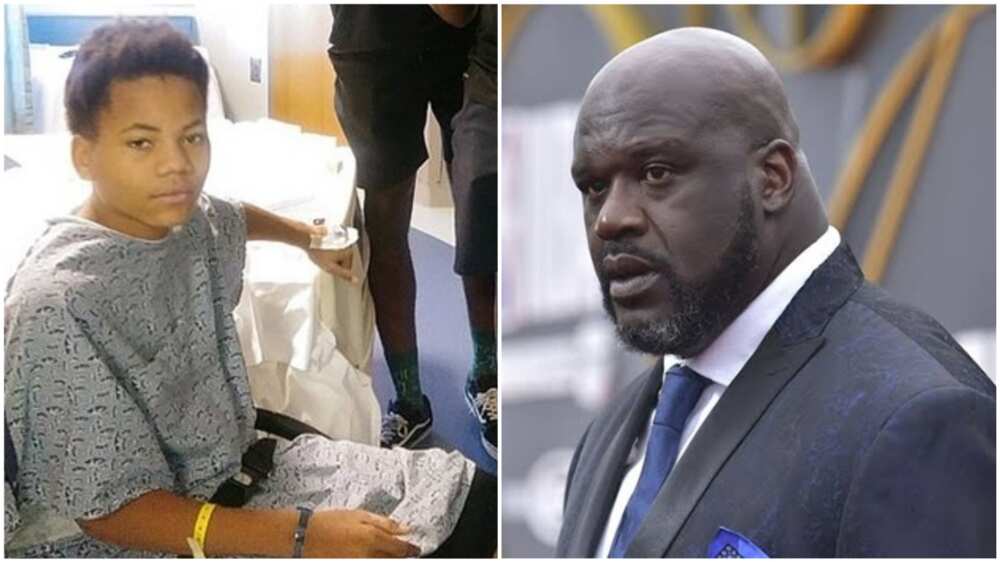
Shaquille O’Neal buys a house for a boy to enable him use his wheelchair after an accident that paralysed him

0
Without the new big home, the boy would not be able to use his wheelchair when he leaves the hospital because his old house is small. Photo credit: HLV


NBA star, Shaquille O’Neal, bought a 12-year-old boy, Isaiah Payton, a house because his old home lacked wheelchair access – The boy had an accident where a stray ball hit his chest, a situation which rendered him totally paralysed – After his recovery, he could not return to his parents’ one-bedroom apartment because it would not contain his wheelchair Everybody needs some act of human kindness to enjoy life in full. NBA star, Shaquille O’Neal, did that to a boy and his family when he bought them a new house. The 12-year-old boy, Isaiah Payton, was hit by a stray bullet in his chest in Atlanta, Georgia which paralysed him from his waist. The NBA star was saddened by the situation the boy was thrown into and had to step into the case and help in the way that he could.

However, after Isaiah recovered from the accident, he could not return to his parent’s one-bedroom apartment as it does not have wheelchair access.

Without the new big home, the boy would not be able to use his wheelchair when he leaves the hospital because his old house is small. It was at this particular time that O’Neal came into the situation and got a new home for them, even as he promised to do more to make the family comfortable. (Legit.ng)

A DEAF EX CORP MEMBER PROFFERS HOW TO MAKE THE SCHEME MORE INCLUSIVE TO THE DEAF AND PWDS

0

BY Comr. Yusuf Kumo

POSTING AND ORIENTATION CAMP.

When I graduated from the prestigious, Gombe State University it didn’t take up to two months our names were released for NYSC service and I was finally posted to Nkwere Imo State for my NYSC Orientation.

I must admit that it was stressful most especially for people like me. I was even like “Wow, so I can’t even rest from this final year’s stress eh. I must leave home again and Obey the Clarion Call. such is life I thought.

On that fateful day we were Leaving with my fellow Gombawa Imo posted corpers, we spent day and night on the roads until the next day. On the roads I was busy thinking and praying…my mind is filled with a lot of thoughts… How will I go through the camp as a Deaf, will they get me a sign language interpreter or I should hire one? Where can I get one there? Can the people there tolerate to communicate and inform me what’s going on in the camp by writing in case there’s no interpreter? A lot of questions filled my mind.

That very moment we arrived, I feel very glad and said Alhamdulilahi for the safety that I can now rest and sleep a little bit then start my registration. Oh No… Soldiers shouted at the entrance. bring your bag for security check then follow that line for screening then collect your this and that and go to Ugwumba Hall to proceed your registration. I was like wow… And did everything my fellow was doing…it was until I went to the Hall alone seeing thousands struggling to make up the queue. I decided to introduce myself to army guarding the hall and the queue that I’m Deaf coming from the Northeast, Gombe state. Fortune come my way as the army himself guided me to the screening staffs without following the long queues and I am fortunate again to meet a physically challenged staff who guided me throughout the registration.

Having Completed my registration I had to communicate with most of the staffs and fellow corpers in writing and lip-reading since my platoon officer said that they don’t have any sign language interpreter here in the camp… I decided to take up the challenges since I can read, write and lip-reads as I usually do in school… Within one week Another fortune come my way as I’m able to meet a sign language interpreter (who’s also a Corp member). a week later I meet another Corp member who knows Sign language. I can’t believe it, I thanked Allah for guidance and mercy…

Having introduced each other we became friends and I introduced one of them to my platoon officer who advised us to always be together most especially during SAED Lecturers and morning/evening parades/assembly.

 We did and I’m forever grateful to them.

When I asked them how did they learned Sign language? (thinking it’s because they studied Special education, Oh No…) they both said they learned it from their Churches as encouraged by their pastors to help/interpret for the Deaf worshippers. I was impressed and weep for the Muslim North ….

Living in the camp was fun, most of the people in the camp were caring and accommodative especially when they realize you’re deaf coming from far North East. The weather is so sweet but rains are so much.

I must admit, I love the warm breeze of Imo State.

Before the end of the camp I was fortunate to meet the state coordinator who we even snapped pics together and said that I should not worry and that if I wish I can be relocated anywhere I wanted (on the basis of my conditions) since my parents put pressure on me to relocate back to Gombe and there was plan for me to serve under one of my Boss, I don’t want to disappoint my parents, I applied for relocation and submitted to those in charge of relocations.. they asked me where is my medical report I showed them my certificate of fitness but they said they need my medical report instead. Unfortunately, I left it at home thinking only the certificate of fitness is needed, I just don’t know/was uninformed. Since I didn’t bring my medical report, they decided to relocate me to Bauchi instead. I’m grateful for that either.

POST CAMP: RELOCATION AND REPORTING.

When I finally reported to Bauchi state NYSC Secretariat, I was first posted to one secondary school but when I told them that I’m a Deaf and don’t know much about teaching since I studied administrative related course instead of education, they asked me where do I wanted to serve? That I should go and bring notification letter from any organization I wanna to serve at.

I was fortunate that the organization I wanted to serve (I.e Bauchi State Agency for PWDs) is Inclusive because there’s both Deaf, disabled and Normal people working there together including sign language interpreters. Since there’s sign language interpreter, the issues of communication won’t be my problems.

One of the Deaf staff, Malam Tasiu introduced me to the Deputy Director of the Agency Mr. Muktar Umar, who welcomed me warmly and instead of giving me the letter alone he went with me to the NYSC Secretariat and told them that they wanted me to serve under their organization. See simplicity, humility and gentility.

That fateful day I started my PPA, the Deputy Director of the Agency told me that they have four (4) Administrative Structures and that I need to select one, they are 1. Administrative, Accounting, Rehabilitation and blind workshop.

I selected administrative, something related to my discipline and was put under the registry department… I also sometimes helped in typing and printing when the need arises.

I must admit, most of the staff are so simple, humble and gentle. The Director of the Agency is but a woman of simplicity, humility, human and public relations. Serving under her and the organization is a pleasure.

CDS/INEC SENSITIZATION…

I, like many Corp members usually attend CDs general or group meeting once a week but unfortunately, as a deaf without sign language interpreter I hardly understand all what’s going on. I sometimes try to lip-read, sometime requested others to help me write in brief what’s being discussed…

It was until the INEC sensitization/training (which I decided to participate, not only because of the money but also to contribute my quota to National Development) that I decided to bring a sign language interpreter to enable me understand what’s going on well.

Having introduced him to the NYSC officials, they urged him to help interpret everything and work with me during the election day so as to facilitate communications… When we asked them who will pay the interpreter’s service (Knowing fully that interpreters are not doing it free) they said it’s not their responsibility but the INEC… INEC ke…. for where!

Since it’s clear that the INEC is unwilling to pay for my interpreter’s service I decided to pay the interpreter’s service and transports throughout the election. (In fact, interpreters are expensive)

The fun part of this INEC tinx is that when I was posted to one Polling Unit of two Voting points together with other ad-hoc staffs mostly students, at the collation center many of them including the other two Corp members wondered and even asked how can a Deaf do it here? They doubt if I can but my interpreter’s assured them that I can do it since I’m educated…

On that very day of the election when we arrived to our PU/VPs, to my surprise, all of them including the Corp members don’t know how to start and use the card readers. They told my interpreter to asks me if I know how to use the card reader. Since I read and understand how to use the card reader through the INEC manual distributed to us during the training, I said Yes and showed them how to use it.(funny is not it?) They requested that I be the one in charge of card reader’s verification and statistics instead of PO. I don’t argue. That’s when they started respecting the Deaf they early doubted ??. (Don’t be too early to judge)

Thankfully, the election went smooth!

Meanwhile after the elections, I learned that the INEC in collaboration with EU will be distributing the materials used by the EU election observes to interested Corp members who participated in the election. The materials include mobile phones, laptops, printers, PC etc. And that interested Corp members should post a pic of himself on Twitter or Instagram and tag them telling the reasons why he/she participated. I did, I even introduced myself as a deaf and urged them to make it inclusive by considering at least 5% of Disabled Corp members who participated because I know many of them. Unfortunately, none of us disabled Corp members who participated and applied benefited from it.

Even this INEC automatic employment to Corp members who participated in the 2019 general election I don’t think if they can make it inclusive to PWDs..in a country like Nigeria, it’s unfortunately that it’s only who you know no matter who you are. There’s God O.

Throughout my stay in Bauchi, the Good People of Bauchi are so simple, humble and gentle. They respect and honor you a lot especially if they realize that you are Corp member. That’s why I said “Bauchi is truly the home of religion, respect and hospitality”

HOW TO MAKE THE SCHEME MORE INCLUSIVE TO THE DEAF AND PWDs…

Permit me to say that, there’s many steps to make the NYSC scheme more inclusive to us, for the Deaf, the biggest challenges we face is information and communication barriers. It’s as a result of this barriers that a camp army almost harass my friend a Deaf Corp member posted to Kano camp which forced him to report that to the camp director/state coordinator and requested for a sign language interpreter to facilitate communications. For details see the links below (https://inclusivenews.com.ng/2019/09/02/deaf-corper-narrates-his-harrowing-ordeal-with-uninformed-soldiers-in-nysc-camp-in-kano-state/)

If I may suggest, The NYSC Director General (DG) need to direct all state Coordinators to hire at least two sign language interpreters to accommodate Deaf Corp members posted to their states. Meanwhile the Deaf prospective Corp members are advised to put their physically challenged status during the NYSC registration and it will be important if the NYSC NHQ will use the information supplied during the registration to know where and where Deaf Corp members are posted so as to direct the state Coordinators/camp directors to accommodate them well with sign language interpreters.

More so, the NYSC DG need to make a conscious effort to ensure that any any benefiting program by the scheme or partner agencies should include at least 5% Corp members with disabilities so as to motivate and encourage them.

Meanwhile the Z.I /LGI also need to make an effort to know whether there are Deaf and disabled Corp members posted to serve in their states/LGs so as to accommodate them well with interpreters most especially during CDs meetings, INEC sensitization and training, clearances among others.

Last but not least, the scheme needs to be more accessible to PWDs.

2019 Christian Pilgrimage: NCPC to begin airlifting of pilgrims December 1

0

By Lanre Oloyede

 Nigerian Christian Pilgrim Commission, NCPC, is set to formally flag off the 2019 general pilgrimage to Israel and Rome on 1st December, 2019.

This was disclosed in a press statement, issued by the Assistant Director Media of the Commission, Celestine Toruka, which stated that the flag off ceremony will take place in Lagos.

The inaugural flight is expected to be made up of intending pilgrims from Lagos state who will be the first batch of intending pilgrims to be airlifted to Israel for the 2019 general pilgrimage exercise.

The statement further revealed that the flag off which was earlier scheduled for 17th November 2019, had to be postponed due to operational reasons.

According to Toruka, all logistics have been put in place by the Commission for a hitch free pilgrimage exercise, adding that flagging off the exercise on 1st December means that the 2019 general pilgrimage would officially commence in earnest from that date with the airlift of intending Pilgrims to the Holy land in batches.

This year’s general pilgrimage which has, “Engaging Christian Pilgrimage for National Change and Development” as its theme will cover only two destination countries – Israel and Rome, and will run from December 2019 to January, 2020.

The Commission  urged all intending pilgrims to the Holy Land to be guided its Corporate Slogan which is, “Proclaiming Christ, Serving Nigeria”.

CCD urges INEC to implement disability law to ensure inclusion of Voters With Disabilities in Bayelsa and Kogi States Governorship Elections

0

The Executive Director of Centre for Citizens with Disabilities (CCD) has called on residence of Kogi and Bayelsa to support eligible voters with disabilities to participate and ensure equal voting access for all as we gear up towards the states Governorship elections scheduled to hold on Saturday, November 16, 2019

CCD which is deploying observers in all the Senatorial district of the States reecognized that people with disabilities are generally known to be disadvantaged in the society, and consequently suffer many deprivations and denial of their rights, especially during elections.

Appreciating that voting in elections has been recognized as one of the rights of citizens with disabilities that is often violated and ignored. The plight of Persons with Disabilities is further compounded by societal attitude, which often entails looking down on persons with disabilities even on election days. For this reason, many citizens with disabilities suffer the violation of their rights and disenfranchisement in silence.

The hallmark of democracy is that people govern themselves through elected representatives who they can subsequently return, remove or reject. Elections provide the only means of succession in a democracy.

He is concerned about the measures adopted in previous Elections conducted by INEC which have not been satisfactory to Persons with Disabilities; issues like negative attitude of INEC adhoc staff to citizens with disabilities, denial of priority voting to voters with disabilities, absence of sign language Interpreters for the deaf at polling units, Absence of Braille Materials for the blind, inaccessible polling units with lots of mobility barriers have continued to hinder the effective participation of Persons with Disabilities participation during elections in the country.

Appreciating the President Mohammadu Buhari for signing into law Discrimination against Persons with Disabilities (Prohibition) Act early this year, which made robust provisions for the participation of persons with disabilities in the socio-economic activities of the country on an equal bases with other.

He went further to remind INEC that they are under obligation to implement the disability Act and INEC policy for the participation of persons with disabilities in elections, which provides rights to priority voting, none discrimination, access to public building used by INEC for the conduct of election amongst others.

CCD being a premier disability rights organization of, and for persons with disabilities that works to promote independent living, participation and inclusion of citizens with disabilities in democratic governance and is accredited by INEC to observe 2019 Bayelsa and Kogi States governorship election.

As a major organization observing these elections to ensure the inclusion persons with disabilities in the process, CCD made the following calls to guarantee the rights of persons with disabilities in the elections:

1.INEC to implement the disability act by ensuring that all barriers that hinders persons with disabilities from participating in elections are removed.

2.Eligible voters with disabilities to go out enmass to cast their vote to the candidate of their choice.

3. INEC to guide election security agencies on election day security to ensure voters goes to the poll peacefully, as election day violence may hinder eligible voters with disabilities from participating in the elections 

4. Election day Security agencies to respect and protect the rights of persons with disabilities, in particular deaf voters in the two States. Reports from previous elections show that deaf voters are expose to violence and hostility from security agents and other citizens on election day.

5. The goal of this campaign is to ensure that eligible female and male persons with disabilities gain Equal Voting Access during Elections in Nigeria. The core objectives for this campaign include- examining militating and facilitating factors on persons with disabilities participation in elections. Sensitizing stakeholders on Equal Voting Access for Persons with Disabilities during Elections and mobilizing Persons with Disabilities Participation in Elections.

6. THE MEDIA to support persons with disabilities by ensuring that election day report captures the experience of persons with disabilities during election.