Tuesday, December 23, 2025
Home Blog Page 509

Network for Disabled Women distributes palliative to women with disabilities in the FCT

0

As COVID-19 is ravaging the world, People with disabilities are most hit in terms of the impact on them economically, among people with disabilities, women with disabilities are more at the receiving end.

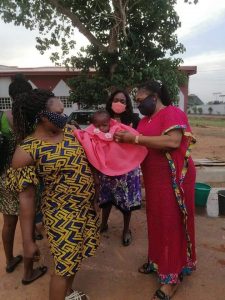
It is based on the challenges women with disabilities are facing occasioned by the lockdown that Network for Disabled Women, an NGOs for women with disabilities in Nigeria with the support of ACTION AID and Canadian Embassy distributed food items to indigent women with disabilities in the FCT.

Lois Auta, the leader of the group in a chat with The Qualitative Magazine said that the idea behind the project is to cushion the effect of the lockdown on these indigent women with disabilities. She reminded that a woman with disability suffer multiple discrimination and that always put women with disabilities at disadvantage especially in a time like this. She thanked the donors for coming to the aid of women with disabilities at this trying time and also having faith on the organization to reach out to these women.

The Qualitative Magazine learnt that 85 indigent women with disabilities benefited from this distribution exercise by receiving a cartoon of Indomie noodles each.

The beneficiaries were elated by the gestures and they appreciated Lois Auta for the good works, attracting help for women with disabilities is a great fit.

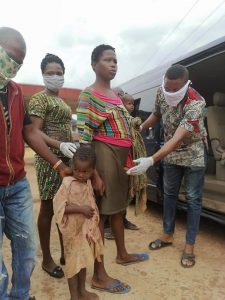
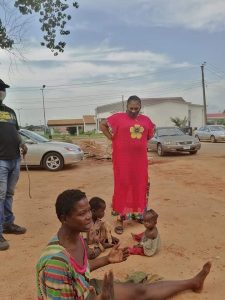
See some pictures of the distribution exercise:

Community based workers can help PWDs access services during COVID-19

0

By Theresa Lorenzo & Anthea Hansen & Harsha Dayal & Sumaya Gabriels 

People with disabilities face stigma because of their impairments. They are often marginalised , more so if they have psycho-social disabilities . This makes it difficult for them to access basic services such as healthcare.

But community based workers have specialised skills and experience working at a household and community level. They are able to identify, screen and support vulnerable individuals and families. These workers are part of an essential service in health systems across Africa. They include community health workers, home based carers, community rehabilitation workers and community development workers.

We conducted a study in three rural communities in Botswana, South Africa and Malawi. We found that community rehabilitation workers, community development workers and community health workers bridged the gaps between people with disabilities, their families and services at district level. They worked in communities and were able to help authorities identify families with a person with a disability.

Community based workers are able to build trusting relationships with people with disabilities and their families. This support helps reduce their anxiety and allows them to participate in community campaigns and events. In doing so, their dignity and sense of belonging in their families and communities is restored.

South Africa’s disaster management plan for COVID-19 targets the most vulnerable. But it needs to respond in a more deliberate way when it comes to people with disabilities. To do this, it needs to harness the critical mass of community based workers as key links to help reduce community transmission of the virus.

Community based workers

A national study on young people with and without disabilities in South Africa showed that community rehabilitation workers are able to reduce inequalities in access to health and social services. They can do this through health literacy and activism, and mobilising community resources through co-ordinated action with the different government departments.

This is why this cadre of worker is well placed during the COVID-19 crisis. They can help ensure that people with disabilities are not left behind in screening, testing and referral to health services. This is particularly important given that many are more vulnerable to ill-health and dying.

Community rehabilitation workers are able to ensure that people with intellectual disability get easy-to-read information about the virus. This includes mitigation strategies and hygiene rules.

Community rehabilitation workers can also raise these matters with community radio station and journalists. This would ensure that it reached vision impaired and blind people.

They are also able to provide emotional and spiritual support to people with disabilities and their families. This is particularly important for mothers or caregivers of children with disabilities.

Read more: How lockdown could affect South Africa’s children with special needs

Many people with disabilities are self employed or in informal employment. This means that they have to be included in government and non-government initiatives around income protection. Community based workers are able to access the necessary information that will help people with disabilities to submit forms to the relevant authorities.

In addition, community based workers have links with networks and organisations. This can help them to access relevant information about government’s stimulus packages and interventions for small and medium enterprises. They provide a conduit for information about these resources. They are also able to do early identification (screening, tracing), deal with food security (they know which families are most in need and at risk). They can also ensure continuity of referrals not only for rehabilitation and medical needs, but for creating links to economic resources through government’s assistance to small and medium enterprises.

Read more: Coronavirus could revolutionize work opportunities for people with disabilities

Critical catalysts

Community based workers act as critical catalysts in improving the access to health, social and economic development as well as education resources. In turn, this facilitates integration into existing services.

Their skills, abilities and competencies are integral to the human resources for health workforce. These need to be harnessed in flattening the curve of the COVID-19 pandemic.

At the same time, the mental health and wellbeing of these community based workers and caregivers also needs to be prioritised. They also need personal protective equipment such as gloves, masks, sanitisers and aprons.

Kashifa Abrahams, a researcher in the South African parliament, contributed to this article.

Theresa Lorenzo is a Professor in Disability Studies and Occupational Therapy at the University of Cape Town. Her research was funded by the National Research Foundation and the PERC programme at UCT.

Anthea Hansen works as a lecturer at the University of Cape Town.

Harsha Dayal is a Research Associate at the Africa Center for Evidence (ACE), University of Johannesburg.

Sumaya Gabriels works as a lecturer at the University of Cape Town.

By Theresa Lorenzo, Professor and PhD programme convenor, Division of Disability Studies, and co-lead of Inclusive Practices Africa, Department of Health and Rehabilitation Sciences, Faculty of Health Sciences, University of Cape Town And

Anthea Hansen, Lecturer, University of Cape Town And

Harsha Dayal, Research Associate, Africa Centre for Evidence, University of Johannesburg And

Sumaya Gabriels, Lecturer, University of Cape Town

COVID-19: UN donates N38m palliatives to vulnerable Nigerian women

0

By Fortune Abang

The UN Women says it has donated N38 million to Nigeria in the wake of the coronavirus, to boost palliatives for vulnerable women in the country.

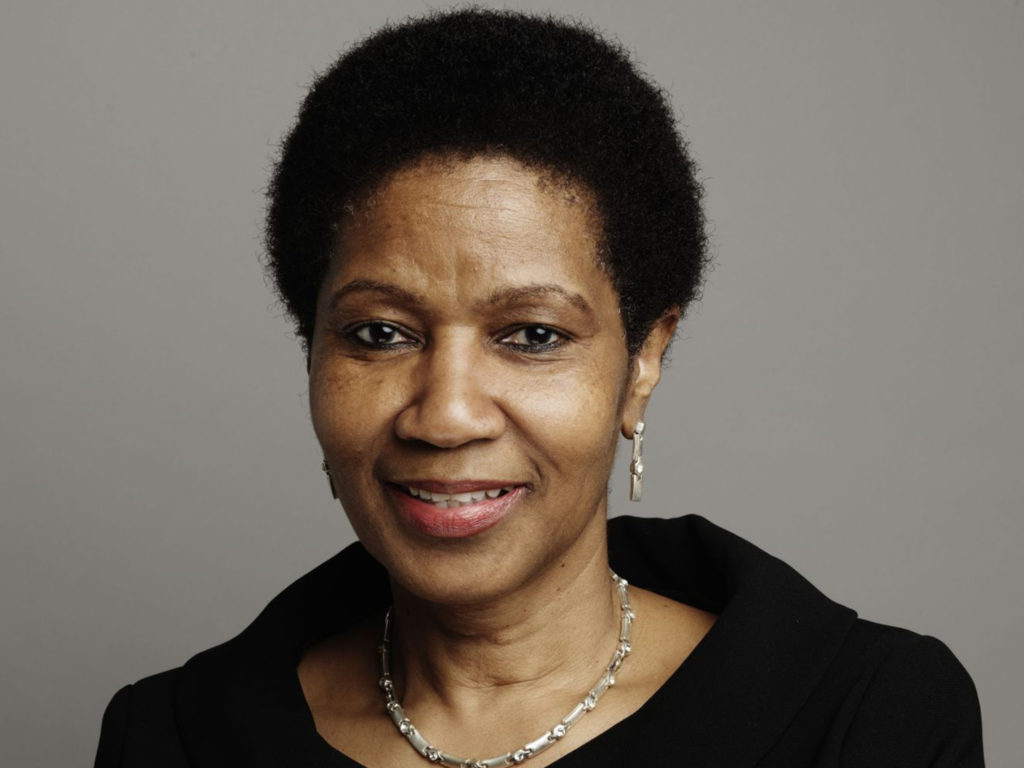
Phumzile-Mlambo-Ngcuka-UNWomen  COVID-19: UN donates N38m palliatives to vulnerable Nigerian women Phumzile Mlambo Ngcuka UNWomen 1024x768
Phumzile Mlambo-Ngcuka, Executive Director, UN Women

According to a statement on Friday, May 8, 2020 in Abuja by Mercedes Alfa, UN Women Media Officer, the fund was presented to the Minister of Women Affairs, Dame Pauline Tallen, by Ms Comfort Lamptey, Country Representative to Nigeria/ECOWAS.

The UN Women is the United Nations Entity for Gender Equality and the Empowerment of Women that ensures every woman and girl child exercise human rights and live up to full potential.

“As part of efforts to support the government of Nigeria on COVID-19 response, UN Women has donated N38 million to the Federal Ministry of Women Affairs toward palliatives for vulnerable women.

“The donation is officially presented today in Abuja, to the Minister of Women Affairs, Dame Pauline Tallen, by the UN Women Representative to Nigeria and ECOWAS, Ms. Comfort Lamptey.

“The funds will be channeled toward the procurement and distribution of relief and hygiene supplies, including food items, soap, masks and sanitisers, which will be procured from women-owned businesses.A

“These palliative are targeted at reaching 12,600 vulnerable women and girls,  who have been worst hit by the effects of the crisis, in 14 states across the six geo-political zones in Nigeria,” Alfa said.

She said that through the oversight and supervision of the ministry, women organisations and networks in targeted states, including the Africa Women Leaders Network (AWLN), women leadership roles would be underlined.

She said that leadership roles include the procurement of the palliatives from women-owned businesses, identification of vulnerable households, the monitoring and distribution of the palliative materials to vulnerable women.

She quoted Lamptey to have said that women were the most affected by the pandemic, in spite of the fact they formed major chunk of the owners of micro-enterprises in Nigeria.

“Women in Nigeria make up 47.8 per cent owners of micro-enterprises and 22 per cent of SMEs, with high concentration in economic sectors, such as wholesale, manufacturing, accommodation, food services and agriculture.A

“This women-led enterprises will be heavily impacted by disruptions in supply chains and closure of markets; impacting on their ability to feed their families and be independent.

“Whilst the pandemic is one that affects all spheres of society, women and girls are being more adversely affected by violence, food insecurity and loss of income,” she said.

Alfa said that women and girls are the bearers of an unfair burden of care during this time; they are most likely to be responsible for caring and providing for households including sick relatives.

She said that the UN Women would continue to strengthen the capacities of the most affected vulnerable female-headed households, poor women with disabilities and those affected by conflict.

The UN media officer also noted that the support was aimed at improving awareness and adoption of hygiene practices, as measures to prevent beneficiaries and their communities from contracting the COVID-19.

She said that Tallen expressed appreciation to the UN Women and also the UN family in Nigeria, led by Mr Edward Kallon, Resident Coordinator, for the donation and support.A

Tallen extolled the organisation for highlighting the need to prioritise women empowerment through the UN-managed Basket Fund to guide the COVID-19 response in Nigeria.

She highlighted the efforts and resilience of Nigerian women in the face of ongoing challenges and commended the efforts of frontline workers and journalists for their selfless service.

Meanwhile, the Executive Director of UN Women, Ms. Phumzile Mlambo-Ngcuka, urged governments and stakeholders across the world to integrate protection policies for women in their COVID response plans.

“Where governments or businesses put income protection in place, this can ease dilemmas, sustain income and avoid driving households into poverty.

“This response must also include those in the informal economy, where most women, who work outside home make their livelihood; such social protection is best directed specifically to women,” she said.

COVID-19 Palliative: Sen. Dr Danjuma La’ah brings succor to his constituents

0

The Senator representing Southern Kaduna Senatorial District at the National Assembly, Dr Danjuma La’ah has called on Nigerians to maintain all regulations governing the lockdown to avert the spread of the pandemic.

He made this known while distributing relief materials worth millions of naira across the Senatorial district at the administrative office of Dankat oil, Kagoro in Southern Kaduna.

The Federal Law Maker who pledged his commitment to work tenaciously for the good of the people advised them to use the items judiciously noting that, the gesture was to reduce the hardship faced by Constituents as a result of the stay at home order.

Distributing the food items across the 87 ward that made up the zone, special considerations were given to security operatives, traditional rulers, health workers as well as Muslims observing Ramadan fast and people living with a disability, PLWD.

Sen. Danjuma La’ah enjoined Nigerians to pray fervently against the pandemic and embrace safety measures to combat the dreaded pathology.

In a goodwill message, His Royal Highness, Chief of Chawai Mal. Yahaya Mohammed described the gesture as timely and called on those directly involved to maintain equity and justice in the distribution process to enable the items to get to the vulnerable families for a better living standard.

Group lifts Women with disabilities in FCT with Palliatives

0

Fred Ezeh, Abuja

Relief came the way of dozens of persons with disabilities in Abuja on Wednesday when they received food and other items donated by a non-governmental organization, Survive Fistula Health Care Foundation (SFHF).

Executive Director/Project Manager, SFHF, Mrs Peters Ogunmayin, who presented the items to the beneficiaries explained that the palliatives was made possible through the funding support from CBM Australia. She said the intention was to ensure that a number of women with disabilities in the nation’s capital are able to feed their children and close relations for at least one month. Coincidentally, the items, which included face masks and hand sanitizers, were shared to the beneficiaries at the Kuje Primary Health Care Centre, on a day the United Nations raised the alarm that one billion people with disabilities across the globe face socioeconomic crisis due to COVID-19. Mrs Peters, in her remarks, said the gesture became imperative following the challenges faced by the beneficiaries, as the nation continues to grapple with the effects of coronavirus ravaging the world. She said: “We requested our donor to give us money to assist these people and they did. What we are having today is for the PWDs, the needy ones.

Our targets are blind people, the deaf and physically-disabled persons within Kuje Area Council. We can probably extend it to Gwagwalada, Kwali, that we are also covering.“It is just a palliative for 25 people. Our palliative is not like others. We have 10KG of rice, 10KG of beans, spaghetti, half carton of indomie, oil and pepper and other items inside that carton, for them to cook when they get home; to alleviate their challenges.”CBM Australia Country Programme Manager, Omoi Samuel, who led other officials of his organization to the event, said the palliative was timely and would guarantee good nutrition and availability of meal for beneficiaries for at least a month.He said: “We are supporting SFHS as one of our local partners to implement health programmes.

With the advent of COVID-19, we needed to look at its impact on persons with disability. The intention of this exercise is to provide them with what we called “dignity package.” It contains food that is sizable for at least one month for a household of at least seven and the package has all the nutritional values.”One of the beneficiaries and Chairperson, Deaf Women Association of Nigeria, Abuja chapter, Hellen Beyioku-Alase, expressed delight with the intervention. She appreciated the donors and appealed to other groups, corporate organizations and individuals in the country to be compassionate to the vulnerable people around them.

Anambra Commissioner For Women Affairs Lady Mezue Rescues Two Infants And Their Mentally Challenged Mother

0

Written By Vincent Ezechukwu.

Anambra State Commissioner for Women and Children Affairs, Lady Ndidi Mezue, today, 13th May, 2020, at Ufuma Junction, Orumba, North LGA, Anambra State, rescued a mentally challenged woman and her two infants, a boy and a girl.

Lady Mezue swung into action on receiving a call from a concerned citizen, who alerted her on the terrible condition of the trio. After two days frantic search across Orumba North and South, the woman and her children were located at Ufuma with the assistance of Ufuma Vigilante Group.

Following the rescue, the woman and her children were cautiously relocated to Awka, and resettled in a government owned facility, to be rehabilitated before reuniting them with their family and the society.

Source: Anambra State Broadcasting Service

Anambra Disability Community COVID -19 Response Team Inaugurated In Awka

0

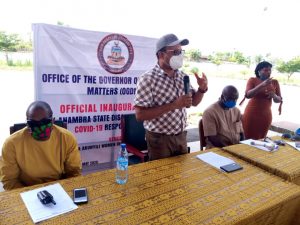
Anambra State Disability Community COVID-19 Response Team has been inaugurated.

The inauguration was held at Professor Dora Akunyili Women Development Centre, Awka.

The Steering Committee has six sub-committees namely, Information and Communication Committee, Medical Outreach and Rehabilitation Committee, Palliative and Welfare Committee, Contact and Mobilization Committee, Fund Raising Committee and Security and Statistics Committee.

Inaugurating the committee, a member of the State Action Committee against COVID-19, who is the Special Adviser to the Governor on Indigenous Medicine and Herbal Practice, Dr. Onyekachukwu Ibezim told the newly inaugurated committee that their mandate is to ensure that persons with disabilities in Anambra State are well taken care of, provided for, as well as participate actively in all the activities towards the fight against Coronavirus for the betterment of Disability community in Anambra state.

Governor Willie Obiano represented by his Special Adviser on Disability Matters, Barrister Chuks Ezewuzie said that the relaxation of the lockdown measure in the State does not mean a triumph over the deadly virus, assuring that the battle against Coronavirus will be intensified.

Governor Obiano promised that his administration will always support persons with disability in Anambra state at all times.

The Chairman of the newly inaugurated Committee, who is the Anambra state Chairman, Joint National Association of Persons with Disabilities, Comrade Ugochukwu Okeke in acceptance speech said that they will do their job with honesty and commitment. U The Permanent Secretary, Ministry of Women and Children Affairs, Mr. Daniel Ezeanwu, the Senior Special Assistant to the Governor on Power and Utilities, Engineer Victor Meju, the Special Assistant to the Governor on Sign Language Communications, Mr Colins Joseph, were all present during the inauguration.

The inauguration climaxed with a melodious song by persons with disabilities.

Source: Anambra Broadcasting Service

HOW COVID-19 THREATENS HEALTHY, AGED PERSONS, BY WHO

0

The World Health Organisation (WHO) has alerted that the COVID-19 pandemic is claiming lives in hundreds of thousands globally, disrupting livelihoods and threatening recent advances in health and progress towards global development goals.

It said the pandemic was particularly challenging, as it was threatening aged persons, who were hitherto living longer and healthier lives.

In its 2020 World Health Statistics published yesterday, WHO Director-General, Dr. Tedros Adhanom Ghebreyesus, said, “The good news is that people around the world are living longer and healthier lives. The bad news is the rate of progress is too slow to meet the Sustainable Development Goals (SDGs) and will be further challenged by COVID-19.

“The pandemic highlights the urgent need for all countries to invest in stronger health systems and primary healthcare, as the best defense against outbreaks like COVID-19 and against the other health threats that people around the world face every day. Health systems and health security are two sides of the same coin.”

WHO’s World Health Statistics, an annual check-up on the world’s health, reports progress against series of key health and health service indicators, revealing some important lessons in terms of progress made towards the Sustainable Development Goals and gaps to fill.

According to the report, life expectancy and healthy life expectancy have increased, but unequally. The biggest gains were reported in low-income countries, which saw life expectancy rise by 21 per cent or 11 years between 2000 and 2016 (compared with an increase of four per cent or three years in higher income countries).

Meanwhile, the United Nations Children Fund (UNICEF) has declared that an additional 950 Nigerian children may die daily from preventable causes in the next six months as the COVID-19 pandemic disrupts routine services and threatens to weaken health systems.

These potential child deaths would be in addition to the 475,200 children who already die before their fifth birthday every six months – threatening to reverse a decade of progress in ending preventable child mortality in Nigeria.

Also, about 6,800 more maternal deaths could also occur in Nigeria in just six months while globally, 6,000 additional children under five could die every day.

Country Representative, UNICEF Nigeria, Peter Hawkins, who disclosed this yesterday in Abuja, noting that in countries with overall weak health systems, like Nigeria, COVID-19 is causing disruptions in medical supply chains and straining financial and human resources and warned that these disruptions could result in potentially devastating increases in maternal and child deaths.

Hawkins noted that visits to health care centres were declining due to lockdowns, curfews, disruptions in transportation and as communities remain fearful of infection.

He said, “We have made steady progress in reducing preventable child and maternal deaths in Nigeria over the last 20 years – and it would be devastating if that progress is lost or reversed – devastating for Nigerian families, communities and for the country in general.”

Source: Guardian 

COVID-19: NGO Creates Awareness, Provides Free Consultations To 2500 Beneficiaries

0

By Sade Oguntola

FOLLOWING challenges with limited access to health, the Brain Health Initiative of Nigeria (BHIN), a nongovernmental organisation, in collaboration with other doctors provided over 2500 free telephone consultations on all health-related issues during the COVID-19 pandemic.

Dr Temitope Farombi, who is spearheading the free telephone consultations, said that the initiative which commenced 21st April involves offering free consultations to its callers on different aspects of medicine.

These include dental care, children health, medical conditions, medication advice, accident and trauma cases, obstetrics and gynaecology. Others are wellness and wellbeing advice as well as mental health and geriatric care.

Dr Farombi said the services are provided through 10 different Glo lines including, 08057802243(mental health cases), 08057801423 (children’s health), 08057802999(medical/geriatric cases) and 08057798627 (obstetrics and gynaecology) and 08057801596 (medication use advice).

“We notice that a lot of people are afraid to come out to the hospital even though they are sick. Even the non-COVID-19 cases whose symptoms are similar to coronavirus infection are turned back and they are not getting adequate attention.

“We observe that a lot of people resorted to self-medication and all sorts of things. These have contributed to an increased morbidity and mortality rate in communities,” she said.

Dr Farombi said BHIN brought together 10 doctors to offer free medical health telephone consultations as its contribution to the COVD-19 pandemic response.

Meanwhile, BRIN in its COVID-19 awareness and education campaign to the Hausa community in Sabo area of Ibadan has urged for cleaning of hands with soap and water before praying to get protected from COVID-19.

During the campaign, food items, fruits, face masks, bottled water, kegs of washing liquid and buckets with taps were donated to the community.

Dr Farombi stated that although it might be difficult for them to observe social distancing, washing of hands with soap and water always as well as the wearing of face masks would still be helpful to prevent contracting the infection.

The medical expert said those without face masks could use handkerchiefs or scarf to prevent picking droplets through their nose and mouth, as well as avoid touching their faces, mouth and noses with their hands.

Jerima of Ibadan land, Hausa community, Alhaji Danjuma Yakubu; Alhaji Basiru Yakubu and Ciroma of Ibadan land, Alhaji Isa Bawa, representatives of the community, expressed appreciation to the group for their intervention.

Source: Nigerian Tribune

Covid-19 palliatives: Disability community, groups appreciates ACCI

0

Beneficiaries of the palliatives materials donated by the Abuja Chamber of Commerce and Industry (ACCI) have appreciated the Chamber for coming to the aid of the needy in times of serious want.

The groups which comprises of People With Disability (PWD) and several women organisations based in the Federal Capital Territory (FCT) bared their minds while taking receipt of the materials at separate locations in Abuja.

At the secretariat of the chamber on km8 Umaru Musa Yar’Adua Expressway Way (Airport Road) Abuja, the Director General of the Chamber, Ms. Victoria Akai said the items were part of combined donations from the President of the Chamber, Prince Adetokunbo Kayode, Unilever Nigeria, Executive Committee as well as the Gemstones Miners and Marketers Association of Nigeria (GMMAN).

The DG emphasized that there was every need to come to the aid of families and persons, especially the less privileged in the society, whose source of income have been drastically affected due to the effect of the Coronavirus disease (Covid-19) and the lockdown measures that accompanied it.

The Women groups beneficiaries operated under the platform of the Women Arise Development and Humanitarian Initiative (WADHI) who collected the consignment include: Home Excellence Family Worship Centre; New Era; Wuye Market and Abiding Ladies Fellowship.

Responding on behalf of the groups, WADHI Convener, Mrs. Mrs Esther Eghobamien-Mshelia appreciated the gesture and reiterated the commitment of the association towards upliftment of the women folk.

The association has a cluster of women and facilitated the distribution of the items through the women leaders in all the area councils to reach many homes.

At Karomajiji( disability colony), a suburban community in the territory, the representative of the Chamber, Mrs. Tinuke Temitope said due to the impact of the pandemic, some families have found it difficult to survive while some might take a long while to recover from the effect.

She said there was therefore an urgent need to lend a hand of support to the needy.

Those who spoke during the event including, Mohammed Dantani, Rahina Haruna, Chika Chime and Amina Haruna were full of appreciation for the generosity extended to them by the Chamber.

Source: chambertelegraph