Tuesday, December 23, 2025
Home Blog Page 508

SURVIVING COVID-19 PANDEMIC AS PERSONS WITH DISABILITIES

0

An article written by Ininuma, B. Minabo Esq. is a member of Association of Lawyers with disabilities in Nigeria,
with support from the Disability Rights Fund (DRF)


As Governments all over the world respond to the advent of the Corona virus pandemic, it is critical now more than ever for them to make sure that measures taken to prevent and protect from the virus is inclusive of Persons with disabilities. Their rights should be protected in every way possible because this virus transcends boundaries, age, gender or ability.


WHAT IS CORONA VIRUS?
Corona virus according to the World Health Organization (WHO) is a large group of viruses that consist of a core of genetic material surrounded by an envelope with protein spikes that gives it an appearance of a crown. The 2019 novel Corona virus was first discovered in a seafood and live animals market in Wuhan, China.

SYMPTOMS
They increase as researchers try to understand how the virus present. Currently according to WHO they include;
Fever, dry cough, tiredness, aches and pains, nasal congestion, head ache, conjunctivitis, sore throat, loss of taste or smell or rash on skin or discoloration of fingers or toes, diarrhea, and shortness of breath. But in more severe cases pneumonia or breathing difficulties and even death.


WHO IS AT RISK?
Everyone is at risk especially;

Persons with disabilities with chronic health challenges are at greater risk of contracting corona virus because of physical barriers to access hygiene facilities like hand washing stations, difficulty in enacting social distancing rule and the need to touch surfaces for support.

Persons with chronic health issues like diabetes, cardiovascular diseases etc

Care givers, friends, family members and health workers who are taking care of infected persons.

Persons who have had contact with someone having travelled from those places with accelerated rate of infections. People who have close contact with animals.

HOW IT IS TRANSMITTED (SPREAD)
It is transmitted;

By direct contact with the respiratory droplets from cough and sneezing of an infected person.

By touching contaminated surfaces and then touching the face, eyes, nose or mouth.

TESTING FOR THE VIRUS
The infection is tested with a Pulmonary chain reactor (PCR) test kit. This test identifies the virus base on it’s genetic finger print.

TREATMENT
There is currently no specific treatment for this virus. However, vaccines are in development.

KNOW THE BEST PRACTICES FOR PERSONS LIVING WITH DISABILITIES (PWDS).
Get a seat and talk to Persons with disabilities directly at eye level and not to their caregiver. Don’t speak about them or COVID 19 related issues as it concerns them as if they are invincible, can’t understand what is being said or can’t speak for themselves.

Use plain language to explain to the individual and the caregiver about COVID 19 and the various precautionary measures and emergency response protocols to take in preventing the
disease.

Always keep in mind that the individual understands you. But make sure you leave time
for questions and response because some of us are highly intelligent professionals.

HOW YOU CAN ASSIST.
Be aware of the Person’s reach. Appropriate hand washing stations and sanitizers or disinfecting
wipes should be placed with persons using wheelchair and the virtually impaired in mind.
Provide ramps and rooms with enough access to a wheelchair and make sure the floor is not wet
to prevent accidental slip and fall of persons with limited mobility or the visually impaired.
Stairwells, door knobs and surfaces should be frequently disinfected as such surfaces are used as support while moving around. Also the virtually impaired use auditory cues to go around. Such auditory clues should be clear and specific. Where the need arises, read posters and instructions concerning the pandemic to the visually impaired.

Digital displays, pictograms, posters, and signage encouraging good hand washing and
respiratory hygiene practices should be placed at strategic areas for those with limited use of
verbal communication, the Deaf or hard of hearing. And to better communicate with them,
follow their cue to find out if they’ll prefer sign language, gesturing, or writing.
In taking care of a quadriplegic or bedridden, place disinfecting wipes or hand sanitizer beside
the bed or use a clean, wet and disinfected towel to help in cleaning the face and hands as often
as possible. Also ensure increase flow of air or ventilation in the room they are kept in.
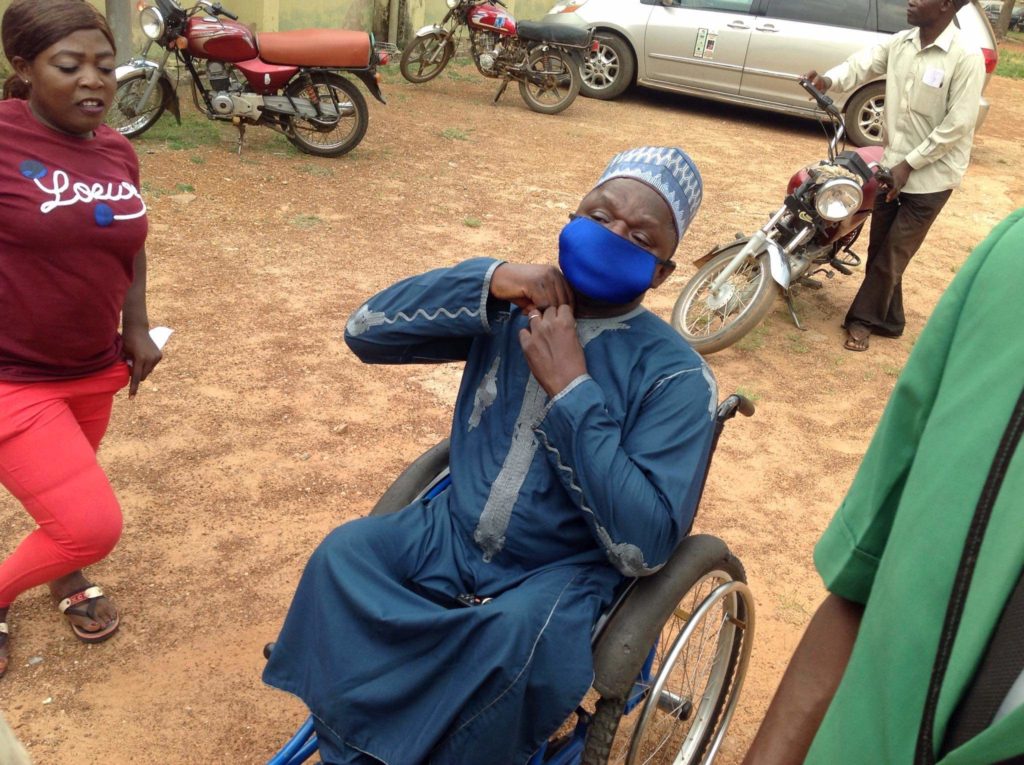
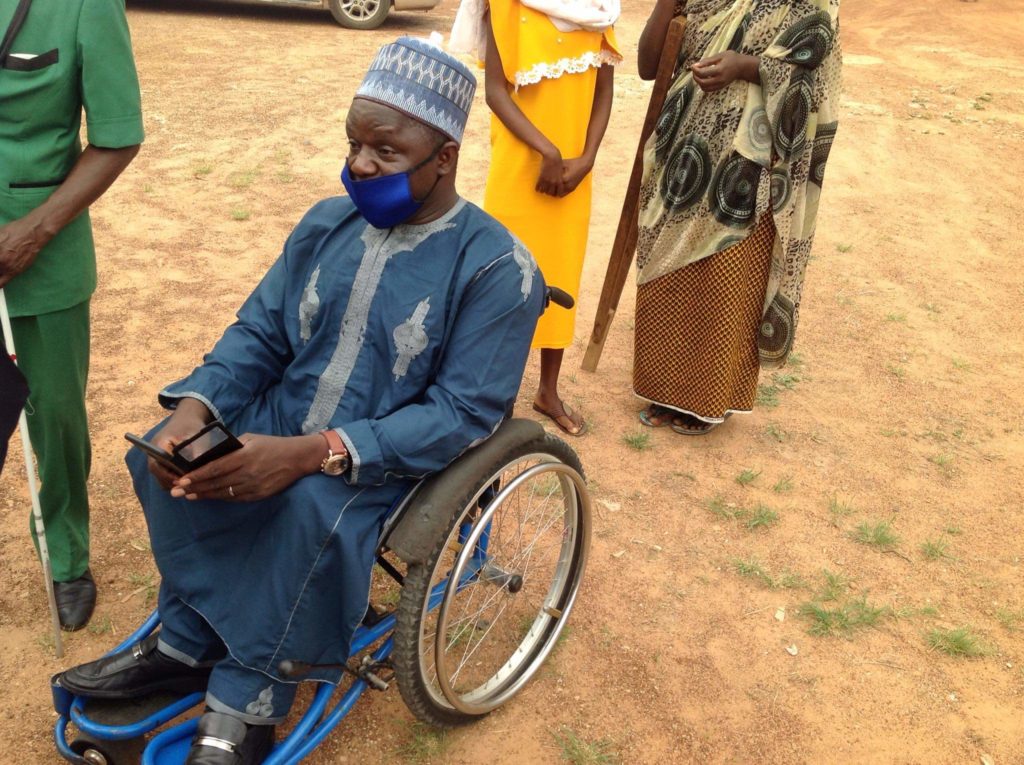
Assistive devices such as wheelchair handles, crutches, white cane, scooter etc in most cases are used without cleaning them. These devices should be cleaned with disinfectant regularly. This is because in some cases, caregivers also handle them and so can be contaminated from mere touch.

Persons with disabilities who are health care professionals should maintain high Personal,
Protective Equipment (PPE) standards to ensure not only their safety but that of their families as
well. This is because there is a spike in health workers contacting this disease.

When going out for any reason, especially when using public transportation, observe the rule on
face mask, social distancing and use hand gloves to reduce spread through contact.
With the lockdown going on in various states of the Federation, we should be given primary
consideration when palliatives are being distributed because our source of income had been grossly affected and in some cases hampered by it. Dedicated shopping hours for PWDs should also be considered.
We can come together as PWDs and form advocacy groups to carry-out more sensitization about the pandemic to our disability community. This is because sometimes it’s easier and better to talk to someone who understands what it is like to desire to live a normal existence with
disability.
Remember, most Persons with disabilities need the assistance of caregivers, friends and
relatives with activities for their daily living. We should therefore be considered as exceptions to the rule on social distancing as our caregivers exhibit high safety standards.

Coronavirus is a novel disease, and because we are all navigating on uncharted territory, let us
take personal responsibility for our lives. All Health and hygiene, safety protocols should
continue to apply. Unnecessary travels and visitations should be avoided because what is known about this virus, its prevention and cure is still in the works. The relaxation of the lockdown does not mean that Corona virus is less potent. Let’s continue to observe the necessary health and safety rules and keep going strong. This too will pass.


AKWA IBOM’S SCHOOL – ON – RADIO PROGRAMME LEAVES OUT DEAF CHILDREN

0

Abasifreke Effiong – Uyo

Nigeria’s Public Relations Officer, National Association of the Blind, Mr Ubong Udo, says children with hearing impairment have been left out in the ongoing school – on – radio programme in Akwa Ibom state.

Udo in a Facebook post on Saturday noted that the radio school like many other programmes of the state government does not cater for all strata of citizens of the state.

“Regrettably children with disabilities are often neglected in educational planning in the state. A case in point is the ongoing school – on – radio where the hearing impaired persons are totally excluded from the scheme.”

Akwa Ibom state government introduced the school – on – radio programme about three weeks ago to serve as an intermediate classroom during the coronavirus lockdown.

Schools are yet to resume because of the ravaging coronavirus pandemic, prompting governments and institutions to set up intermediary schools on new and conventional media.

When The Dune sought to know how children with hearing impairment could be integrated into the programme, Udo, in a telephone conversation recommended that the state government should introduce the school programme on television with a sign language interpreter to cater for the deaf.

“There is no way the deaf can be part of the radio school. The way out is for the government to introduce the programme on television and have a sign language interpreter on the television crew to interpret what the teacher says.”

He regretted that some clusters of persons with disabilities were left out in the sensitization on COVID-19 in Akwa Ibom state.

“There was no sensitization of any kind on COVID-19 for persons with disabilities. That exclusion makes PWDs even more vulnerable to pandemic”, the PRO said.

An NGO working around issues of PWDs, Centre for Citizens with Disabilities, CCD, had recommended the creation of a disability desk at isolation centres in the state to cater for persons with disabilities.

Despite the recommendation, the Akwa Ibom state does not have a representation from any of the clusters of persons with disabilities on the incident management committee on COVID-19.

Following demand to have a representation on the committee by PWDs in the state, The Dune drew the attention of the Commissioner for Information, Mr Charles Udoh who is a member of the incident management committee to the exclusion.

The commissioner said, four weeks ago, that he will table the concern before the incident management committee. There has been no feedback yet and government has not made any addition to the committee.

Meanwhile, Mr Ubong Udo has lauded the Akwa Ibom state government for constituting a committee on education, urging the committee to develop an all embracing education road-map for the state which no child would be relegated to the back burner.

He noted that persons with disabilities are usually left behind in education planning.

“According to the state policy on education, basic education is free and compulsory and no Akwa Ibom child should be left behind with regards to access to education. Unfortunately and regrettably too, children with disabilities are often neglected in terms of educational planning in the state.”

“I urge the committee to develop an all embracing education road-map for the state which no Akwa Ibom child would be relegated to the back burner.”

“I suggest the committee should interface with the Joint National Association of Persons With Disabilities to ensure the development of an inclusive and accessible education road map where children with and without disabilities can study side by side in the same school environment”, Udo added.

The food items will sustain me for two week, a person with disability who benefited from ActionAid Nigeria Palliative to Badagry Communities expresses joy

0

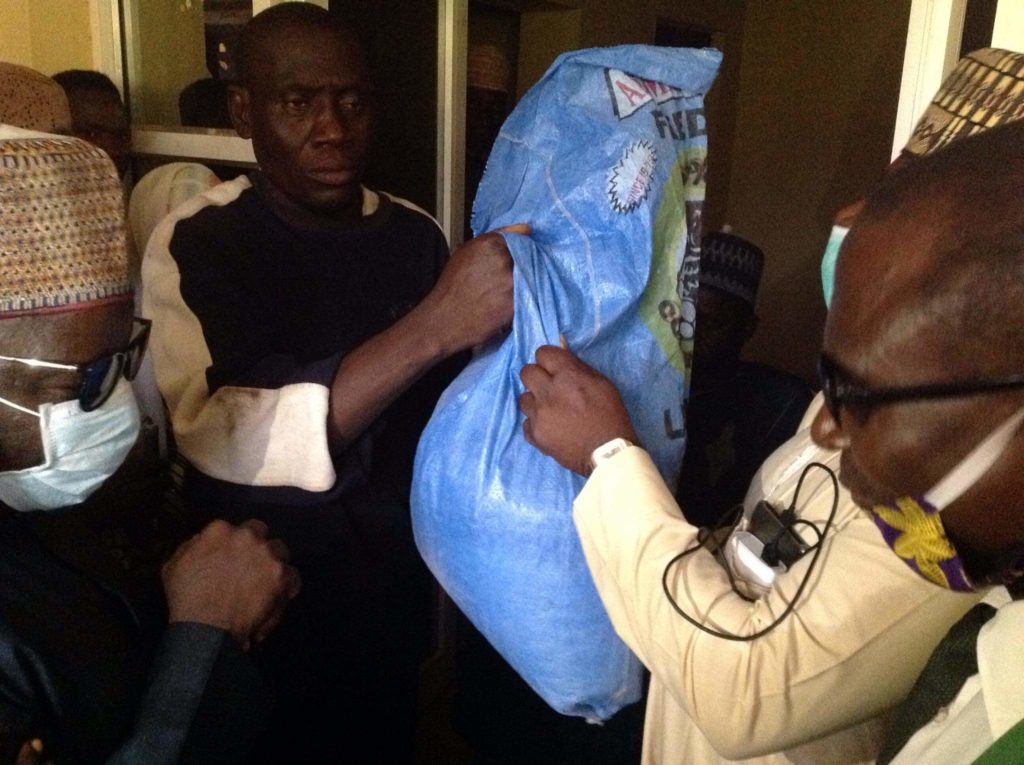
To cushion the effect of the Coronavirus pandemic, ActionAid Nigeria recently distributed relief materials to more than 230 households in Wesere and Aivoji communities in Badagry West Local Council Development Area (WLCDA), located near Benin Republic.

The palliative was distributed through ActionAid’s local partner, Humanity Family Foundation for Peace and Development (HUFFPED). Communications Advisor, ActionAid Nigeria, Kemi Akinremi said the distribution of palliatives in the communities was to cushion the effect of economy downturn on the people as a result of the COVID-19 outbreak, which has led to hunger in the communities.

Executive Director of HUFFPED, Henry Adenigba revealed that the communities decided the items distributed as palliatives. ‘‘Women in the community specifically requested for food and ActionAid and HUFFPED decided we should provide them with a two-week supply, which comprises of 5kg of rice, 10kg of beans, 10kg of gaari, half crate of egg, and other food condiments like a roll of tomato paste, maggi, and salt.”

Awonronsu Maumeh, one of the beneficiaries in Wesere community, said the food package is a huge relief and will cater for two weeks feeding for his family. ‘‘I rely heavily on handouts from people in the community because my disability has restrained me from being able to work, and my children have also gone to town to look for a source of livelihood. They often send me money to feed but it is not regular. With the provisions from ActionAid, my two weeks feeding is assured,” he said.

Chairman, Badagry West LCDA, Joseph Henugbe, while appreciating the orgnaisations for their generosity, said more needed to be done for the people. “The palliatives from the government need to be augmented.”Members of the communities were also sensitised on the precautionary measures to stay safe and remain healthy during the COVID-19 outbreak.


Entrepreneurs With Disabilities In The Throes Of Liquidation

0

By GBENGA OGUNDARE

Nigerians living with disabilities are grieving over the loss of their livelihoods to the Coronavirus, sadly there are many more reasons why the weeping in this vulnerable community may endure.


Bukola Adeniji, 39, has a simple invitation to treat strategically etched on her Whatsapp status: “Cakes for birthday and valentine. Call 08068078439.”

The visually impaired entrepreneur actually does more than that to survive the harsh conditions that persons living with disabilities endure on the streets of Lagos and elsewhere in Nigeria on a normal day.

She also produces and packages bean flour, which she supplies to supermarkets around Ebute Meta area of Lagos where she lives. Blind Bukola Adeniji busy baking for survival

“I also do home deliveries when people make orders via my online marketing drive,” she explained to the reporter.

And the woman was enjoying a huge patronage especially from her cake-baking business because “it targets children, and they are always eager to buy”, according to her.  

But that patronage and profit have disappeared out of sight already – gone with the 2 billion jobs in the informal economy around the world. The International Labour Organization estimates that small-scale entrepreneurs “have suffered massive damage to their capacity to earn a living” due to declining working hours induced by lockdowns to rein in the spread of Coronavirus.

In Nigeria alone, over 40 million of such informal businesses including Ifeanyi Nwafor’s beads and jewellery enterprise have gone down with the lockdown. 

Now in a quandary on the wheelchair, she has been perpetually confined. Ifeanyi is only left to wonder where the next meal will come from after losing her customers and start-up capital to emergencies triggered by the initial five-week lockdown. Ifeanyi Nwafor perfecting her beadmaking craft

“I was making N20,000 per month before the lockdown, but now I don’t have patronage again,” she groaned, adding that, “People are more concerned now about eating than buying jewelleries.”

Already, the UN labour agency is predicting a 10.5 per cent deterioration in working hours during the second quarter of the year and that is equivalent to 305 million full-time jobs, compared to pre-crisis levels

So, in the coming days, it can only get grimmer for Bukola, Ifeanyi, and the crowd of PLWDs struggling to gain economic independence in Nigeria. 

“For millions of workers, no income means no food, no security and no future. Millions of businesses around the world are barely breathing. They have no savings or access to credit,” ILO Director-General, Guy Ryder, said on April 29.

Ryder sure has a bother. PLWDs and the vast crowd working in the informal sector are the real faces of the world of work. And if they don’t get an urgent help now, Ryder worries, they will simply perish.

That’s a doomsaying Bukola is desperate to stave off now. “My major source of income is the schools where I sell my cakes, but now schools have shut down, so I can’t sell again,” she said.

“I really need some support financially now because my capital has been eroded with the lockdown,” she lamented, adding that, ‘I didn’t get the palliative promised persons with disabilities during the lockdown, so virtually all my business capital have gone into taking care of personal needs while we were staying at home.”

Not that there were no palliatives, just that the conditional cash transfer was initially designed to capture a particular set of beneficiaries under a ‘normal’ social and economic environment.

Ene Obi, Country Director at ActionAid Nigeria, argued, “COVID-19 has altered that environment.

“Yet, government’s palliative measures are not prioritising women. The exclusion of the Ministry of Women Affairs from the Presidential Task Force on COVID-19 further hinders the voices and needs of women being captured in governments’ response strategy.”

In April, the Federal Government claimed it spent at least N2bn on cash transfer to 148,176 beneficiaries in 22 states. 

That is approximately N13,500 each for the faceless beneficiaries, which did not include Bukola, Ifeanyi and the crowd of special needs persons reeling under the economic hardship brought on by the lockdown.

Why the denial will linger

The breather entrepreneurs with disabilities desperately desire will not come soon if indeed it ever comes. For one Nigeria, teeming with no fewer than 20 million PLWDs, is still struggling to include this minority population in its public spending—how much less floating a special relief fund to get businesses by special needs entrepreneurs back on their feet.

Funding has always been the excuse. And the government will sing it out louder in these trying times as Nigeria’s oil fortunes dip and its economic handlers watch on helplessly as COVID-19 ravages everything in sight. 

For instance, of the 80,000 households and small businesses that scrambled for the N50bn credit facility which the CBN proposed to dole out to households and SMEs through the Nigeria Incentive-based Risk Sharing System for Agricultural Lending Microfinance Bank, only 3,256 – less than five per cent of the total applicants, made it through the shortlist, the CBN announced in May.

The list of potential beneficiaries did not include Babatunde Mohammed however. Also, an entrepreneur living with visual impairment, Mohammed could not meet the conditions stipulated by the apex bank for anyone seeking to access the credit. 

“I didn’t have the insurance requirement they asked for and that automatically disqualified me from the application process,” Mohammed said.  

If he and other Nigerians with special needs had not been schemed out by the CBN stringent conditions for loan applicants, Mohammed, whose enterprise involves procurement of assistive technology and mobility devices for persons with disabilities, would have saved the livelihoods of two families whose breadwinners work as staff in his TBlaze General Services.

“I pay at least N100,000 in salaries to the two members of staff in my employ, and that’s aside from other ad hoc staff I use every now and then as my business demands.

“But as it is now, I will need urgent capital to be injected into the business to make it survive. There are devices I need to procure before my clients begin to make their orders,” Mohammed told the reporter.

Only a swift cash relief intervention that makes recovery effective and sustainable for special needs persons and their businesses will help lift Mohammed out of his present quagmire. 

And Switzerland is offering a global example in this regard – creating rapid access to credit facilities through its Federal Council to its SMEs so they can bridge liquidity shortfalls. 

Over 76,000 small businesses in the country have benefitted from the emergency loans already, more than other countries in Europe, according to the Financial Times.

The success of the Switzerland intervention can be traced to partnership between government and private sector players. The rapid credit plan, for instance, is the brainchild of Thomas Gottstein, the Chief Executive of Credit Suisse, who worked with Finance Minister, Ueli Maurer, and others to set up a task force.

If implemented, that kind of coordinated partnership is capable of fast-tracking small business aid in Nigeria actually.

But for small enterprises run by Mohammed and his clan of entrepreneurs with disabilities, there is a snag. Paucity of credible data on the population of PLWDs in Nigeria as well as their geographical spread will likely make access to credit facility by members of this community a nightmarish experience.

Obviously outdated now, just one national eye health survey has ever been carried out in Nigeria since over a decade ago, for instance. 

Accurate population figure or not, people are skeptical already that relief funds won’t trickle down to the small business owners and traders that need it the most. 

And in the case of entrepreneurs living with disabilities, the odds are stacked high against them, according to David Anyaele, Executive Director at Centre for Citizens with Disabilities.

“They (PLWDs) may never be able to access any support fund from government,” Anyaele said, adding that, “Because the program is not designed with a disability eye lens.”

That’s a glaring discrimination for entrepreneurs with disabilities looking to recover from the blow dealt their businesses by the lockdown.  

And the impact for this disadvantaged community can only get more dangerous in the coming days as infection rate spikes across the country. 

This report was facilitated by the Wole Soyinka Centre for Investigative Journalism (WSCIJ) under its COVID-19 Reality Check project.

Source: Sahara reporters

COVID-19 Lockdown: 4,000 residents in Gamboru, Limanti benefits from Gov. Zulum’s palliative, 10% were persons with disabilities

0

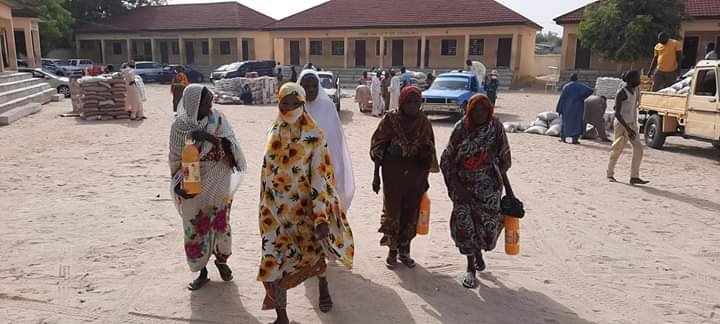
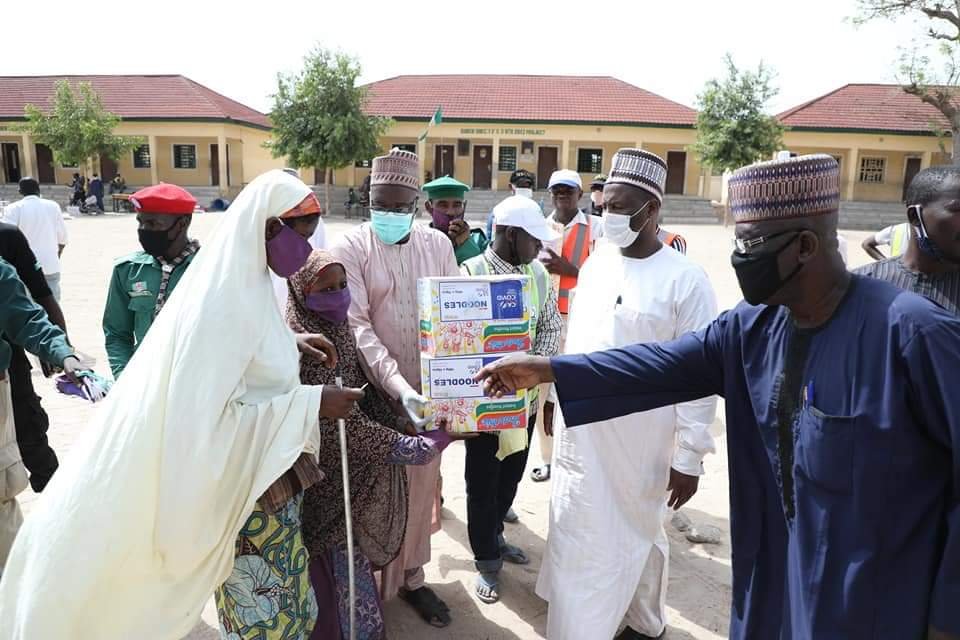
Not fewer than 4,000 households benefited from the distribution of palliatives approved by Governor Babagana Umara Zulum to cushion effects of the lockdown order in the state.

24,000 households were reached since the exercise was flagged off by Governor Zulum on 25th April, 2020 at the Muna Custom house in Jere Local Government Area.

The exercise which took place on Friday 8 May in Limanti and Gamboru wards, were coordinated by the 16 members committee led by the Hon. Commissioner of Agriculture, Engr. Bukar Talba.

Each beneficiary received one bag of rice, one bag of millet grain, one carton of pasta, cooking oil and some condiments.

Speaking to newsmen after the distribution, Engr. Talba explained that the exercise targets 100,000 households, comprising of IDPs and the host community.

He added, “we have so far delivered food items to 24,000 households. We are determined to reach 60,000 vulnerable households within the host community.”

The Commissioner however disputed claims that the beneficiaries were mostly members of the ruling All Progressives Congress (APC). He further explained that there is a criteria for the selection of the beneficiaries which was independently done by the community leaders.

“We have a laid down criteria for the distribution. 2,000 households were selected in each ward. Of these, 50% beneficiaries are vulnerables members ofhe community, 20% widows, 20% aged, and 10% people living with disabilities selected.
We have entrusted the community leaders to do the selection process as they know their people better.” Engr. Talba said.

Not fewer than 4,000 households benefited from the distribution of palliatives approved by Governor Babagana Umara Zulum to cushion effects of the lockdown order in the state.

24,000 households were reached since the exercise was flagged off by Governor Zulum on 25th April, 2020 at the Muna Custom house in Jere Local Government Area.

Today’s exercise which took place in Limanti and Gamboru wards, were coordinated by the 16 members committee led by the Hon. Commissioner of Agriculture, Engr. Bukar Talba.

Each beneficiary received one bag of rice, one bag of millet grain, one carton of pasta, cooking oil and some condiments.

Speaking to newsmen after the distribution, Engr. Talba explained that the exercise targets 100,000 households, comprising of IDPs and the host community.

He added, “we have so far delivered food items to 24,000 households. We are determined to reach 60,000 vulnerable households within the host community.”

The Commissioner however disputed claims that the beneficiaries were mostly members of the ruling All Progressives Congress (APC). He further explained that there is a criteria for the selection of the beneficiaries which was independently done by the community leaders.

“We have a laid down criteria for the distribution. 2,000 households were selected in each ward. Of these, 50% beneficiaries are vulnerables members ofhe community, 20% widows, 20% aged, and 10% people with disabilities selected.
We have entrusted the community leaders to do the selection process as they know their people better.” Engr. Talba said.

COVID-19 Palliative: Beautiful Gates Handicapped People Centre Jos reaches out to PWDs in Jos East, B/Ladi & Riyom LGAs

0

As part of its commitment towards cushioning the adverse effect of COVID-19 Pandemic on persons with disabilities, Beautiful Gate Handicapped People Center on Friday distributed food items to persons with disabilities in Jos East, Barkin Ladi and Riyom Local Government Areas, Plateau State.

Delivering the items in a low-key event that held in the Council Secretariat complex in the above mentioned Local Government Areas to observe the social distancing order, the CEO Beautiful Gate Handicapped People Center, a great Philanthropist, Chief Ayuba Burki Gufwan disclosed that he was there to demonstrate love and compassion for persons with disabilities with the food items to help alleviate their sufferings in this trying time.


Chief Ayuba Burki Gufwan, CEO Beautiful Gates Handicapped People Centre, Jos

He said COVID-19 pandemic has affected social, economic, religious and other activities of persons with disabilities and they need help from all and sundry.

He said government alone cannot do it that’s why Beautiful Gate Handicapped People Centre is here to complement the effort of government.

He charged the Council Chairman of the areas to always consider people with disabilities in their activities especially at a time like this so they can get palliatives to cushion the adverse effect of COVID-19 pandemic.

Chief Ayuba urged PWDs in the Area to always assist their members who may be in need.

He said the reason why the center targeted People with disabilities is because they constitute the poorest of the poor in the society and need special attention and in addition, the means of livelihood of the people has been greatly affected on account of the pandemic.

He called for government intervention in providing farm inputs now that the rainy season is here.

He advised the PWDs to stick to all preventive measures advised by health experts and government directives aimed at curtailing the spread of the virus while urging government at all levels to increase palliative interventions to the people.

In his remarks, Plateau State Chairman Joint Association of People with disabilities, Hon. Seth Ata appreciated the humanitarian gesture which is a show of love and empathy, calling on government at all levels, NGOs and well spirited individuals to emulate Hon. Ayuba Burki Gufwan and extend their palliatives to PWDs in this trying times.

He urged the Chairman of JONAPWD to always engage persons with disabilities to give them sense of belonging in the society.

He appreciated Chief Ayuba Gufwan for identifying with Members of his Constituency in the entire State.

In their separate remarks, Council Chairmen of the Areas visited Lauded Beautiful Gate Handicapped People Centre for identifying with people with disability in his humanitarian intervention.
They gave assurance to always carry people with disabilities along in all their policies.

The Chairmen of the Local Government JONAPWD in the areas visited who couldn’t hide their joy commended the empathy displayed by Hon. Ayuba Gufwan and prayed God to open greater doors so he can reach more persons with disabilities.

They lauded his impacts on the less privileged and vulnerable in the society saying his contributions to human capital development can never go unnoticed.

The food items shared to 300 beneficiaries (100 each) in the 3 Local Government Areas were rice, beans, garri and maize.

The Centre have been done similar gesture to people with disabilities in 14 other Local Government Areas in the State.

Some pictures of the event:

PWDs are fully involved in Governance Process in B/Ladi LGA – Barr. Musa Davou

0

The Joint National Association of Persons with disabilities(JONAPWD) in Barkin Ladi LGA has lauded the Local Council for carrying them along in the governance process and giving them sense of belonging.

The group commended the Management Committee Chairman, Hon. Barr. Ezekiel Mandyau and his Team for always identifying with persons with disabilities and recognizing them.

This was disclosed by the Chairman, JONAPWD Barkin Ladi LGA, Barr. Musa Davou when he received food items by Beautiful Gates Handicapped People Centre Jos as palliatives to cushion the adverse effect of COVID-19 Pandemic on Friday 15th May, 2020 at the Barkin Ladi Council Secretariat.

Barr. Musa Davou while appreciating the CEO of Beautiful Gates Handicapped People Centre for identifying with them by extending humanitarian intervention to them expressed satisfaction with the recognition accorded to them.

He said that the association were included in the palliative committee in the Area which has increased their hope in future engagements.

Delivering the items in a low-key event to stick to social distancing, the CEO Beautiful Gate Handicapped People Center and a great Philanthropist, Chief Ayuba Burki Gufwan disclosed that he was there to demonstrate love and assist the target persons with food items to alleviate their sufferings.

Chief Ayuba Burki Gufwan, CEO Beautiful Gates Handicapped People Centre Jos said COVID-19 pandemic has affected social, economic, religious and other activities.

He said government alone cannot do it hence the intervention from Beautiful Gate Handicapped People Centre.

He charged the Council Chairman to always consider people with disabilities in their activities most importantly now so they can get palliatives to cushion the adverse effect of COVID-19 pandemic.

Chief Ayuba urged the beneficiaries to also assist people who may be in need.

He said he targeted People with disabilities because they constitute the poorest of the poor in the society and need special attention.

In his remarks, Plateau State Chairman Joint Association of People with disabilities, Hon. Seth Ata appreciated the humanitarian gesture saying that it depicts love and empathy, calling on government at all levels, NGOs and well spirited individuals to emulate Hon. Ayuba Burki Gufwan by assisting the people with palliatives in this trying times.

He urged the Council Chairman to always engage persons with disabilities to give them sense of belonging in the society.

Barr. Ezekiel Mandyau, the Management Committee Chairman of Barkin Ladi LGC who was represented by the Information Officer of the Council, Mr. Zakari Mohammed Gonto commended Beautiful Gates Handicapped People Centre for assisting the less privileged and vulnerable in the Area.

He said his administration will continue to partner and engage people with disabilities in the area in terms of humanitarian interventions and other activities.

Mr. Zakari urged the persons with disabilities to use their potentials for the peace, unity, growth and development of the area describing them as special persons with multidimensional talents which must be harnessed for societal transformation. He added that the Council will not relent in giving greater attention to persons with disabilities and the less privileged in the area.

He said the Council is opened to progressive and constructive engagements with persons living with disability.

He urged them to use the food items for the purpose they were given and assist those who are in need but the gesture may not reach.

Mr. Zakari charged them to abide by all preventive measures put in place by health experts and government directives at all levels aimed at stemming the spread of COVID-19 Pandemic.

The Food items distributed to 100 beneficiaries by Beautiful Gates were Rice, Beans, Maize and Garri.

Source: ViewpointNigeria

NYSC members donate palliatives in Lagos community

0

Some members of the National Youth Service Corps (NYSC) in Obalende/Ikoyi Local Government Area of Lagos State, have donated palliatives to some less privileged in cushioning the effect of COVID-19 pandemic.

Food items such as garri, beans, rice, and noodles were distributed to no fewer than 210 people in their host community.

Mr Afolabi Babatunde, who spoke on behalf of the corps members, told NAN that they came together and task themselves on how to support indigent people in their host community.

Babatunde said that they also enlightened the community on how to adhere to the precautionary measures, like the use of face masks and social distancing to contain the spread of COVID-19 pandemic.

“We are doing this because we care for our host community.

“We understand the challenges they are facing, especially those who cannot afford the three square meals.

“We may not be able to give everybody, but with the little we give, we know the community will appreciate it,’’ Babatunde told NAN.

The NYSC Coordinator in Lagos, Mr Eddy Megwa, said he was proud about the efforts of the corps members in their responses to curb the spread Coronavirus through sensitisation and reaching out to indigents people.

Megwa said: “Indeed they have shown how their training is bringing out the best in them, especially as a symbol of national unity.

“It is a remarkable initiative; we are proud of our corps members all over the nation.

“Indeed, they have shown the nation one of the ways of preaching national peace and unity.

“We want to say thank you to the community for coming out to receive the palliatives and most importantly for supporting us with shelter and proving jobs for us.’’

Muslim Groups Donate Relief Packages To 500 vulnerable and Persons with disabilities In Oyo State

0

By Saheed Salawu

FIVE hundred underprivileged people in Oyo State have benefitted from food items distributed as relief packages by the Muslim Coaliton Against COVID-19.

The items distributed are rice, beans and garri.

The beneficiaries, coordinated by five Muslim organisations under the coalition, were drawn from 10 local government areas.

The local governments are Afijio, Atiba, Ibarapa, Ogbomoso North, Ogbomoso South, Ibadan North, Ibadan North West, Ibadan South West, Akinyele and Lagelu.

The five coordinatimg organisations are the Muslim Students’ Society of Nigeria (MSSN), Dawah Front, The Muslim Congress (TMC), Federation of Muslim Women’s Associations in Nigeria (FOMWAN) and Al-Mu’minaat (The Believing Women) Organisation.

At the presentation of the packages in Ibadan to the organisations for onward distribution to the beneficiaries, the Oyo State coordinator of the group, Alhaji Abideen Ladeji, said the palliatives were meant to reduce the hardship being faced by the people in the midst of the ravaging coronavirus pandemic.

“The beneficiaries are basically the poor, irrespective of religion and people with disabilities. These are people who are mostly affected by this lockdown due to coronavirus.

“We are starting this distribution in Abuja, Lagos, Rivers, Oyo and Osun states and we have spent over N5 million for the pilot scheme,” Alhaji Ladeji said.

He said the coalition, which consists of over 50 organisations, aimed to spend N500 million on the vulnerable throughout the country, stressing that they would come back to Oyo State to cover more local government areas.

One of the beneficiaries, Mr Tijani Abdullah, a person with disability, commended the gesture and described it as timely.

“A lot of persons with disabilities are just there at home suffering from hunger at this period of COVID-19 pandemic restrictions. We really appreciate this gesture,” he said.

Another beneficiary, Mrs Oyedele Afsat, equally commended the coalition, saying things were very difficult at this period.

She called on government at all levels to come to the aid of the underprivileged in the society.

Acting Chairman Persons With Disabilities Niger Delta’s Appeal To The Management Of NDDC

0

Acting Chairman Inigbelabia Reuben Oba, Of Persons with Disabilities in Niger Delta and other states members Of the association will love to thank Niger Delta development commission (NDDC) for all they have been doing for persons with disabilities.


The last supply of palliative given to PWDs though was misused by some few persons in the organizational, that not withstanding, PWD has changed the leadership of Mr Simon Bidei due to reasons best known to us. We have entrusted our leadership on Mr Inigbelabia Reuben Oba.


We are appealing for PWD to be included in the second batch of the distribution of palliative to cushion the impact of pandemic corona virus. We are the most affected even though we haven’t gotten the virus yet. The PWD are finding it hard to survive when the pandemic corona virus wasn’t there, not to talk of now that there is corona virus and a lockdown to top it all.


We are appealing once again mostly calling on the Acting Managing Director Prof Kemebradikumo Pondei and the chairman of the committee for the distribution of palliative Chief soboma jackrich to include the persons living with Disabilities in 9 States that make up Niger Delta region to include PWD’s in your distribution of palliative. It must be done through Mr Inigbelabia Reuben Oba, who will ensure that these palliatives will be evenly distributed to those affected.


We say a very big thank you for all you have been doing for us, God will continue to bless you. We are proud to inform you that PWD now have qualified graduates in different fields , who are ready to start working.


It ‘s said “teach a man how to catch fish and stop giving him fish.
Sign
Inigbelabia Reuben Oba
(Acting Chairman PWD Niger Delta)