Friday, December 26, 2025
Home Blog Page 493

Army Day: 3 Division distributes palliatives to 500 widows, PWDs in Plateau

0

The 3 Division of the Nigerian Army, Rukuba, near Jos has distributed palliatives to 500 Widows, Widowers, Orphans and Persons With Disabilities in Gangare and Tudun Wada communities of Jos North Local Government Area of Plateau State.

Presenting the items separately to the beneficiaries on Saturday, the General Officer Commanding of the Division, Major General Nuhu Angbazo, said the gesture was part of the 2020 Nigerian Army Day Celebration.

Represented by Brigadier General Idowu Akinlawon, the Chief of Staff of the Division, Angbazo added that the gesture was aimed at cushioning the hardships caused by the advent of the COVID-19 pandemic.

Angbazo said the initiative was a directive by the Chief of Army of Staff, Lieutenant General Tukur Buratai, as part of activities marking the NADCEL.

He also said the distribution of the palliatives formed a crucial part of the 2020 NADCEL, adding that the gesture was to promote civil-military relations.

He said: “The Nigerian Army is celebrating its 157 years of existence; it is a week set aside to appreciate and encourage the gallant men.

“As part of this year’s celebration, the Chief of Army Staff, a very caring and passionate personality, has directed that instead of making merry, we should extend love to the needy in the society.

“We know the hardships that people are currently passing through, especially with the advent of COVID-19.

“These items we are distributing today are not something big, but a token to reduce the sufferings of these categories of people.”

The GOC urged the beneficiaries put the items to good use and share with others in their respective communities.

Speaking at the event, Governor Simon Lalong of Plateau State lauded the army for the gesture, describing it as “timely”.

Represented by Irimiya Werr, Plateau State Commissioner for Special Duties and Inter-Governmental Affairs, Lalong said the gesture goes to show that the Army was not only concerned with the security, but also welfare of the people as well.

He said: “The Nigerian Army no doubt has been giving us an exemplary style of leadership, and today we are witnessing yet one of such.

“What we are witnessing today goes to show that you are not just concerned about the safety of lives and property, but the welfare of the people as well.

“So, as a government, we want to thank the Nigerian Army for this wonderful gesture.”

The governor advised residents of the state to strictly adhere to the safety protocols against the virus put in place by the government. ( Eagle Online)

COVID-19 lockdown: How ‘diversion’ denied many poor, vulnerable persons govt’s food

0

AFEEZ HANAFI tracks irregularities in the distribution of COVID-19 Emergency Food Response Initiative of the Lagos State Government and the Federal Government’s Conditional Cash Transfer scheme in the state

Neighbours and good Samaritans dictate whether Kafayat Ayobami and her eight-year-old son get their daily meals or go hungry. Such is the pitiable fate that has defined the living of the duo in the past four years when the 31-year-old single mother lost her sight.

While they grappled with vagaries of survival, nationwide lockdown imposed by the President, Major General Muhammadu Buhari (retd.), to check the spread of the coronavirus pandemic compounded their ordeal.

They could no longer go outside their community in Maya, on the outskirts of Ikorodu, Lagos, to beg for alms for fear of contracting the virus.

Every other day, the effect of the lockdown stung mother and son to no end. They pounced on any food item gifted to them as it came and have had to skip meals on several occasions. Many of their neighbours who usually lend a helping hand were also struggling with the tough period.

Few weeks into the lockdown, the Lagos State Government announced its COVID-19 Emergency Food Response Initiative “committed to reaching the poor and vulnerable regardless of their location within the state.”

Lagos, being the epicentre of the virus in Nigeria, received N10bn from the Federal Government to support emergency response to the pandemic.

As the distribution commenced, Ayobami’s expectation that the food palliative would reach her doorstep was high; particularly as the state government made a separate arrangement for persons living with disability.

“Some officials called me during the lockdown and said they wanted to give me food items,” Ayobami stated during an encounter with our correspondent mid June.

“They said my house was too far and that they could not come. I called them again but their line didn’t go through,” she remarked grimly while being led by her son to a wooden bench in front of their mini apartment.

While the about two months’ lockdown lasted in the Africa’s fifth largest economy, Ayobami and her son lived every day on the off chance, hoping that help would come their way from anyone.

She said, “I didn’t receive any food palliative from the state government. It was the chairman, association of the blind in Lagos who sent N5,000 to me which I used to feed myself and my son for some days. Many times, I cried because there was nothing for us to eat. We had to combine breakfast with lunch on many occasions.

“I was selling provisions before I lost my sight. I spent all my capital to treat the eyes to no avail. I started going out with my child to beg for alms but we stopped because of the virus. I didn’t want to put him at risk.”

The Lagos State Commissioner for Information and Strategy, Mr Gbenga Omotosho, said in March that the state government would be giving five-kilogramme bags of rice, beans, garri, loaves of bread, dry pepper, water “and some elements of Vitamin C,” to 200,000 poor and vulnerable households.

The immediate past Commissioner for Agriculture, Mr Gbolahan Lawal, also stated that the government would work with the existing database, using the Lagos State Residents Register Agency and registered community development associations in 377 wards to reach the beneficiaries.

In April, Lawal said the government had ‘crossed’ the first phase of the programme that was supposed to cater to 200,000 households and “moved to specialised areas, groups, such as the physically challenged people, whose data we have through our Office of Disability Affairs.”

Unfortunately, the food ration never got to Ayobami and some other physically challenged people across the state, said the Chairman, Nigeria Association of the Blind, Lagos branch, Mr Babatunde Mohammed.

“The state government promised to do door-to-door delivery to our members but they did not do that,” Mohammed told Sunday PUNCH. “Initially, they sent text messages to most of us, asking if we still occupy our addresses where we did our LASRRA. I was happy that eventually LASRRA is useful. But at the end of the day, most of our members were exempted from the palliatives.”

Mohammed explained that a member of the association was part of the government team that went to Agege, Ikeja and Ogba to distribute the food items to PWDs, adding that only one Olaniyi got the palliative in Agege.

He stated, “When they finished the exercise that day, they gave Kemi (the member) 10 food packs to distribute to other members. She called me and I had to pay a dispatch rider to distribute the packs to some of our members in Ogba, Agege and Iyana Ipaja, who were calling me consistently.

“The Chairman, Joint National Association of Persons Living with Disability, Lagos State branch, Dr Adebukola Adebayo, worked with the Ministry of Agriculture and they went to every local government to distribute food palliatives to our members. They told people to gather at three or four locations within a local government, so our members had to trek down there.

“They gave quite a number of our members in Alimosho LGA. In Kosofe, many people could not get because they did not have information about the location in good time and it was difficult for them to get there. On Lagos Island, they (officials) were waylaid by hoodlums. They had to run away and could not return there.

“Out of over 100 members in Ikorodu, only 31 got food packs and there was no even distribution. Some people got spaghetti and sugar while others got rice and beans. I didn’t get the palliative because I was more concerned about my people.”

Adebayo, in an interview with our correspondent, noted that PWD community was not properly engaged by the state government in the planning of the COVID-19 relief programme, leading to the exclusion of many potential beneficiaries.

“Not planning for emergency is a failure on the part of government at all levels and I will score the government 30 per cent. There was problem with the distribution of food. Sometimes, politicians hijacked it and it didn’t get to the people it was meant for,” he added.

The JONAPWD chairman disclosed that he was involved in the distribution of the food rations, adding that of hundreds of thousands of PWDs in Lagos, 3,000 food packs were provided with support from non-governmental organisations.

The 2006 Nigerian census indicated that 3.3 million Nigerians or 2.32 per cent of the population had disabilities. The figure was questioned as underreported just as the population has increased from 140,431,790 then to about 200 million according to the World Poverty Clock. Lagos population is reportedly over 20 million.

The 2011 world report on disability said about 25 million Nigerians had at least one disability while 3.6 million of the figures had significant difficulties in functioning.

Adebayo said the food packs were initially meant to be delivered door-to-door but it was realised that the government didn’t have the logistics to do so.

He stated, “Many of our members who are blind and those in wheelchair found it difficult to come to the distribution centres. Hoodlums also waylaid us but it was not rampant.

“The food items available were just too few. The package contained 5kg of rice, 5kg of beans and 5kg of garri. There were also seasoning and a litre of groundnut oil there.

“Next time government wants to do something like this, the Lagos State Office of Disability Affairs should be actively involved. Data collected from LASODA was obsolete.”

Adebayo maintained that no PWD in Lagos benefited from the Federal Government Conditional Cash Transfer during the lockdown but said plans were underway to include some members.

Buhari had directed the Ministry of Humanitarian Affairs, Disaster Management and Social Development in March to pay N20,000 (a cumulative of N5,000 for four months) to 2.6 million poor, vulnerable Nigerians on the National Social Register to mitigate hardship caused by COVID-19. The tally was later extended to 3.6 million to accommodate more people.

Following the outbreak of coronavirus in the country, the Federal Government raked in about N27bn donations from individuals and corporate organisations to manage the pandemic.

The International Monetary Fund also released $3.4bn (about N1.2tn, at N380 to $1) early May to Nigeria to address challenges arising from the economic impact of COVID-19.

Food items we got, far below govt’s promise – Residents

In separate interviews with our correspondent, heads of registered CDAs in various Lagos communities said food palliatives distributed grossly fell short of what they expected of government. Others said they only got some food quantities from their local councils.

In most cases, two or three food packs were given to an entire community to share. In the end, few elderly people got two to three dericas (a tin of about 600ml) of rice, beans or garri while many others didn’t get at all, Sunday PUNCH’s investigation showed.

“We didn’t get anything from the Lagos State Government,” the Chairman, Oke-Aro CDA, Ibereko, Badagry, Mr Johnson Ajele, declared.

“It was Olorunda Local Council Development Area that sent us two small bags containing three dericas of rice and beans, and one bottle water. We were asked to give the food to underprivileged people in our community. They told us to take pictures of the beneficiaries and send to them.

“We gave the food items to two old poor people. Some days after, a former commissioner sent two polythene bags of food rations containing three dericas of rice, three dericas of beans and three dericas of garri. We shared it to six poor elderly people in the community out of about 80 of them. We didn’t get any cash from the Federal Government,” he added.

Chairman, Mulero-Ashafa CDA, Alhaji Adisa Korodo, said they waited to no avail for the state’s COVID-19 emergency food response, before the Orile-Agege LCDA chairman gave the community seven bags of rice and beans shared to each family in two dericas.

“We only heard of the state government food palliatives. We didn’t get it. It ended up in the hands of politicians. We were asked to come to Oyewole Primary School on Friday, March 27.

“Some executive members went there to represent our CDA. The people who wanted to distribute it came late and asked us to come the next day. The following day, the officials went to Oniwaya (a neighbouring community). Our members went there but nothing was given to them,” said 79-year-old Korodo, who is also an executive member, Community Development Committee, Orile-Agege.

President of the Joint 19 CDAs in Selewu, Igbogbo, Ikorodu, Mr Segun Daniyan, told our correspondent that some packs containing rice, beans, garri, five loaves of bread and two sachets of tomato were given to five CDAs by the state government.

“My CDA got three packs,” Chairman, the Exclusives CDA – one of the 19 CDAs – Mr Akinpelu Atoyebi, stated.

“We shared the food items to nine underprivileged people. Some got garri, some got rice while others got beans. Some other CDAs got one or two packs.”

Secretary, Forolagba CDA, Ifako in the Kosofe Local Government Area of the state, Mr Azeez Ademosu, explained that a food pack, comprising 5kg of rice, 5kg of beans and 5kg of garri was shared among 20 poor families in his domain.

“The local government also gave us one 5kg of rice and garri and one carton of noodles which we shared among ourselves. Some people were given small rice, some got beans, while others received garri,” he noted.

An elder in Akodo community, Ibeju-Lekki, Alhaji Najeem Jegede, said he only got 5kg of beans with the label COVID-19 Emergency Food Response from the state government and not the complete food ration.

He lamented, “The distribution was faulty because a lot of our people didn’t get. People believed the food was diverted by some politicians in charge of the distribution.

“It was our local government chairman who gave people takeaway packs while a commissioner from Ibeju-Lekki shared some food items.”

Few food packs for many vulnerable persons 

Residents of Ifelodun CDA, Itire, Mushin LGA, were perhaps among the ‘luckiest beneficiaries’ of the food palliatives. Of about 400 people aged 55 and above in the community, 80 people got a pack of food ration each, said the chairman, Mr Rasheed Bakare.

“We got the food around April through the local government. The council invited all the CDA leaders and gave us 80 packs of food items to distribute to residents from 55-year-old and above, but a lot of people did not get. Nobody got a dime from the Federal Government,” Bakare submitted.

Chairman, Ijebutedo CDA, Somolu LGA, Mr Fatai Adeniji, noted that the state government also distributed the food palliatives in his CDA.

“I benefited from the food but many people didn’t get. As for the N20,000 cash promised by the Federal Government, nobody received it in my CDA,” Adeniji, 58, added.

We didn’t get any food palliatives– Indigent elderly

At 60s, Mrs Wuraola Aiyeni of Radiatu Osoba Street, Igbo-Olomu, Ikorodu, has yet to bid farewell to hard labour.

She fetches logs of wood from bushes and sells to locals to put food on the table for her five children. The eldest among them is 25 years old and an apprentice carpenter while others are in school.

As the rainy season started, accessing bushes increasingly became difficult for the sexagenarian.

“Surviving is difficult but it was much more difficult during the lockdown,” Aiyeni spoke stealthily. “I didn’t get any palliatives and coping with five children was really tough for me. Their father is no longer with us.”

A similar slice of abject lack worsened by the COVID-19 lockdown was what Aiyeni’s neighbour, Mrs Modinat Idowu, also fought off.

A widow with six children, life has taken a harsh toll on the 72-year-old woman while struggling to cater to her six children.

She stated, “I retired as a market sweeper. I live on gestures from one of my children and residents but during the lockdown, I could barely get anything from them because they were not working.

“I didn’t get any food or cash from government. It was a tough time for me but I am grateful to God that I survived.”

Some underprivileged people in the Eti-Osa LGA, who also shared their ordeal during the lockdown, with Sunday PUNCH, complained that they didn’t benefit from the food ration.

A 61-year-old retiree, Mr Ebine Ifeniyi of Ibamo community on Ajah-Ado Road, relived days he endured hunger and skipped breakfast or lunch.

He said, “I am one of the elders in the community. None of us in this area got food palliatives from the government. It was God that kept me throughout the lockdown. It was really tough. There were times I had to eat garri.

“I retired as an hotelier 17 years ago. My wife and I have a small provision shop we manage but sales dropped drastically during lockdown. We are at least 25 elderly people in my community. None of us got any palliatives.”

Mr Jackson David of Okera Kekere, Eti-Osa, was also caught in the turbulent time without any succour from either the state or federal government to cushion the effect.

“My family ate once or twice a day during that time. It annoys me when I hear story that government distributed food because it didn’t get here. If they gave to the younger ones, are my children not young enough to collect? Everything is politics.

“Many of us are elderly and vulnerable here, yet we didn’t receive anything. I have LASRRA card and a national ID card which means my details are with the government and they can use them to reach out to me,” the 65-year-old retiree noted.

The traditional ruler (otherwise known as baale) of Orimedu in Ibeju-Lekki, Chief Mubashiru Abiodun, revealed that some officials came to his community in June and collected details of potential beneficiaries of the COVID-19 food package.

“They promised to come back with food but we have not seen them. There are about 60 people of age 55 and above in my community. It was very difficult for my people to survive during the lockdown,” Abiodun, 60, added.

We distributed food to 500,00 households, not everyone’ll get –LASG

Omotosho said in a state with over 20 million population, it was normal for people to complain they did not get the food ration.

He noted that the palliatives were meant for “the poorest of the poor and vulnerable people who don’t know where their next meal will come from.”

When our correspondent told him that many poor, vulnerable households the food packs were meant for did not receive them, he said, “They would not get because in Lagos we have about 22 million people. If you tell people to register, they won’t. People come to Lagos every day, yet they want the government to take care of them.”

He added, “There is no evidence of diversion. It might have happened but I didn’t see it. Where did they divert it to? No politician will divert the food and put it in their room; they will still give to people. There is no way you can do something as massive as this and there wouldn’t be errors. This is the first time we are doing this kind of thing.

“We have the data of physically challenged people. We have the Office of Disability Affairs where they have been registered. That is why it was easy for us.”

When told of physically challenged people who could not get the palliatives because of the alleged ‘obsolete data,’ he said there was no way government would give food to everybody.

Sunday PUNCH requested the monetary value of the total food packs distributed by the government from the state Ministry of Agriculture which coordinated the programme but did not get a reply.

“A lot of information has been put out there has to the monetary value and quantity of the food items distributed. You can check online and get back to me. We have distributed to about 500,000 households,” the Acting Commissioner for Agriculture, Ms Abisola Olusanya, said.

Multiple checks by our correspondent indicated that the monetary value was not in the public domain.

Subsequent calls put across to Olusanya’s mobile were not picked up and she had yet to reply to a text message sent to her as of press time.

CCT failed in Lagos during total lockdown

To lessen the impact of the total lockdown on the vulnerable people, the President ordered that four months’ payments of N20,000 be paid upfront to beneficiaries of the Conditional Cash Transfer across the country.

All the elderly, poor Lagos residents Sunday PUNCH interviewed said they did not receive the money while languishing in hunger during the lockdown.

Our correspondent evoked the Freedom of Information Act, requesting the Ministry of Humanitarian Affairs, Disaster Management and Social Development on June 16, 2020 to provide details of Lagos beneficiaries of the N5,000 CCT. There was no response from the ministry as of Saturday – more than one week after the seven-day timeline elapsed.

However, the state Commissioner for Local Government and Community Affairs, Mrs Yetunde Arobieke, said 8,147 beneficiaries had been enrolled and would soon be given their wallet identity cards to access the fund.

She stated, “Government is starting with six local government areas (Ibeju-Lekki, Epe, Amuwo-Odofin, Apapa, Badagry and Lagos Island) which are 30 per cent of the local government areas in the state. From there, we will move to 70 per cent and then 100 per cent.

“They (Federal Government) actually started with the most indigent (people) according to the statistical rating of Lagos State; people who are not only poor but are living in blighted areas.

“The first enrollment was 8,147. It is a continuous process. We just finished another 5,865 and we are moving to do the enrollment. That is where we come in as a ministry. We enroll the beneficiaries for their wallet ID cards which they will use to access the N5,000.

“We were supposed to start giving out the wallet ID cards to the first batch of beneficiaries this week but it has been postponed till next week (from June 29). If we have households with a lot of children, we will give them extra N5,000. If there are pregnant people there, we will give them N15,000.”

When our correspondent requested the list of those already enrolled, the commissioner asked him to monitor the exercise in the six local government areas.

The Socio-Economic Rights and Accountability Project in a tweet on Friday said failure by the Federal Ministry of Humanitarian Affairs, Disaster Management and Social Development and Central Bank of Nigeria to provide names of beneficiaries of the COVID-19 funds was in violation of the Framework for the Management of COVID-19 Funds in Nigeria.

“The Framework for the Management of COVID-19 Funds in Nigeria put together by AGF (Attorney General of the Federation) and Finance Ministry states that ‘it is mandatory for all MDAs (ministries, departments and agencies) to provide information on all COVID-19 Fund transactions to any member of the public under the FOI within seven days of receiving the request.

“The Framework also states that ‘failure to publish timely report of COVID-19 activities and spending in response to FOI request will constitute early warning signs of mismanagement and shall be deemed as contravention of this guideline,” the group wrote on its Twitter page, @SerapNigeria.

Commenting on the irregularities surrounding the COVID-19 palliatives in an interview with our correspondent on Friday, SERAP Executive Director, Mr Mumuni Adetokunbo, urged government to ensure transparency and probity “so that people entitled to palliatives will not have any cause to complain they didn’t get them.”

Source: PUNCH

COVID-19: EU Donates 18.7m Palliatives To Victims Of Trafficking In NAPTIP

0

As part of its response to assist the Federal Government tackle the effect of the Novel Coronavirus (COVID-19), the European Union (EU) has donated personal protective equipment (PPE), food items and disinfection and hygiene products worth 18, 722, 000 to shelters operated by the national agency for Prohibition of Trafficking in persons (NAPTIP) and the network of CSOs against Child Tracking, abuse and labour (NACTAL), including some Libya and Lebanon returnees in Nigeria.

The Head of the EU Delegation to Nigeria and ECOWAS, Ambassador Ketil Karlsen, who led a team for the exercise in Abuja said as European Union, we have fundamentally spent every working hour since the crisis broke out to look at what can be done to support Nigeria in the response to fight the Pandemic and how to translate it into reality.

He said, ” we must make sure that venerable victims of Human Trafficking in this particular situation are also cater for and we have look at what support we can provide for Nigeria and today a step is taken to help the venerable victims of Human Trafficking, we must not forget victims of rape and gender violence then in particular people living with disabilities who are living in difficult situation in Nigeria.

Also speaking, Institutional coordinator, the action against Trafficking in persons and snuggling of Migrants in Nigeria (A-TIPSOM), Mr Jose Antonio Nsang Andeme said the donation is part of the effort of the European Union in maintaining it’s humanitarian support to the most vulnerable people in Nigeria, through the A-TIPSOM project implemented by FIIAPP.

She said the action against Trafficking in persons and snuggling of Migrants in Nigeria began in 2018, through an agreement between the European Union and the Government of Nigeria, with the objective to reduce the Trafficking in persons and snuggling of Migrants at national, regional and international Level between Nigeria and the European Union, with specific emphasis in woman and children.

As Covid-19 pandemic is putting the world under enormous strain, affecting the lives of everyone, trafficked persons are among the most affected group of people, hence, service providers need adequate palliatives that will enhance the comfort of trafficked persons staying in shelters during this pandemic.

In response, NAPTIP DG, Dame Julie Okah-Donlie appreciated the EU Ambassador for their continuous support and partnership in the fight against human trafficking in Nigeria.

She assured that the items will be distributed judiciously for the purpose of which it is given, adding that NAPTIP look forward to more partnership and more projects in the future.

“Any profits from the store go directly to people with disabilities” The Chicago Scene in Lincoln Square to scope out Planet Access

0

by: Tom Barnas

Every purchase you make at Planet Access helps open doors to community life for people with disabilities. For over 20 years, Toad&Co + Search Inc. have partnered to create opportunities for people with disabilities to live inclusive lives within communities where they are accepted, valued and able to contribute as equals.

Our commitment to full community inclusion is demonstrated by the lives people are living on a daily basis. They volunteer at local charities alongside people of all abilities, engage in self-advocacy, use public transportation and other community resources, connect to their world using the internet and social media, work at local businesses and explore new experiences.

Planet Access is a social enterprise partnership of Toad&Co + Search Inc. Search is a 501(c)3 non-profit that empowers individuals with intellectual and developmental disabilities to achieve their full potential, accept a valued role in their community and lead rich, rewarding lives.

Search provides a wide range of flexible, personalized services including supported living arrangements, adult learning, and employment programs, as well as medical, behavioral, therapy and home-based services.

Our vision is of a world where all people live, learn, work, and play alongside one another, bringing their unique abilities to the community.

All profits from your purchase at Planet Access are invested back into Search’s programs.

Severe COVID-19 in Multiple Sclerosis Linked to Disability Status, Age, Obesity

0

Notably, the cohort assessment did not identify a link between exposure to disease-modifying therapies and COVID-19 severity

By: Matt Hoffman

In a recent attempt to understand the risk factors involved for patients with multiple sclerosis (MS) to possibly develop a severe form of the novel COVID-19 infection, results suggest that neurological disability, age, and obesity were all associated with severe infection. No link was observed between exposure to disease-modifying therapies (DMTs) and COVID-19 severity.1

Conducted by Céline Louapre, MD, PhD, of the Clinical Investigation Center, L’Institut du Cerveau et de la Moelle Épinière, and colleagues, the cohort study included 347 patients with MS. Infection severity was assessed on a 7-point ordinal scale ranging from 1—denoting no hospitalization with no limitations on activities—to 7—denoting death. There was a cutoff at 3 on the scale, which was defined as hospitalized and not requiring supplemental oxygen.

All told, 21% (n = 73) of patients had a severity score of ≥3, and 3.5% (n = 12) died from COVID-19. A higher proportion of those with a severity score of ≥3 had no DMT exposure (46%) compared to those with DMT exposure (15.5%; P <.001). As mentioned, age was independently associated with a higher risk of an infection severity ≥3 (odds ratio [OR] per 10 years: 1.9; 95% CI, 1.4–2.5), as was Expanded Disability Status Scale (EDSS) score ≥6 (OR, 6.3; 95% CI. 2.8-–4.4), and obesity (OR, 3.0; 95% CI, 1.0–8.7).

Notably, EDSS was associated with the highest variability of COVID-19 severe outcome (R2, 0.2), followed by age (R2, 0.06), and then obesity (R2, 0.01). The median EDSS score was 2.0 (range, 0–9.5), and 81.8% (n = 284) of the population were receiving a DMT.
READ MORE: Targeting Bruton Tyrosine Kinase for Multiple Sclerosis Treatment
“The identification of these risk factors could provide a rationale for an individual strategy of clinical management in patients with MS during the COVID-19 pandemic,” Louapre and colleagues wrote. “Risk factors associated with the severity of COVID-19 in patients with MS are unknown. DMTs may modify the risk of developing a severe COVID-19 infection, besides identified risk factors such as age and comorbidities.”

This registry, dubbed Covisep, is a multicenter, retrospective, observational cohort study conducted in MS expert centers and general hospitals and with neurologists collaborating with MS expert centers and members of the Société Francophone de la Sclérose en Plaques. Those included were patients presenting with a confirmed or highly suspected diagnosis of COVID-19 between March 1, 2020, and May 21, 2020.

“COVID-19 has significantly changed medical practice for several weeks, and it is likely to remain an issue for months,” the authors concluded. “Our data do not support an increased risk of a severe outcome associated with DMTs, which should reinforce the recommendation of not stopping current DMTs and not delaying treatment initiation in patients who have higher disease inflammatory activity, the risk for relapses, or subsequent disability.”

These results echo the previous understanding of MS specialists as well as add to the literature that has been collected thus far from other assessments. A number of neurologic complications have been observed in patients with COVID-19 infection, and the infection has shown links to conditions such as stroke.

In a recent NeurologyLive News Network series, Jiwon Oh, MD, PhD, assistant professor of medicine, Division of Neurology, University of Toronto,  commented on the potential risk factors that may increase a patient with MS’s risk of acquiring coronavirus or complications of COVID-19. Watch below as she discusses what is being done in clinical practice to reduce a patient’s risk during the pandemic.

COVID-19 Palliative: NETWORK OF DISABLED WOMEN distribute food items and PPE to women with disabilities

0

by Chris Agbo

The Network of Disabled Women embarked on a tour of distribution of Palliative to women and girls with disabilities.

The Founder of Cedar Seed Foundation and the President of Network of Disabled Women, Lois Auta in a chat with The Qualitative Magazine said that the exercise was sponsored by Actionaid Nigeria and Canadian Embassy to cushion the effect of COVID-19 pandemic on persons with disabilities especially women and girls with disabilities.

Speaking further, she said that women and girls with disabilities face multiple challenges, as such they requires a lot of support at this trying times.

The Palliative Distribution exercise saw the Network of Disabled Women took the packages to special schools and homes such as SafeHost International, Engraced Ones, Jesus Kids Home, School for the Deaf, Kuje and women with disabilities across the area councils.

The group also extended the palliative to women with disabilities in state like Kwara.

The different cluster of disability were represented and the beneficiaries have in their well package bags the following items: Sanitary Pads, Food items such as Rice, Beans, Spaghetti, Maggi, Palm oil, Salt, Sachets of tomatoes, Sardines, Personal Protective Equipment (PPE) such as Sanitizers, Facemasks, Handgloves and Pouch.                                                                                                                                                              

Watch the video of the Palliative Distribution tour in the FCT:

SEE SOME PICTURES OF THE EXERCISE

Include People With Disabilities In Committees On COVID-19, CCD Urges Govts

0

Centre for Citizens with Disabilities (CCD), has called on the three tiers of government to include people with disabilities in their various agencies and committees handling containment of COVID-19 pandemic spread.

Its Executive Director, Mr David Anyaele, made the call in an interview with the News Agency of Nigeria (NAN) in Lagos on Thursday, saying that this would give them sense of belonging.

Anyaele said: “What we are saying is that governments should redesign or review their information, education and communication strategies to accommodate people with disabilities.

“The state governments’ response strategies should include people with disabilities in agencies and committees on COVID-19.

“Also, Lagos State Government should establish or inaugurate the board of Lagos State Office for Disability Affairs (LASODA) which has yet to be constituted.

“We are saying that Lagos State Government should implement the Lagos State Special People’s Law, which prohibits discrimination on the grounds of disabilities.

“This is because people with disabilities are not accommodated in the Lagos State COVID-19 Committee, which is at variance with the Lagos State People’s Law.

“So, these and many are some of the things we discovered and analysed and recommended.’’

He said reports of a recent survey showed that there was urgent need
for inclusion of Persons Living with Disabilities (PWDs) in Information, Education and Communication (IEC) materials as well as palliatives response on COVID-19.

According to him the report is entitled: “Persons with Disabilities in Lagos State, A Rapid Assessment of the Effectiveness of Government COVID-19 Communication and Palliative Distribution Strategies’’.

Anyaele said that it was conducted by the Centre for Citizens with Disabilities (CCD), with the support of Actionaid, UpRight for Nigeria and UKaid.

He said that the survey was designed and implemented to assess the effectiveness of Information, Education and Communication (IEC) and palliative models in five states- Akwa Ibom, Enugu, Lagos, Kaduna and Kano.

According to him, in the report, there are major gaps in knowledge, saying the PWDs knowledge is not matched with the requisite attitudes for the prevention of the spread of COVID-19 pandemic.

“That will go a long way in ensuring that approaches and strategies of reaching these people are integrated in the process of dissemination of information.

“The PWDs, who responded in the report showed that the strategy adopted for distribution of palliatives was poor.

“But, they said the process should be continued, while asking for expansion of the COVID-19 palliatives support to include more PWDs in Lagos State.

“There was no targeted response to PWDs on COVID-19, be it in Information, Education and Communication (IEC) strategies of the government.

“Also, government did not target people with disabilities specifically in the distribution of the palliatives in the states,’’ Anyaele told NAN.(NAN)


Kebbi, FG, UN Begin Palliative Support Disbursement To 180 Poorest Poor

0

Hajiya Aisha Mohammed-Maikurata

The Kebbi Ministry of Women Affairs and Social Development in collaboration with Federal Ministry of Women Affairs and UN Women have flagged-off the distribution of palliative support to vulnerable women in the state.

Hajiya Aisha Mohammed-Maikurata, Permanent Secretary of the ministry, stated this in a statement made available to journalists in Birnin Kebbi on Thursday.

The permanent secretary said that the partnership was meant to support the poorest of the poor women in the state.

According to her, most of the beneficiaries are widows, HIV patients and people with disabilities.

Mohammed-Maikurata also said that more measures were being put in place to improve the livelihood of women and support them care for their families and children.

“In realisation of this goal, the ministry had the first phase of the palliative distribution and the beneficiaries are 50 women with disabilities, 50 widows, 50 elderly, and 30 people living with HIV/AIDS,” she added.

Mohammed-Maikurata listed the palliative support distributed to the 180 beneficiaries to include food items such as rice, garri, palm oil, bathing soap among others.

She commended the efforts of Gov. Atiku Bagudu for supporting women and less-privileged people in the state.

The permanent secretary appreciated the Federal Ministry of Women Affairs and UN Women for their genuine commitment to assist indigent women and other services to humanity in the state. (NAN

Disability Rights: Accolades For Buhari And Call For More Action

0

Love him or hate him, President Muhammadu Buhari has done more for persons living with disabilities than any President in Nigeria’s history. The President is therefore Nigeria’s only inclusive President. His records
speak for him.

He was the first President to recognize that persons living with disabilities are also people like the rest of the society.
He was the President who acknowledged that a person living with disability and well educated could be appointed to a top position in government. President Muhammadu Buhari made history in 2016 when he appointed a person living with disability, Senior Special Assistant on Disability Matters. Buhari appointed a visually impaired veterinary doctor, Samuel Inalegwu Ode Ankeli as his Senior Special Assistant, with the responsibility to advise him and handle matters concerning persons living with disability.

Mr. Ankeli was before then head of the Directorate of Persons With Disability at the Buhari/Osinbajo APC presidential campaign headquarters, the first of any such department in a political party in Nigeria.

“He led a team that successfully mobilized a large number of the more that 24 million disabled persons in the country to support the APC candidate and his running mate in the 2015 presidential election campaign,” a statement by presidential spokesperson, Garba Shehu, said at the time. Mr. Ankeli hails from Benue State. He went to school in Giwa, near Zaria and Kaduna before studying veterinary medicine at the Ahmadu Bello University, Zaria.

He worked with the Benue State government before quitting to give time to his activist role in the promotion
of the wellbeing of the blind and people with all kinds of disability. He is married, with children.

Ankeli did not disappoint the President as he spearheaded the campaign for more rights for persons with disability and was reappointed to the position when Nigerians massively re-elected Buhari for second term in 2019.

The import of this is that, the President recognized that lives of Persons With Disabilities Matter, and appointed someone to help him address this issue. By appointing Ankeli to the position of Senior Special Assistant (a position
close to a ministerial status), Buhari demonstrated that persons living with disabilities could function at the top level of governance.

If there is any other president in Nigeria who has done this before I remain to be corrected.In the United Kingdom and other parts of the world, persons with disabilities are given opportunity to excel. David Blunkett, a blind man was once a cabinet minister of the UK government under the David Cameron administration and his performance as a minister was never in doubt.

Before now, in Nigeria, persons living with disabilities are rarely invited at the decision making process, for a country that has over 25million persons with disabilities.

For over 18 years disability rights activists and campaigners had called for a law that would address all the impediments to a better and reasonable life for persons living with disabilities. The National Assembly supported this.

The Disability Bill was passed into law by the National Assembly under the administration of former President Olusegun Obasanjo, and the Ota farmer shoved it aside and refused to assent to the Bill. Persons living with disabilities and campaigners was heart broken over the decision of Obasanjo because the law was necessary to address discrimination against persons with disabilities.

President Goodluck Jonathan did not do any better. The Seventh National Assembly passed the Disability
Bill into law, yet for no cogent reasons Jonathan left office without assenting to the law.

Another opportunity lost. However the emergence of President Muhammadu Buhari presented hope for persons
living with disabilities and campaigners, more so as the President showed quite early that he is an equal opportunity and inclusive president, when he created the office of the Senior Special Assistant on Disability Matters with a person living with disability appointed to the position.

Again in 2019, Buhari made history when he assented to the Discrimination Against Persons with disabilities (Prohibition) Act, 2018. The Act prohibits all forms of discrimination on ground of disability and imposes fine against violators.

The Act further provides: “Discrimination is prohibited in public transportation facilities and service providers are to make provision for the physically, visually and hearing impaired and all persons howsoever challenged. “This applies to seaports, railways and airport facilities.

The rights and privileges include education, healthcare, priority in accommodation and emergencies.” Furthermore, all public organisations are to reserve at least five per cent of employment opportunities for this special category of persons.

The National Commission for Persons with Disabilities is also to be established in line with Section 31 of the Act with
Executive Secretary as the head.

The challenge now is how to ensure that the Act is enforced. To effectively enforce the law the President should without further delay establish the National Commission for Persons with Disabilities and appoint an Executive Secretary (who must be a person with disability) running the commission. The importance of the commission cannot be overemphasized.

According to the Discrimination Against Persons with Disabilities (Prohibition) Act, 2018, the commission’s responsibilities include; policy formulation and implementation, public enlightenment, data collection and record-keeping of information regarding persons with disabilities, receipt of complaints from persons with disabilities whose rights have been violated and institution of schemes which promote the welfare of persons with disabilities.

If we are to believe the National Human Rights Commission (NHRC) there are moves to establish the commission.

The NHRC said it would partner with the Federal Ministry of Humanitarian Affairs in the establishment of the new commission. The executive secretary of the NHRC, Tony Ojukwu, disclosed this in a statement he issued after a meeting with the humanitarian affairs minister, Sadiya Farouq, recently.

Mr Ojukwu said although the establishment of the Disability Commission is within the powers of the ministry, the rights commission would play a significant role in protecting the rights of persons with disabilities.

Eighteen months is too long a time to wait before the establishment of the Commission since the Act was assented by President Muhammadu Buhari.

Buhari has already done a lot but he needs to do more to drive the process by ensuring that the Commission is established, and he should not allow the bureaucrats to delay the establishment any further.

Disabilities Act is one of the legacy laws of Muhammadu Buhari, as an inclusive President and he should not allow bureaucrats to undermine it.

Uwadima, The founder,
Disabled World Nigeria Advocacy.
He writes from Abuja.

Disabled Children Locked Away By Ashamed Parents, Say MPs

0

By Daniel Sabiiti

Boy, as he is known in his neighborhood is a 15-year-old firstborn with autism disease in a family of four siblings from Kinyinya, Gasabo district.

The neighbors, and even his siblings call him ‘Boy’ since his name is not known to anyone, except his parents. 

While his siblings are healthy and try to engage him in playing children’s games, he can barely move his body or make a statement with three lines as his mouth drips with salvia every minute.

That is a life Boy has known since day one of life on earth. Sometimes he gets erratic throwing stones on windows when he is upset with something he cannot say verbally.

Other siblings sometimes laugh at him or try to control his mood, but like many children he is left to the care of the housemaid.

For 13 years, his parents locked him in the compound after realising that “his attitude was not pleasing the neighbor” in a society which had rejected him after all. 

It is only in 2018 that his parents decided to send him to a specialized school in Rwamagana district – Eastern Province despite all odds.

“Surprisingly since he started school, he has learnt to speak though with difficulty but also listen to what he is told. We didn’t think this would happen,” says his caretaker Alice Mukasine.

On June 25, Rwanda Parliament ratified an African Union Protocol that guarantees equal protection of economic, social, cultural, civil and political rights to individuals with “physical, mental, intellectual, developmental or sensory impairments.

The MPs said that challenges to those categories (where Boy actually belongs)need serious attention in Rwanda. 

The parliament indicated that a score of such children are undocumented and have been denied right to live out their potentials.

MP John Ruku Rwabyoma said that it is unfair for parents to hide such children instead of giving them a chance to exercise their fundamental rights.

Rwabyoma said children with disabilities are in most cases abandoned by their fathers who leave them to the mothers to care for.

“We need a special social support system so that these children can come out to  light. Maybe this will encourage couples to equally take responsibility,” MP Rwabyoma said.

Rwanda became the 7th country in Africa to ratify the protocol which was first signed in January 2018.

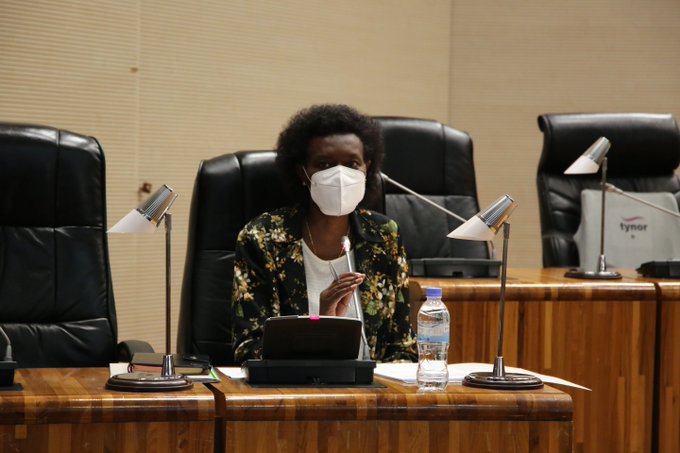
Minister of State Ignatienne Nyirarukundo presenting to the parliament the African Union Protocol on equal protection of economic, social, cultural, civil and political rights to persons with disability

Lawmakers said that the treaty wouldn’t make sense if the government has no specific policy on disability.

They pushed the government to speed up revision of the old policy to enable Rwandan parents to improve welfare of the disabled persons. 

MP Eugène Mussolini, who represents the persons with disabilities (PWD) in parliament said that the existing policy is based on research done in 1995 yet many issues and concerns like access to health have changed over time.

“How shall we implement this law yet the policy on disability doesn’t represent reality on ground?” Mussolini asked.

Minister of State of Local Government, Ignatienne Nyirarukundo, who presented the AU protocol for ratification in Rwanda said that the policy on disabilities is ready but it was met with debate before approval.

Nyirarukundo said that the debate arose when some officials on the policy task force wanted the disability policy to be joined with social protection policy which however, the Ministry thought that it needed to be a separate policy.

The new policy on persons with disabilities is under review and will be tabled to the parliament soon, according to Nyirarukundo.