Project Enable Africa, known for the digital empowerment and human rights advocacy for Persons with Disabilities in Nigeria recently unveiled a new program targeted at enhancing businesses led by Persons With Disabilities (PWDs).
The program which is supported by the Aspire Coronation Trust (ACT) Foundation, commenced on Saturday with an orientation session for participants. The program is designed to provide business support to at least 50 PWDs-led businesses in Nigeria.
The goal of the Business Support program is to promote the access of entrepreneurs with disabilities to training content, tools, resources and mentorship necessary to scale their businesses, especially in the post-COVID era.
The Business Support Training is the first of its kind, in Nigeria, targeted at providing inclusive business support content and resources for the community of persons with disabilities.
During the orientation which was held on Saturday, 10th October, The Lead Faculty, Mr Kola Olugbodi welcomed participants warmly and encouraged them to make the best of the training and all its modules. “I urge you all to be restive in your approach to life and personal success, this will help to make you self-reliant and not have to necessarily depend on others because of your disability. I have no doubt that this program will help advance your business goals as long as you are willing to make the best of it.”
According to Mr Olusola Owonikoko, the Executive Director of the organisation, “the pandemic has disrupted many aspects of daily lives, leading to increased unemployment. Data from the Global Disability Inclusion Survey as shown that 51% of people with a disability have either lost their jobs, been laid off, or believe they will lose their job in the next 90 days, compared to 28% of those without a disability.”
“We realized that from our interactions with the disability community, most especially through our just concluded food drive project, that one of the most sustainable supports that can be given to Persons With Disabilities is to provide specific knowledge-driven assistance required to scale businesses and ensure sustainable growth and profitability.”
“We are confident that we will be able to achieve this lofty goal by providing adequate knowledge in areas such as business mentorship, access to market, funding linkage, legal counsel, the need for digitalization and financial management.”
“We are indeed grateful to Aspire Coronation Trust (ACT) Foundation for supporting this project. With their support, participants will have ample opportunity to re-invent their businesses and help remain profitable despite the global pandemic”.
Imagine that you have a medical emergency, but you can’t communicate with the doctor because he doesn’t understand what you are saying. Imagine the doctor asking you questions to diagnose your ailment, but you don’t understand what he is saying or what the medication he has prescribed for you is for. JOSEPHINE EJEH looks at this and many other challenges faced by people with hearing loss when accessing healthcare services in public hospitals in Abuja, Nigeria’s Federal Capital Territory (FCT) due to the absence of sign language interpreters.
IT was her first pregnancy in 2012. Like every other expectant mother, she was very excited to register for her ante-natal clinic. Her expectation was that she would be given all the necessary healthcare support other pregnant women usually enjoyed. But against her expectation, it all turned out to be one of her worst nightmares ever as her pregnancy progressed.
Beyioku-Alase Hellen is hearing and speech impaired, a condition that makes her unable to hear or speak. She developed these conditions in 1994 at the age of six.
Though she had heard many unpleasant tales of how people with speech and hearing loss were marginalized at public hospitals, the 32-year-old expectant mother had thought health workers in the hospital where she enrolled for the ante-natal care would be sympathetic with a pregnant woman who is speech and hearing impaired.
Hellen was wrong.
Her hope of getting the best ante-natal care continued to dim after each appointment in the hospital. She would leave her home very early in the morning so that she would be among the first few pregnant women to arrive at the hospital, yet she always ended up being the last patient to leave the hospital as a result of the communication barrier. Oftentimes, her hospital card would be abandoned after the nurses have repeatedly called her name without any response.
On the first day of her ante-natal clinic, Hellen, now a mother of four, was the first to arrive at the clinic so she was the first on the list of patients for medical attention, but she was left unattended to for almost nine hours and not allowed to see the doctor until other expectant mothers had seen the doctor. All her efforts to get the attention of the nurses and other health workers when they were calling out names and she couldn’t hear them, were frustrated. The health workers shouted her down and ordered her to sit down.
In her confused state, after so many hours, Hellen mustered the courage to report the matter to the medical director of the hospital.
“I was very angry, so I summoned the courage to approach the Medical Director of the hospital. I laid my complaints to her in writing and she was sympathetic with my plight and the issue was resolved. I thought that was all, but I was wrong. When I went into labor subsequently and went to the hospital, there was no health worker to explain to me what I should do at each stage of my labor. The nurses just signaled to me with their hand to wait and left me in severe pain for up to 45 minutes. I felt so bad,” she narrated to The ICIR.
Throughout the period of her painful labor, Hellen could not explain to the nurses how she felt. She muttered some sounds, but no one understood what she meant. Even when she felt the baby head was coming, the nurses were nowhere to be found and she could not call out to them. Hellen laid there in the labor ro0m all alone panicking that something bad could happen if the baby arrived when nurses were not around.
“As God would have it, a nurse came in to check and behold she saw the head of the baby and shouted. She was not prepared to deliver the baby so that was how God saved me and my baby,” she said.
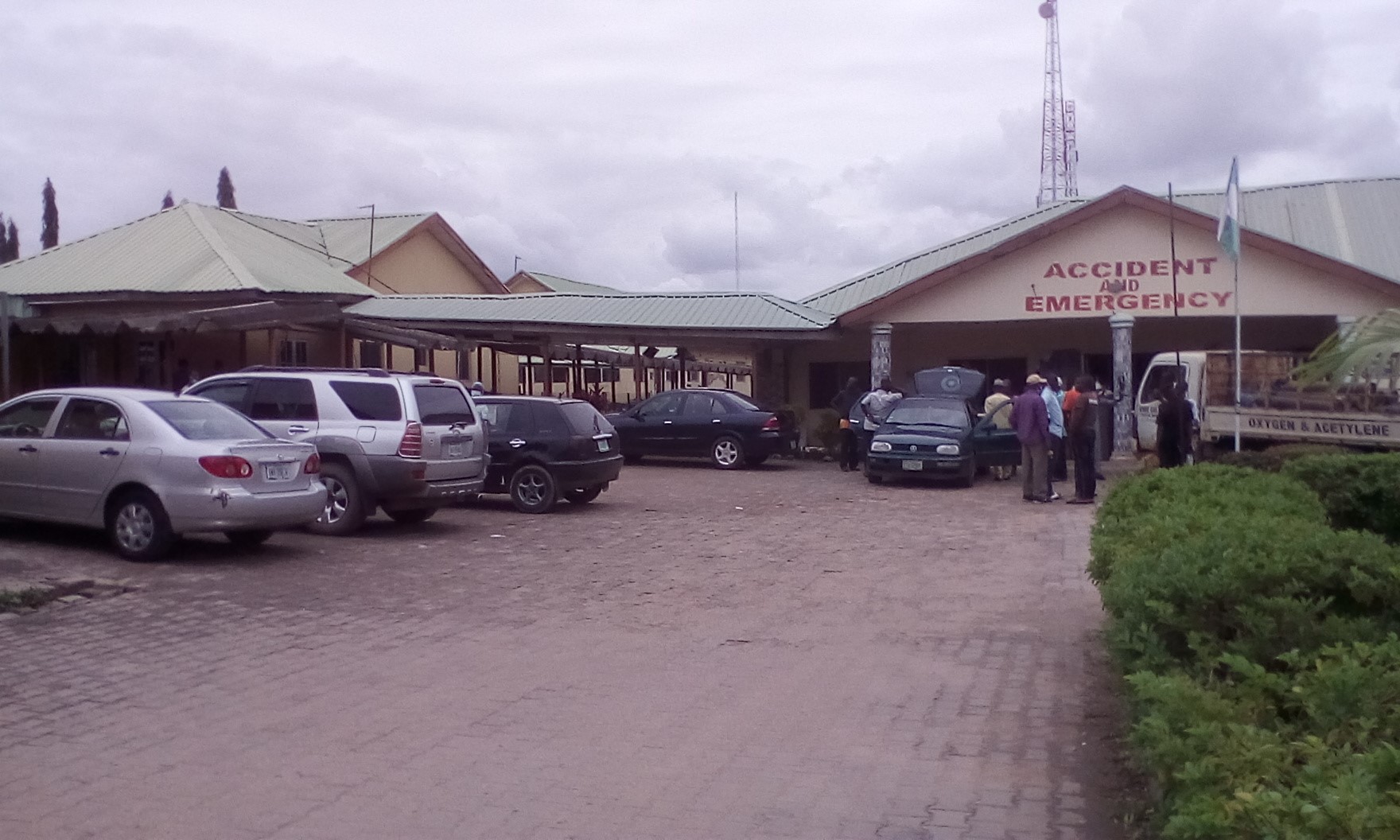
Front View of Kubwa General Hospital, Abuja
It was a similar experience during her second pregnancy. Hellen would be in the hospital as early as 6 am but nobody cared if she was around or not. Some expectant mothers who arrived at the clinic hours later would be attended to while she was left out.
During the sessions of health talks for pregnant women, she would sit down among other expectant mothers in the clinic feeling ignored, marginalized, neglected and left out because she could not make any sense of what the nurses were saying. Hellen had no slightest idea of the things she ought to do as an expectant mother and what not to do due to the communication barrier.
In one instance, she wrote to a nurse to plead with her to explain in writing what she lectured the other pregnant women but, the nurse shouted at her down, saying that she was disturbing her.
The attitudes of the health workers made Hellen who was then a student of Abuja University to resolve never to return to the hospital again for delivery since she realised she could not trust them with her life and the life of her unborn baby. She re-enrolled in a private maternity clinic belonging to a church to deliver her second baby.
Like Hellen, many women with speech impairment and hearing loss have been forced to boycott ante-natal clinic when pregnant because of the hostile and unfriendly attitude of health workers. Some of them even prefer to deliver their babies at home to avoid the harsh experiences they have in the hospitals.
“When you are sick, you have the right to go to the hospital but when you go to the hospital, you don’t find anybody who understands your language. Sign language is the language of the deaf so if I don’t have anybody who understands my language how do I express myself? Imagine as a pregnant woman I go to an ante-natal clinic. I sit down like every other woman, but there is no interpreter. How do you expect me to be able to make sense of what is being said? How do I take care of myself as a pregnant woman, if the information is not available because of communication barriers?
“So, how do the deaf get all that information? This is one of the sad experiences that makes deaf women not go to the hospital because we feel ignored, marginalized and not considered. It is as if our human rights don’t matter to the health workers. They feel hospitals are for only people who can speak and not for deaf people, that is wrong,” Helen said while recanting her ordeals in the hospital during her first pregnancy.
“Even if I remember that experience most of us prefer to give birth at home. Just imagine if the woman dies giving birth herself. So, we need to change the attitude and orientation of doctors and nurses to know that we are all humans too. We are all humans. We have equal rights when it comes to health. Whether deaf, blind or physically challenged, we are all the same,” she said.
Hellen’s sad experiences in the public hospital birthed the Deaf Women Aloud Initiative (DWAI), an initiative she pioneered.
DWAI is an organisation which promotes the rights of deaf women and girls, works to ensure proper access to health care services and information as well as help them to fight sexual and gender-based violence, among others
Years later, the thought of how to communicate with the doctors and other health workers remains a source of worry to the Executive Director of Women Aloud Initiative, whenever she is ill.
“As I am here today, each time I feel any pain or discomfort in my body, what comes to my mind is, if I go to the hospital, how will I be able to communicate with the doctor? I may be educated and can write but what about other deaf people who only depend on sign language because they can neither read nor write,” Helen asked?
With her experiences and those of other pregnant women suffering from speech and hearing loss, who died due to negligence and lack of communication, she was determined to change the situation so that other women with speech and hearing loss will not have the same experience.
Hellen is one of the thousands of faceless people with speech impairment and hearing loss facing the challenges of accessing healthcare service due to the communication barrier with health workers in Abuja public hospitals.
Enniyin Bose, 46, always feels frustrated anytime she visits the Kuje General Hospital because she can’t communicate with any of the health workers in the hospital.
Due to the language barrier and the absence of a sign language interpreter, often spends longer periods in the hospital before she eventually sees the doctor.
Her predicament is compounded as she is further subjected to the rigors of communicating with the doctors through writing.
“It is not always easy because when I submit my hospital card, the nurses will keep calling and shouting my name, I will not hear so I will not answer. So, sometimes I get very angry and frustrated that I am kept so long in the hospital,” Bose, who lost her hearing and speech at the age of nine due to medical complications, told The ICIR.
Ignored and marginalized
The enjoyment of the highest attainable standard of health is one of the fundamental rights of every human being, including people with hearing loss, according to the United Nations in the World Health Organisation(WHO) World Report on Disability, 2011.
Also, access to health care without barriers is one of the rights of people with disabilities clearly defined by the United Nations Convention on the Rights of People with Disabilities (UN- SCRPD). Based on this provision, people with hearing loss and speech impairment have the right to enjoy the highest attainable standard of health, yet the communication barrier has resulted in health workers ignoring and neglecting them, making them feel frustrated, intimidated, and marginalized.
United Nations Convention on the Rights of Persons with Disabilities
On March 30, 2007, Nigeria signed the United Nations (UN) Convention on the Rights of Persons with Disabilities. Subsequently, on September 24, 2010, it gave a formal confirmation, ratified and assented to the Convention.
The 2006 UN Convention enjoins the States Parties to secure the human right to a signed language in legislation; to ensure its use in civil society, educational settings and cultural settings; and to secure its use as a means of access to wider society, including health services.
Article 30 of the Convention enjoins States Parties to provide early intervention services designed to minimize and prevent further disabilities, and that best practices in health-care access should follow these Articles, as well as Article 9, which mandated the provision of accessibility in health-care settings via national signed language interpreters.
Although Nigeria is one of the signatories to the Convention and its Optional Protocols, it has not lived up to the expectations of the Convention because in the area of health, accessing healthcare remains a challenge for individuals with speech and hearing impairment in various parts of the country, including Abuja, the Federal Capital City of Nigeria where they are constantly discriminated against, intimidated and ignored.
No Professional Sign Language Interpreters to Sign for Deaf Patients
Investigation revealed that many hospitals in the FCT-primary, secondary and tertiary health facilities, do not have professional sign language interpreters who are very important to bridge the communication gap between health workers and patients with speech and hearing loss visiting the hospitals.
Nearly all the public hospitals visited by our reporter do not have professional sign language interpreters that would have helped to bridge the typical communication gap people with speech and hearing loss usually face with health workers in hospitals.
Hospitals Rely on Note Taking to Communicate with Patients with Hearing
Checks also revealed that many of the hospitals in the FCT predominantly rely on note-taking as the method of communicating with patients suffering from speech and hearing loss.
In many instances, doctors or other health workers were not even patient enough to allow such patients ample opportunity to explain vividly in writing, their health challenges.
Demian Ayo, who lost his hearing at the age of eight is one of such persons who are being deprived of the right to receive the best medical attention.
Each time he visits the Asokoro General Hospital where he accesses healthcare services, he faces communication barriers because there is no sign language interpreter in the hospital. Demian often feels sad because, on many occasions, he is not given the opportunity to be diagnosed.
“Sometimes the doctors are patient to write, sometimes they just look at me and administer treatment or drugs without saying anything to me,” he told The ICIR.
Doctors and other health workers in Nyanya General Hospital also depend primarily on note-taking. A female nurse confirmed to The ICIR on the condition of anonymity that there has been no professional sign language interpreter in the hospital for over three years that she has been in employment, so the health workers communicate with patients with speech and hearing loss basically by writing notes.
When The ICIR visited that hospital, Dr. Ekpe Philip, the Medical Director of the hospital could not be reached. Our reporter was asked to wait for hours to see him. But after waiting for hours, she was denied access to him and told instead by his Personal Assistant to write an official letter requesting to have a chat with the Medical Director.
The situation is the same at Wuse Hospital, where a top management staff also confirmed to our reporter that the hospital depends on the writing method to communicate with speech and hearing-impaired patients.
Other patients who cannot read or write, usually come to the hospital with an interpreter.
High Cost of Hiring Services of Private Sign Language Interpreter
Hearing and speech impaired people from wealthy backgrounds and those of average economic status living within the city centre, pay for the services of professional sign language interpreters to escort them to the hospital. However, how many poor persons with speech impairment and hearing loss in the hard-to-reach communities in the FCT struggling to make ends meet are financially buoyant to pay for the services of a sign language interpreter?
Sometimes, even those who can afford to hire the services of an interpreter, face the difficulties of finding one on short notice. There is also the issue of confidentiality as persons with speech and hearing loss who spoke with TheICIR said they feel ashamed disclosing personal information, asking and responding to private issues in the presence of an interpreter, a friend, or family member.
Family members, friends and children used as interpreters
In most of the communities visited, people with speech and hearing loss use family members, friends and their children as interpreters because they cannot afford the service of a private sign language interpreter.
Where they are not available, they (people with speech and hearing loss) visit the hospital alone without communication support and demonstrate how they are feeling by just pointing to the part of their body where they have discomfort, leaving the health workers with the difficult task of figuring out what he is implying.
Joseph Denda, 43, uses his younger brother Benjamin as an interpreter whenever he visits the Primary Healthcare Centre in Leleyi Gwari community in Kwali Area Council where he lives.
The peasant farmer whose speech impairment resulted from an illness, can hear what the health workers say but due to the speech challenge uses gestures to respond to the health workers’ enquiries with the help of his brother.
Benjamin who always feels sad and frustrated each time he has to accompany his elder brother who is a grown man to the hospital like a child shares similar feelings with other relatives of people with speech impairment and hearing loss who are forced to abandon their works or other activities to accompany their relatives to the hospital.
Mitsi Dimitra, Armyra Christina, Fradelos Evangelos in a publication on ‘Deaf People Accessibility in Health Services” published on researchgate.net, observed: “The use of these individuals as interpreters and mostly deaf children should be avoided as interpreters as it is more likely to make mistakes due to their lack of knowledge of the medical terminology.”
The researchers noted that the personal relationship of these persons with deaf people put to question the impartiality and credibility “as there is the possibility of concealment or paraphrasing of the content provided by the physician or patient’s information.”
They also observed that “the presence of these people and the use of them as interpreters may inhibit discussion and reporting of sensitive issues such as domestic violence, substance abuse and sexually transmitted diseases.”
For Bose and other persons with speech and hearing loss who are literate, noting taking may provide an alternative in the absence of a professional sign language interpreter, but can this equally apply for uneducated ones who can neither read nor write?
Patients with Speech and Hearing Loss Misdiagnoses and not Diagnosed
Finding shows that many people with speech and hearing loss are often not diagnosed properly. Symptoms point the doctor in the right direction, hence, a patient’s description of the symptoms he or she is having helps the doctor identify the problem. But due to the communication barrier, patients with hearing and speech impairment are not able to explain their symptoms vividly to the doctor for correct diagnoses.
The Executive Director of Deaf Women Aloud Initiative (DWAI)who also confirmed this at the recently held 2020 International Week of the deaf said people with speech and hearing loss are at a greater risk of being misdiagnosed or not diagnosed at all because of the existing communication barrier between them and health practitioners.
“They (patients with speech and hearing loss) touch their head to demonstrate that it is aching and that’s all, but how do you figure out exactly what their ailment is with just that? Honestly, most of us go to the hospital with malaria and other ailments but the doctors prescribe only paracetamol for us because we were pointing to our head, so they assume it is a headache that is the issue,” the said with a sad look on her face.
Whenever Patrick Usman, a blacksmith visits the health centre in Passepa community in Bwari Area Council where he lives, he usually points to where he is experiencing a disorder in his body, leaving the doctor or health worker to presume what could be the issue.
Patrick Usman became Deaf at the age of 10, following an ailment. The 34-year-old blacksmith is frustrated that he can’t explain how he feels whenever he visits the hospital or health care centre as he can only point to the part of his body where he has a disorder when he visits a doctor.
“I feel very bad and frustrated whenever a very serious sickness takes me to the health centre because I can’t explain exactly how I feel. Nobody understands me so I just point to the part of my body that I’m not feeling well. If it is a headache, I will use my hand to touch my head and if it is a stomach ache, I do the same thing,” the 34-year-old who spoke through his childhood friend who understands his signs told The ICIR.
Like other persons with speech and hearing loss, Patrick believes that if a sign language interpreter is stationed at the hospital, the communication barrier he experiences would have been surmounted.
Patrick’s story is not different from that of Maikasuwa Sharia, who lives in Kayache also known as Buzunkure in Kuje Area Council of the FCT.
His wife, Tausayi sometimes accompanies him to the hospital when he is sick to explain his symptoms better to the doctor since there is no sign language interpreter at the clinic in Kuje where he accesses health services.
However, if the situation requires urgent medical attention and Tausayi is indisposed, the 37-year-old man has no other choice but to visit the clinic alone without communication support.
Due to the communication barrier, all Maikasuwa does is point to the part of the body where he is having the discomfort and it is left for the doctor to figure out what he is implying.
The mother of four, who always abandons her children at home to escort her husband to the hospital, believes that a sign language interpreter at the hospitals will save her all the stress.
“Since he (Maikasuwa) is an adult, I don’t need to be following him to the hospital like a child because he can explain what is wrong with him to the doctor by himself if there is somebody at the hospital to interpret his sign language,” she said.
Health Workers Rely on Lip reading to Communicate with the Deaf
Over the years Rebecca Adeyanju, a midwife at the Primary Health Centre in Leleyi Gwari community in Kwali, relied on lip-reading methods to communicate with her patients since there is no sign language interpreter in the clinic.
Justina Faruk is one of the persons with speech impairment and hearing loss in the community Rebecca has cared for over the years. She lost her hearing at the age of seven due to meningitis infection when she was only in primary school three.
Pointing to the 22-year-old mother of two at the premises of the hospital, Rebecca said: “We communicate very well. We understand each other. When I speak, she reads my lips because she can’t hear but she replies to me because she can speak.”
Though, health practitioners like Rebecca, believe lip reading or speech reading and note writing provide effective health communication, Lieu, Sadler, Fullerton and Stohlmann in a 2007 study on “Communication Strategies for Nurses Interacting with Patients who are Deaf, describe these methods as “ineffective communication modalities for healthcare conversations.”
According to the researchers, “Deaf people who have practiced lip-reading/speech-reading for many years and who are familiar with spoken language are able to understand at best 30–45 percent of spoken English.”
A visit to Tunga-Ashere, a community in Angwan Madaki District under Abuja Municipal Area Council (AMAC), revealed a similar communication gap between health workers and people with speech and hearing loss.
Minister of Humanitarian Affairs, Disaster Management and Social Development, Sadiya Farouq’s recent announcement of the take-off of the National Commission for Persons with Disabilities (NCPWD) should be heartwarming.
The minister’s announcement followed President Muhammadu Buhari’s approval of the composition of the NCPWD Governing Council and appointment of Dr. Hussaini Kangiwa, the Executive Secretary of the commission as chairman.
The take-off of NCPWD is a signpost of social inclusion scheme of the government because Persons With Disabilities (PWDs) constitute one of the vulnerable, marginalised, disadvantaged and excluded groups in Nigeria. It is also an indication that the Federal Government has commenced implementation of the Discrimination against Persons with Disabilities (Prohibition) Act 2018, also known as the National Disability Act.
Under the Act, the rights and privileges of Persons with Disabilities (PWDs) include education, healthcare, priority in accommodation and emergencies; while all public organisations are to reserve at least 5% of employment opportunities for PWDs, which means the nation will draw from the full potentials of all the human resources in the country.
The Act also provides a five-year transitional period within which public buildings, structures or automobile are to be modified to be accessible and useable by people with disabilities, including those on wheelchairs. Again, the Act specifies that henceforth, before erecting any public structure, the approving authority should not approve the plan of a public building that does not make provision for accessibility of facilities in line with the building code. Approving a building plan that contravenes the code attracts a fine of at least N1,000,000.00 or a term of imprisonment of two years or both.
The Act, therefore, ensures social justice and inclusivity of PWDs in various spheres of human endeavour in Nigeria as discrimination is prohibited in public transportation facilities. Besides, service providers are to make provisions for the visually and hearing impaired and all persons challenged. This also applies to seaports, railways and airport facilities.
Essentially, the Act protects the rights and dignity of PWDs in Nigeria; and parties in the Act are required to promote, protect and ensure the full enjoyment of human rights by PWDs and ensure that they enjoy full equality under the law, which is necessary for inclusive development. Thus, this Act Nigeria has keyed into, global awareness of disability-inclusive development, as the United Nations Convention on the Rights of Persons with Disabilities (CRPD) promotes the full integration of persons with disabilities in societies.
Achieving this requires having a multi-sectoral strategy for addressing the barriers PWDs, which limit their access to education, employment, housing, transportation, health care, rehabilitation and participation in activities such as politics.
Furthermore, the Commission should work closely with the Independent National Electoral Commission (INEC) the full participation of PWDs during elections as part of efforts to deepen democracy in Nigeria. This is against the backdrop that INEC has already pledged to enhance greater participation of PWDs in elections with the provision of support materials such as magnifying glasses at the polling units during elections, transcriptions of voter education materials to braille and others to ensure their full and effective participation in the electoral process. However, producing documents in braille, while the blind members of the disability community have never been introduced to braille will not change their situation.
Also, poor access to many public facilities including the polling booths may also limit PWDs. Basically, mainstreaming cannot be effective unless at the same time, measures are taken to provide basic rehabilitation, prevention of impairments worsening, necessary assistive devices, aids and equipment. So, to enjoy the full range of human rights as contained in the Act, PWDs should have access to education, built environment, transportation, information and communications infrastructure for them to be full participants in all aspects of life.
Ipso facto, addressing the inequalities between PWDs and people without disabilities in all areas of development, needs specific initiatives to empower the PWDs. Therefore, appropriate disability-specific multi-sectoral strategies are needed to make mainstreaming operative, because a physically challenged child who cannot access special toilet himself/herself and is paralysed on a wheelchair cannot benefit from education even if the school is fully accessible, has well-trained teachers and a child-tailored, flexible curriculum. Also, a disabled adult who is illiterate has low self-esteem, with hardly any life experience and no access to essential assistive devices such as crutches, cannot take part in discussions organised by political parties.
Essentially, achieving social inclusion for PWDs requires a comprehensive policy, which recognises that they need special services, special institutions, for a cure and/or rehabilitation or social assistance that permit their participation because they are different.
So, the Nigerian state should walk the talk by mainstreaming disability into its policies as has been done with gender, because in 2006, Nigeria came up with a National Gender Policy, which has helped keep the issue of gender in the front burner, even though gender disparity is still a commonplace. Against the backdrop of this precedent, Nigeria should confront disability and give it attention as is being done to gender discrimination, children protection, HIV/AIDS and humanitarian crisis, by having a programme of action, based on the 2018 Act to address PWDs’ concerns in all political, economic and societal spheres so that these special people can have a remarkable sense of belonging.
Furthermore, the Federal Government should mandate NCPWD and other relevant Ministries Departments and Agencies (MDAs) to jointly design, launch and implement interventions with verifiable indicators aimed at promoting the rights of PWDs. Similarly, the organised private sector should follow suit, because the issue of disability is not only a question of human rights but is also a matter of social and economic development.
Again, the NCPWD should use a participatory approach in handling the affairs of PWDs and carry them along in the planning and implementation of policies for them to have a sense of belonging in the society; and also empower them to be self-reliant.
Meanwhile, relevant civil society organisations, particularly the media, have a major role to play in raising awareness and changing attitudes towards physically challenged people. They should embark on building the capacity of PWDs to enable them to develop life-skills, self-esteem and an understanding of their rights.
This period of nation re-building is also the time political parties should rejig their manifestoes and programmes to include in their agenda PWDs. This way, people with disabilities would be accepted as equal partners in development and included as full participants in all development activities such as politics.
Therefore, for the dignity of human persons and social justice, equity and inclusivity; national development activities should promote non-discrimination and equal opportunities for PWDs to participate in every facet of life — civil, political, economic, social and cultural.
In addition, the President and the National Assembly should ensure that the budget of the NCPWD features in the 2021 appropriation to avoid financial hiccups in the take-off of the Commission.
So, it is hoped that the executive members of the commission will protect the rights of PWDs and provide an enabling environment for them to maximise their potentials, thrive and contribute valuably to the society. This way, our country will be in synergy with the global vision of development and build a just society devoid of discrimination.
As of Monday 19 October, donations raised by #EndSARS protesters has reached ₦ 7,553,675.00 for the young lady, Jane Obiene, who marched out with one limb to join in the protests against injustice done to Nigerians in Abuja.
The initial target was to raise ₦ 1,500,000 in 30 days. This was however exceeded in less than 3 hours on Sunday and has since incapacitated the donation link by Monday.
Obiene had reportedly been unemployed since 2013 because of her disability. She had joined hundreds of Abuja #EndSARS protesters hopping on crutches.
A twitter user, Akproko Doctor, @Aproko_Doctor who had called on people to donate to buy Obiene a prosthetic leg explained that the money will be used to buy both Jane Obiene and Charles Nnamani (another person with a physical disability) prosthesis legs.
He added that donate.ng, though entitled to a 2% admin fee for handling the donations waived it on Sunday, so the money is available in full.
“Work has started for Jane and Charles. We are in touch with Jane’s hospital, seeking a reduced rate for her prosthesis.”
“Charles’s prosthesis will be handled by @Bayo_Ojelabi and his team, they will collect 0 naira for their labour”
He further stated that he will be traveling to Abuja with camera crew to get photos and videos during the fitting of Jane’s prosthesis for documents.
In an unprecedented move to ensure inclusion in the affairs of the Nigerian Bar Association (NBA), the NBA has apologised to lawyers with disabilities (LWDs) for decades of neglect at the Bar. This followed a courtesy visit by the leadership of the Association of Lawyers with Disabilities in Nigeria (ALDIN) to the office of the newly elected President of the NBA, Mr. Olumide Akpata, on the 23 September 2020.
Addressing the ALDIN’s representatives, the President acknowledged that, throughout history, the NBA has failed to carry all its members along, especially lawyers with disabilities who have been forgotten and relegated to the background of NBA affairs. In respect of which the President “tendered an unreserved apology, on behalf of the NBA, to all lawyers with disabilities for the indignity they have historically suffered in a profession that has before now failed to treat them as equal members of the Bar.”
The President went further to restate his pledge “to champion the creation of an NBA Lawyers with Disabilities Forum, whose Chairperson and Secretary shall have statutory slots in the NBA-NEC to provide a strong voice to the interests and plights of our colleagues with disabilities.” The President further reiterated that the NBA will collaborate with the ALDIN to carry out an inaugural disability programme, which will be a first of such many annual programmes that will be dedicated to the issues of lawyers with disabilities at the Bar and persons with disabilities generally.
While the ALDIN awaits real actions in respect of the above propositions, perhaps it is very much in order to thank Mr. Akpata for his willingness and courage to have a meaningful conversation on the historic neglect of lawyers with disabilities in Nigeria and to recreate a 21st century NBA – a Bar that works for all!
In a bid to make the Court accessible to all persons, including persons with disabilities, and to increase greater access to justice, Courts in Nigeria, including the ECOWAS Court, and other legal institutions, have begun to restructure their premises to include ramps. The NBA Secretariat, the National Industrial Court Headquarters, and the ECOWAS Court Headquarters all domiciled in the Federal Capital Territory (FCT), Abuja have restructured their premises to include ramps. In a similar development, the Federal High Court Headquarters, also in the FCT, Abuja, went a step further to assign special parking lots to Persons with disabilities.
All these developments followed the advocacy engagements of the Association of Lawyers with Disabilities in Nigeria (ALDIN) with the heads of the various Courts and institutions where the leadership of the Association raised concerns as to the inaccessibility of Nigerian Courts and legal institutions for persons with disabilities. This was part of the ALDIN’s Project on Accessibility of Justice System in Nigeria to Persons with Disabilities with support from the Disability Rights Fund (DRF). By providing ramps and specialised parking lots in their premises for persons with disabilities, the above institutions have complied with certain provisions of the disability law.
Recently, Nigeria passed the Discrimination Against Persons with Disabilities (Prohibition) Act to take care of the special circumstances or peculiarities of persons with disabilities in Nigeria. The disability law made far-reaching provisions aimed not just at enhancing the social status of all persons with disabilities in Nigeria, but also increasing their accessibility to public facilities and/or social and physical amenities, including Courts. Among other things, the law requires that all public buildings which are hitherto inaccessible to persons with disabilities, or which would subsequently be built, must be made accessible to persons with disabilities by including suitable and appropriate ramps or such other facilities that would make it easier and safe for persons with disabilities to be able to access such public buildings.
While the members of the ALDIN express their satisfaction to the various heads of Courts and the President of the NBA and for leading the charge to make Nigerian public institutions accessible to all, they are also calling on all other courts to follow suit to ensure that the provision of the disability law in this respect is implemented to the maximum benefit of persons with disability in Nigeria.
The Centre for Citizens with Disabilities (CCD) have commended Nigeria Youth for leading the struggle to end the activities of the notorious Special Anti Robbery Squad (SARS).
In a press release signed by the Executive Director of CCD, Mr. David Anyaele, the group declared their support for #EndSARS protesters, and efforts to restructure the Nigeria Police Force, as many persons with disabilities and their families, in particular persons with hearing impairment have suffered in the hands of defunct notorious SARS operatives.
As the National Executive Council (NEC) of the Federal Government of Nigeria resolved in their recent meeting to set up judicial panels of inquiry to investigate allegations of rights violations by police personnel across the 36 States of the Federation and Abuja FCT, CCD is calling on members of the panels to take appropriate measure to thoroughly investigate the extent of the activities of the defunct SARS led to inflicting of any form of disability to their victims.
The group’s observation shows that many of the victims and survivors of SARS notorious activities are struggling with different forms of disability ranging from physical, mental, emotional, and sensory impairment which are hindering them from participating in the society on equal bases with others.
The 1999 Constitution of the Federal Republic of Nigeria as amended provides in section 42.2 that no citizen of Nigeria shall be subjected to any form of disability. As such any form of disability suffered by any citizen of Nigeria by reason of the activities of the defunct SARS operatives shall be made to be accounted for.
The group is calling on the members of the Panel to make recommendations, where necessary that would address the rehabilitation and reinstitution needs of the victims and survivors with Disabilities and their families to ensure total healing.
They hailed Nigeria Youths for leading this struggle to end SARS operation.
National Policy on Inclusive Education is designed to enhance inclusive learning of all children irrespective of the societal status. It is a situation whereby the schools were structured in a way that children with disabilities can learn in the environment with other children. There has been an going advocacy on Inclusion especially in Nigeria and Centre of Citizens with Disabilities have join the trend.
In a consultative forum on access to education for Persons with Disabilities (PWDs) organized by CCD in Abia State, The Executive Director of CCD, Mr. David Anyaele, noted during the meeting that lack of access to quality and inclusive education for PWDs in Abia State is an issue of concern which required urgent remediation.
He held a stand that a functional and efficient Inclusive Education will help to reduce problems faced by Persons with Disabilities in achieving their academic goals, and at the same time maximize their potentials in the society.
The event was held to consult with relevant stakeholders ( both state actors and non-state actors) in order to emphasize the importance of accessible and Inclusive Education to Abians with Disabilities. The roles of each stakeholder were also enunciated.
The executive secretary, Secondary Education Management board ((SEMB) ably represented by Mr. Utugbo Chinwe in her remark appreciated CCD for identifying with the state in such laudable project, with a promise of full support for similar projects in the future.
Felicia Yusuf, a married woman with disability, a mother of
eight children. She is blind though not born blind. A Ngas by tribe, from
Dawaki District of Kanke local government of Plateau state. She grew up in Lagos
with her aunty. She attended Army Children School for her primary education,
from there, she went to Apapa High school, but could not finished, because her
aunt whom she was staying with arranged and got her married to a man, who was
also staying in Lagos, but he is from Bokkos Local government of Plateau state.
In this interview, she
shared with TQM crew how she became blind and her challenges in life.
TQM: Can you tell us,
how you became blind?
After we got married, I gave birth to two children, we then
moved back to Bokkos in Plateau state. And I gave birth to twins. One of twin
became sick, and I took the child to the Hospital but while in the hospital, I
became sick to the point that I was admitted. When I was discharged, all of
sudden I found out that I was losing my sight.
TQM: When you
realized, you were losing your sight, did you seek medical attention?
Yes, some Optical Doctors came to Bokkos, I went to them and they gave me a referral letter to Jos University Teaching Hospital (JUTH). I went to JUTH with my Husband and after examination, I was told, that, I have hypertension. Then, they recommended that I needed a rest in a quiet place, but instead of taking me to a quiet place, my husband took me home. This is the history of the medical care I received. Today, I have been blind for twenty-six years.
Felicia Yusuf
TQM: Where you able to go back to School again?
No.
TQM: What are you
doing for a living?
I am not doing much apart from the music that I am into. Even
though, I have not been active for some time now because of lack of finance.
TQM: How active where
you before?
I have two albums to my credit, but, now I cannot afford the
money to go back to the studio.
TQM: How much are we talking
about here?
We are talking about between Two hundred to three hundred
thousand Naira.
TQM: Have you ever
received any assistance from anyplace?
In August last year, the Church where I worship gave me the sum of ten thousand Naira.
TQM: If you have the
opportunity to appeal to government officials and other private
individuals. What will your appeal be?
I don’t have anything to say to the government because, at
all levels, the government don’t care about the blind persons or persons with
disabilities, especially the government of Plateau State. So what appeal will I make to them, I will
rather stay at home with whatever problem I am facing.
TQM. What about appeal to Individuals?
I would like assistance in favor of my children, my youngest
child is fifteen years, and only one out of my eight children is in the
University, the rest could not go beyond primary school because, we lack money
and my husband is very old that he cannot take of us. I also need assistance for myself so that, I
would be able to achieve something in life.
TQM. Who is
sponsoring your child in the University?
My cousin.
TQM. What are your other children doing now?
They have been reduced to farm labourers. We have farm ourselves, but we can’t afford
the farm inputs do our own farm.
TQM: Thank you for sharing your Story with us. We
pray help comes your way soon and things gets better for you and the family.
Amen!. Thank you.
This story is part of The Qualitative Magazine Project “CONNECTING OUR VOICES TO THE WORLD”-propagating the potentials and challenges of Persons with Disabilities in Plateau State supported by VOICE NIGERIA