Tuesday, December 30, 2025
Home Blog Page 433

A widow with physical disability who trains her three children in school seeks help

0

Helen A. Yakubu is a widow with physical disability and a mother of three children, she was not born with disability but she became a person with disability at the age of three years as a result of sickness. She is from Doemak in Qua’an-Pan Local government of Plateau state.

In the interview with our correspondents Bulus Bala Izang and Joshua Yenle, she spoke about how she is taking care of her children’s education and how she manages discrimination.

TQM. What about your educational background?

Ans. I did my primary school at science primary school Kwa, here in Qua’an-Pan, from there l proceeded to Government Secondary school Shandam, in Shandam local government, l was also privileged to be part of WAYE Foundation Vocational training.

TQM: What are doing to provide for yourself?

I am working with the Local government. But before, l gain employment with the local government, l was engaged in petty business.

TQM. Apart from the local government work, what other things are you doing?

I am into farming, cake baking, l equally make table clothes and carpets for sale to support my salary.

TQM. Have you been supported in any way by either the government or individuals to expand your business?

No.

TQM. Was your husband a person with disability?

No.

TQM. Are your children in school?

Yes, the first one is at University of Bauchi, the second one is at College of Agriculture Garkawa, and the youngest child is still in secondary school, he is in SS 2.

TQM. As a widow, Who is paying for your children’s school fees?

I am the one paying for their school fees.

TQM. As a person with disability, have you any record of discrimination?

Yes l have. When I was younger, a man was in love with me, he started coming to my place, when his friends find out, they discouraged him, that there are so many beautiful girls without disabilities, what are you doing with a girl with disability. With that, my then lover, ended the relationship.

TQM. What do you do about things like this?

I normally do nothing, l just mind my business.

TQM. The government is against any discrimination against any body including people with disabilities and have established institutions to help people with disabilities have their rights. Do you know about these Institutions?

Yes.

TQM. Before we go, what personal appeal would you have to present to the government or people?

I need assistance, especially with the payment of my Children’s school fees, and also with some inputs to increase my business.

TQM. Thank you Madam for your time.

Thank you.

Former governor of Ogun state’s son shares his frustration of being a person with disability in Nigeria

0

Debola Daniel has taken to social media to express his frustration and anger over how people with disabilities are treated in Nigeria – According to the young man, everyone believes they have the power to heal him – Debola also questioned why anyone would deliberately make God look bad.

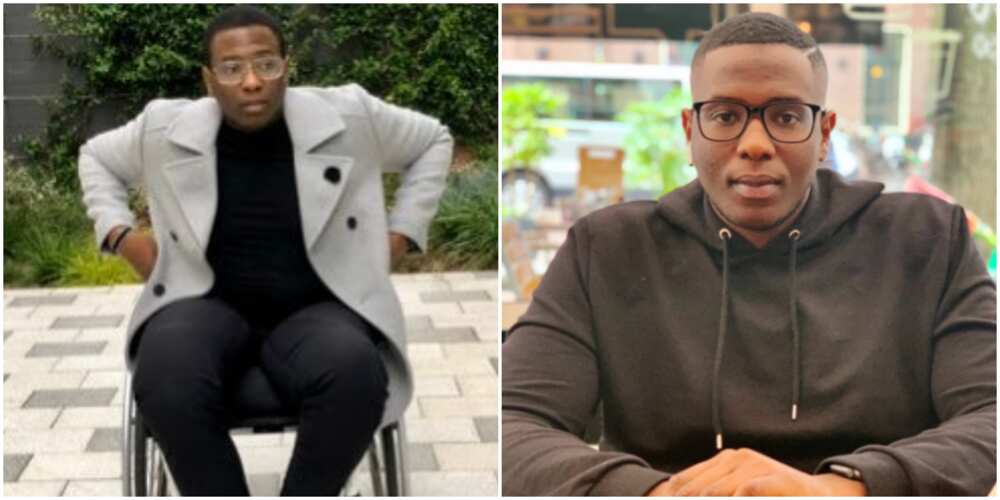
Son of the ex-governor of Ogun state Gbenga Daniel, Debola, recently took to social media to share one of the frustrations of being a person with disability in Nigeria. In a post he shared on Twitter, the young man stated that one out of the many frustrations as a person with disability is the fact that everyone believes they have the divine call to heal him.

Former governor of Ogun state's son, Debola Daniel, shares his frustration about living in Nigeria with disability

Debola Daniel says Nigerians try to heal him all the time Photo credit: @Debola_Daniel Source: Twitter

Speaking further, Debola said that everywhere he goes, people are always commanding him to get up in the name of Jesus, and it becomes weird and awkward when nothing happens and they are just staring at each other.

The handsome lad also questioned why anyone would bring up that kind of situation to make God look bad. “One of the most frustrating things about being disabled in Nigeria, is everyone believes they have a divine call to heal you. Everywhere I go, “I command you to get up in the name of Jesus”. Then that awkward moment of staring at each other. Why you gon make God look bad?”

Nigerians took to the comment section to drop their views and opinions.

@odohton: “If anyone desires to be healed, they will be. I have seen the dead raised long after certified dead.”

@DIKEOLIVER: “Actually, every believer has a divine call to heal the sick, but when the sick doesn’t want to be healed, there is nothing that can be done. The faith must come from both sides.”

@smartdeckk: “When would Nigerians understand that no miracle has ever happened, all are staged.”

@zeezoe13: “Funny thing is that Nigerians pray so much that Nigeria gets worse every day. The prayer isn’t the issue but our desire to want to flaunt supernatural skills in the faces of others.”

PIB Public hearing: CCD proposes amendment of some sections to enhance disability inclusion on the bill

0

TQM report,

Centre for Citizens with Disabilities (CCD) had an opportunity to air its position on the the Bill for an Act to provide Legal, Governance, Regulatory and Fiscal Framework for the Nigeria Petroleum Industry, the Development of Host Community and other Related Matters (HB.1061) – AKA PIB Bill.

In a statement signed by the Executive Director of the organization, Mr. David Obinna Anyaele, the group thanked the leadership of the House of Representatives, in particular the Chairman House Ad-hoc Committee on Petroleum Industry Bill for the opportunity to present to them to air their position on the PIB Bill.


Mr. David Obinna Anyaele making presentation at the Public Hearing at National Assembly

The group believes that PIB provide an uncommon opportunity to write the wrongs against persons with disabilities in the Niger Delta

Observation shows that oil and gas explorations in Nigeria are conducted at the detriment of persons with disabilities

They are concerned that virtually all the support given to host communities by reason of oil and gas explorations are not accessible to persons with disabilities and they are not consulted, neither are their issues mainstreamed in the conversation.

The group is worried that when pollution occurs in the Niger Delta, it is people with disabilities that suffers most.

Painfully, the activities and contaminants being pushed into the environment as a result of oil and gas explorations in the Niger Delta region, sometime leads to still birth and birth with different from of disability (hearing disorder, blindness, physical challenged etc.)

Therefore, It is justice for all to demand that the Bill for an Act to provide Legal, Governance, Regulatory and Fiscal Framework for the Nigeria Petroleum Industry, the Development of Host Community and other Related Matters (HB.1061) provide a certain percentage of not less than 5% of projects and activities should therefore be set aside for the benefit of persons with disabilities in the Host Community Development Trust Fund.

CCD proposed the amendment of the following sections in the Bill to read as follows:

242: (a) Settler shall ensure that members of the Board of Trustees are inclusive of women and persons with disabilities

  1. (a.i.b) three representatives, women, person with disability inclusive of the Host Community, who shall be nominated by the Host Community as non-executive members.
  2. 3(a.i.b) consulted with and considered the reasonable concerns of women, youths, persons with disabilities and Community leaders
  3. We request that you add (h) to read as follows: ensure that all initiatives are inclusive and accessible to persons with disabilities.

Jemya’s family lauds Beautiful Gate and TQM for giving back life to their daughter with gift of a wheelchair and tricycle

0

By Bulus Bala Izang, TQM correspondent, Jos

Miss. Jemya Funturu a sixteen years old girl with physical disability in Mabudi, Langtang south Local government of Plateau state, who’s story was published by The Qualitative Magazine.

A girl who was using Cart as her means of mobility pleaded for a wheelchair or tricycle to enable her to move around.

On Saturday 23rd January, 2021, she was presented with a wheelchair and a Tricycle, donated to her by Chief Ayuba Burki Gufwen of Beautiful Gate Handicapped People Center in response to the published story.

Jemya who could not hide her joy, said her long awaited dream of freedom of movement and integration with people in dignity have now become a reality.

She thank God Almighty and Chief Ayuba Burki Gufwen for making this possible.

Mr. Yakfa Rinpen in his response on behalf of the family, thank Chief Ayuba for his wonderful gesture in the life of Jemya, praying God to bless him and his organization The beautiful Gate.

He equally thank The Qualitative Magazine for giving Jemya the voice to make known her need to the public.

Jemya is still calling on well spirited persons to come to her aid with scholarship so that she could go to Secondary school now that she is mobile, having completed her primary school some years back.

The presentation was made by The Qualitative Magazine’s reporters on behalf of Chief Ayuba Burki Gufwen in Jemya’s compound in Mabudi, Langtang south.
The presentation was made in the presences of her foster parents, and neighbours who were full of gratitude for the show of love and care.

EL-MEELA Heritage donates educational materials and COVID-19 safety items to Deaf School in FCT

0

EL-MEELA Heritage Support foundation on Wednesday visited FCT Social For The Deaf, Kuje, Abuja and donated some educational materials such as exercise books and COVID-19 safety items such as hand sanitizers, washing hands buckets and face masks.

The Management of the School appreciated their support and called on other organizations to also reach out to them because they still need more to overcome the challenges associated with COVID-19.

Pictures of the event

Accountability Lab Nigeria enhances capacity of young artistes to promote inclusion of PWDs and other marginalized group

0

TQM report,

Accountability Lab Nigeria on Monday in Abuja built the capacity of young artistes on disability inclusion and inclusion of other marginalized groups.  

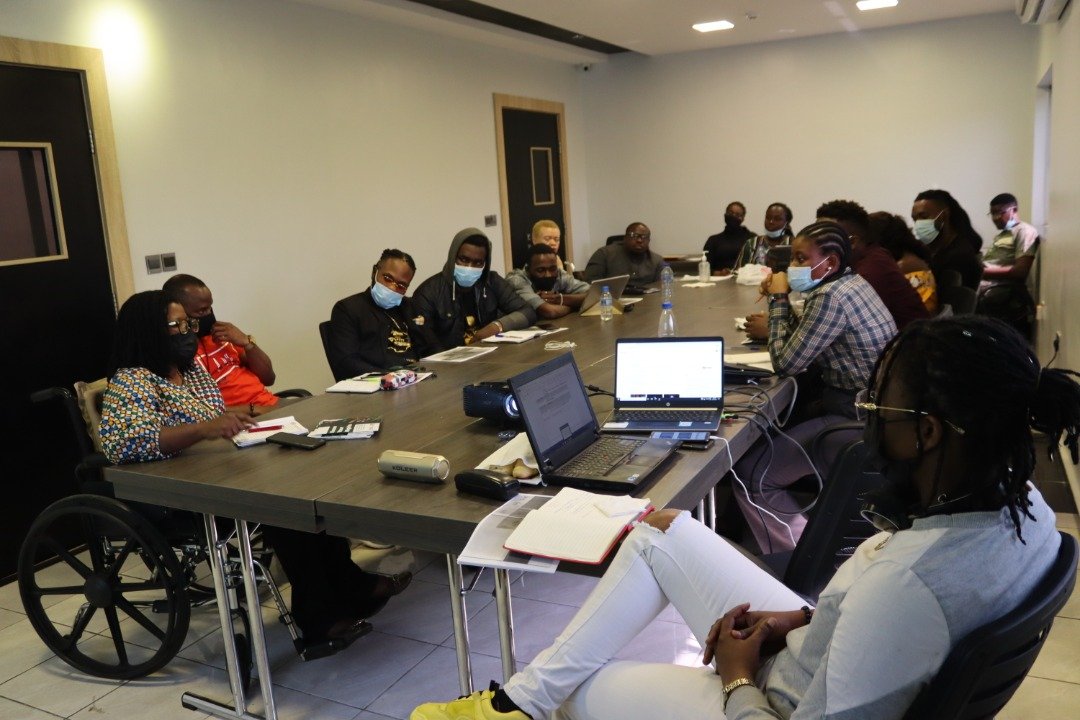
It was part of their two-day Voice Inclusion training designed to develop capacity of the young artistes to create mind-blowing music that will promote an inclusive social change.

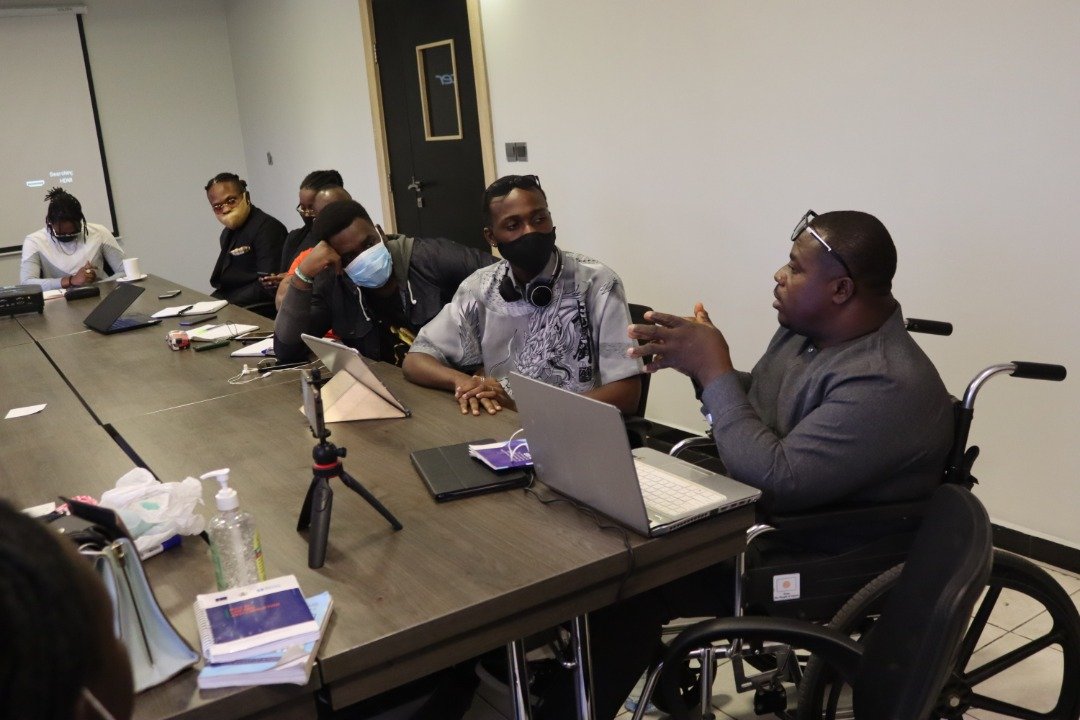
Agbo Chris Obiora, The Executive Director, The Qualitative Magazine (TQM), a seasoned disability rights advocate took the participants on amplifying disability rights in Nigeria; where the participants were able to understand the concept of disability, the models, sections of Disability against Persons with disabilities Prohibition Act 2018, and ways they can use music to promote inclusion and how their message to be crafted so that it can make impact.

Image

Grace Jerry, the Executive Director of Inclusive Friends Association (IFA), renowned disability advocate especially in access to electoral system,  got the participants to understand disability inclusion more and inclusion of other marginalized groups. She engaged them during her group work to write songs using their understanding about disability inclusion and what they came up with were amazing. She advised them to develop on what they have done, enter to the studio and ensure they release these songs that would promote inclusion.

Image

The two facilitators also took the participants on the use of the right terminologies or international acceptable terminologies for disability and ensure that the content they put out meets international standard.

The facilitators offered to assist in proofreading any of their songs focusing on disability inclusion to ensure that they will meet global standard.  

The participants were elated by knowing about the existence of disability act after two years that it was signed. They stressed on the issue of inadequate awareness creation of the act, they promised to add their voices to the campaign using music and dropping comments about the act on their social media handles.  

TQM publication assisted a girl with disability to receive 2 mobility aids, she appeals to Plateau Govt to help her go to school

0

TQM report,

On the 14th November, 2020, we published an interview of a 16 years old girl with disability from Mobudi town, Langtang South Local Government Area, Jos, Plateau State Jemya Funturu who is being carried in a cart who was demanding assistance to go back to school and she was also having serious mobility problem to go to school and that informed our plead for a mobility aid for her. (see https://qualitativemagazine.com/?p=8117)

Luckily, The founder and CEO of Beautiful Gate, Chief Ayuba Burki Gufwan read the story on our platform and donated a wheelchair and a tricycle to her.

On Saturday 23rd January, 2021, our correspondents Bulus Bala Izang and Joshua Yenle were in Langtang to deliver the tricycle and the wheelchair to the girl.

16 years old girl with disability who is being carried in a cart demands assistance to go back to School

It was a lot of exciting and joy in the little village where she resides, Jemya said to us, I can now start school which has always been my dream.

“I became a person with disability from birth, I cannot use my legs and hands properly. My mother was also like me but she is dead now, I am her only child. I finished primary school which is nearby but I could not go to secondary school because the nearest secondary school to us is very far for me and I don’t have mobility aid, I am very grateful that I have gotten one today so I will start and I am hopeful that God will also bring someone that will pay for my school”

“My father cannot afford my school fees and again he does not care about me, it is only my aunt who is now my mother that provides for me. She cannot afford my school fees, she is the only one feeding me and buying my clothes, my father and my step mother his wife does not care about me” she said.


Jemya Funturu trying out the tricycle for the first time

She told us that she would love to be engage herself in buying and sell bakery products like chin-chin so that she can be providing for herself while in school.

She appealed to government and well to do Nigerians to help her go to school.

“I just want someone who can take me to school, government should help me so that in future, I can take care of myself”.

TQM is specially that Chief Ayuba Burki Gufwan for coming to the rescue of the young girl as he read her story.

We are joining her to appeal to Plateau State government to assist her go back to school.

NCPWD plans to roll out certificate of identification for all PWDs

0

The National Commission for Persons With Disability (NCPWD) is to roll out certificates of identification for all persons with disabilities (PWDs).

The Executive Secretary, Mr James Lalu, disclosed this when the Inclusive Friends Association (IFA) paid an advocacy visit on NCPWD in Asokoro, Abuja recently, said the identification certificates would pave the way for seamless intervention programmes of persons with Disabilities in the country.

Mr. Lalu explained that the effort would also help in taking proper census of persons with Disabilities through mobilisation campaigns.

He said that there was need for LGA campaign and mobilisation to ensure that PWDs come out in their numbers to participate in the proposed exercise.

He also identified the concerns of self-denial amongst PWDs, stating that some PWDS were being influenced by their family members not to identify with disability community.

According to him, the data will also assist NCPWD in carrying out their role better, especially around social protection programmes of the government.

The ES lauded the idea of partnership with IFA, based on its track record of successful engagements for PWDs and requested organisation to identify possible areas it intends to work with the commission and communicate same in good time.

In response, the Executive Director of IFA Grace Jerry, appreciated NCPWD for its open-door policy and congratulated the management on their appointment.

Grace said IFA seeks a strong partnership with the commission in the area of training and advocacy, to understand the core mandate of the commission if there is any addition apart from the Discrimination Against Person With Disability Prohibition Act, challenges faced by the commission and what steps and plans the commission has put in place concerning the proposed census planned by the country.

I need support to expand my grain business and send my wards to school—Ramlatu, a lady with Disability pleads

0

Ramlatu Salihu is a thirty years old single lady with physical disability from Doemak in Qua’an – Pan Local government of Plateau state. She is one of the eight children of her parents, She became a person with disability at the age of two years and her father died when she was ten years old.

In a chat with our correspondents, Bulus Bala Izang and Joshua Yenle, she talked about her business of grains.

TQM. Were you privileged to go to school?

I was not privileged to go to school, not only me but my all siblings were not sent to school as well. This is because our parents were not financially strong.

TQM. What are you doing for a living?

I am into the business of selling grains like Maize and beans.

TQM. How did you come about this business?

After the death of our father, my aunt took me to stay with her, and that was her business. When l was younger, she will make kuli- kuli (ground nut cake), l will sit and sell it for her in her shop in addition to other food grains.
When l grew up, l started my own business of selling food grains. And now, l do go to other local market where the food grains are cheaper, buy two to five bags bring it to my shop for resell.

TQM. Bags of food grains are known to be heavy, how do your get them to your shop?

I hire hands and owners of motorcycles to help me in carrying the bags to my shop. I also have four children, a nephew, an orphan and two younger sisters, that are staying with me, they do also assist me.

TQM. Hiring people to help you, how does that affect your profit?

It reduces my profit, but that is one of those costs that l cannot avoid.

TQM. The shop you are in, is it a rented place?

Yes.

TQM. In your business, have you ever received any assistance from the
government?

I have not received even one Naira in form of assistance to my business from the government.

TQM. You talk about, a nephew, an orphan and two sisters that are staying with you, are you providing for them?

Yes l am.

TQM: All the four of them, are they not too many for you to care and provide for?

God have been providing and helping us.
My Nephew, his father gave him to me to be assisting me, then l took the orphan in to assist, and my two younger sisters came to stay with me after the death of our mother, having lost our father much earlier.

TQM. Are they all in school?

Ans. They are not schooling, rather , l am training them in my line of business. I would very much like them to be in school, but l lack money.

TQM. As a lady with disability, do people discriminate a against you?

Yes, people treat people with disabilities, including myself, as if we are animals.

TQM. When treated in such manner, what do you usually do?

I usually let things be, because, l know, l am human and they may not be better than me in any way, in fact, l may be better than them in certain ways.

TQM. Our governments have established Institutions that would help protect the rights of persons with disabilities, do you know about them?

Yes l do. I have even engaged their services in the passed.

TQM. Lastly, what would your personal appeal be to the government and other peoples?

My appeal is that they should help me with finance to expand my business, so that l would have more money to sent my wards to school. Or the government and other people can help us with scholarships.

TQM. Thank You Ramlatu for sharing your story with us.

Thank you.

I was told that I used my eyes for rituals because I was fighting for my right—Shem, a blind man shares discriminatory experience

0

Shem Hosea is a person with visual disability from Bassa local government of Plateau state. He lost his sight as a result of measles when he was two years old. Today he is married with six children.

In an interview with our correspondents, Bulus Bala Izang and Joshua Yenle, he spoke about his formal education, family and the discrimination he is facing.

TQM. What about your formal education?

At first my parents and other relations did not want me to go to school, because of fake news that was going round then, that when people with visual disabilities go to school , they are being killed for rituals, this put fears in them, but l insisted. I later went to school for the blind children Gindiri, in Mangu local government. But after three years, l drop out because of lack of finance. Some years later, l went to Vocational Training Center for the Blind, Zawan in Jos South.

TQM. What is Mr. Shem doing to provide for himself and the family?

After my training at the Vocational training center, l got employment with Bassa local government, and l am still working with them.

TQM. Apart from your work with the local government, are you doing anything extra?

Yes, l am into farming, even before the employment, l was Farming. When l was growing up my father taught me how to be a farmer and since then l have been farming. And in addition to that, l do produce chairs and carpets, but due to high cost of materials, l have not produced any for sometimes now.

TQM. What types of crops do you farm?

I farm crops like Maize, sweet potatoes, coco yam and some vegetables.

TQM. In all these, do you get financial assistance from some where?

No.

TQM. Are your children schooling, if yes, who is paying for their education?

Some of the younger ones are still schooling and by the grace of God, l have been paying for their education. The older ones have finished Secondary school, but because l cannot afford the fees of higher Institution, they are still at home, hoping for the time when God will provide us with money.

TQM. You grew up with disability, do people discriminate against you?

Yes, people discriminate against, in fact it was much more, when l was younger than now.

TQM. Can you give us such instances?

When l was younger and in the village, l went to fetch water, because it was dry season and we don’t have much source of water supply, we have to wait for the water to collect, before we take turns to fetch, a woman came also to fetch water, even though l came before her, she insisted on fetching, the water before me, when l refused, she insulted me bitterly, that l used my eyes for rituals.

TQM. How do you response in situations like this ?

I stand and fight for my right or against any discrimination.

TQM. If you fight for your rights. Have you ever involved, institutions that the government have put in place to help in fighting for the rights of persons with disabilities?

.

TQM. Lastly. What do you have as a personal appeal to the government or individuals?

I should be help, by giving my children scholarship so that, they can continue with their education, and l should also be help with fertilizer or some money to continue with my chairs and carpets making.

TQM. Thank you sir for sharing your story with us.

You are welcome.