The Centre for Citizens With Disabilities (CCD) have called on women with disabilities in Nigeria to continue to challenge the systems and institutions to ensure access to employment and empowerment, elimination of all forms of gender-based violence, and secure sexual reproductive health rights in order to maximize their potentials
“Today is International Women’s Day, a day set aside globally to celebrate the contributions of women and girls to international development and impact. The occasion which usually appreciates the determination, resilience and multi-tasking nature of women across board, also seeks to create awareness on the need for women to be given chances and opportunities to contribute equally with their male counterparts”.
“This year’s Theme is “Choose to Challenge” reminds us the resilience, doggedness, determination and constant push by women with disabilities in Nigeria to create society that is inclusive and participatory on equal basis with others”.
In a press release signed by the Executive Director, Mr. David Obinna Anyaele , he is concerned that Women with disabilities in Nigeria have continued to struggle for equal opportunity, access to healthcare and education as well as respect for their human rights.
He reaffirmed CCD position for a better society for women most importantly women with disabilities, whom the society has long neglected and excluded.
He advised that it is the time for women with disabilities to join politics. There are lots of opportunities for women with disabilities in the political arena as speaking outside the policy table would prolong the struggle for women with disabilities participation in governance.
“As private and public institutions celebrate women across the world, we call for inclusion of the achievement and contributions of women with disabilities in the narratives especially women and girls with disabilities in sports” he added.
CCD is a not-for-profit human rights organisation, established in 2002 to promote the interests of PWDs. The organisation played pivotal roles in the campaign for two disability laws in Nigeria. These are the Lagos State Special People’s Law of 2010 and the Federal Discrimination against Persons with Disability (Prohibition) Act of 2018. It is also the leader in investigating and documenting state and non-state compliance with these legislations.
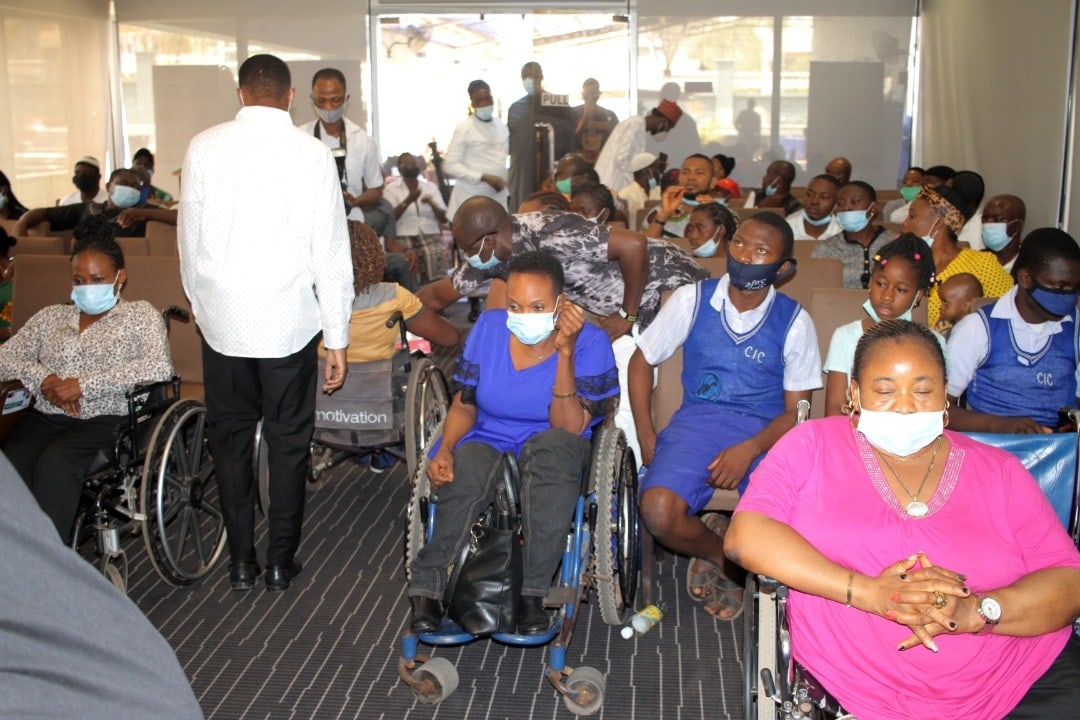
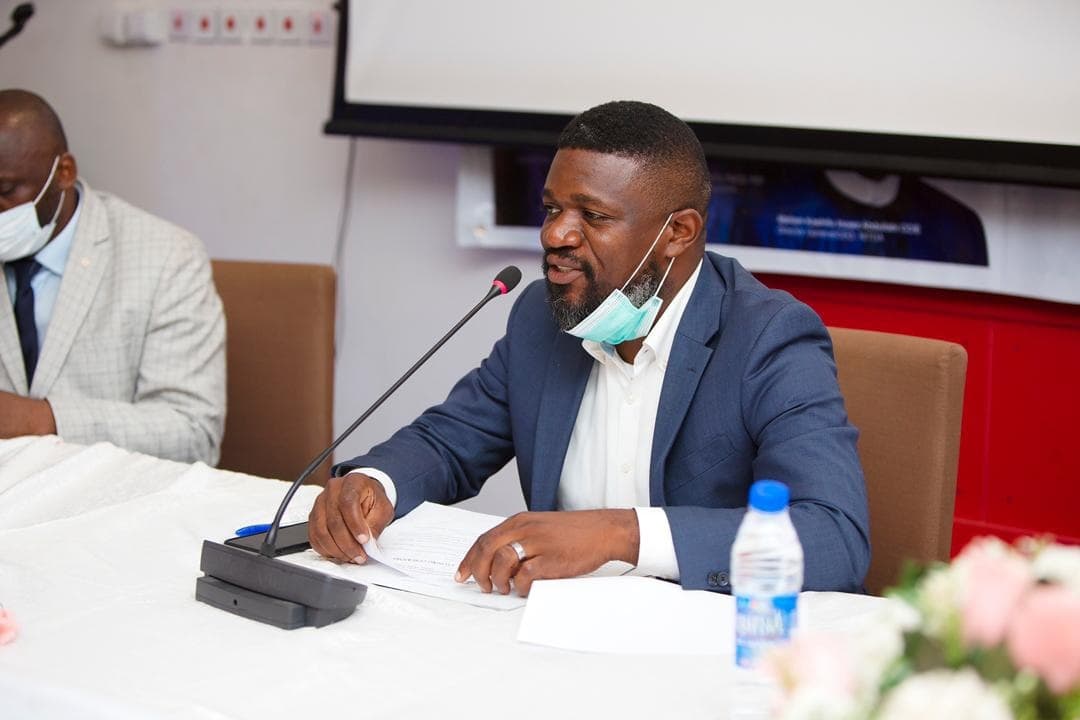
Network of disabled women (NWD) on Friday 5th March 2021 in Abuja organized a one day national dialogue with key stakeholders on strategies for inclusive employment for women with disabilities in commemoration of international women’s day 2021.
The President and CEO of Network of Disabled Women, Lois Auta in
her speech said that the meeting was meant to strategizes for women with disability
on inclusive employment in different sectors.
She stated that it was an avenue for WWD to also share their
experience in public sectors and private sectors in getting employment and the
difficulties they face in their different offices, how challenging they are,
those are the sensitive questions that should be addressed in commemoration of
international women’s day 2021.
She said that they hope to see changes on the issue of
employment as regards to WWD. She
referred to article 27 of UN convention for PWDs (UNCRPD) which states that PWDs
have the right of any employment or training opportunities and Section 6 sub
section 28-29 states that they have the right to participate actively on
employment opportunities.
She further stated that PWDs have the potentials, talents and they are productive, the educated ones don’t have access to job opportunities. She proposed that 5% reserved for PWDs in accordance with Nigeria disability Act be implemented, the National commission for persons with disabilities should ensure that it is implemented by all MDAs, so that unemployment issues for PWDs would be addressed.
Finally in her speech she stated that a communiqué would be
developed which they will share with the MDAs, NDE, and Federal civil service
commission and follow them up to facilitate the implementation of the 5% employment
opportunities for PWDs.
Mrs. A.A Arese representing National human right commission
in her response said that their focus is mainly on women, children, and the
vulnerable group in the society, in their annual report, these groups have been
significant in number within the society and that is why NHRC is fully involved
in issues of PWDs and they are looking forward to work with them.
Obiatuegwu Chika representing United Nation Development
Program in her response stated that UNDP in their interest wants to involve
PWDs especially WWD in their development plan, and also collaborate with them
in gender development. She further stated that in commemoration of
international women’s day 2021 WWD to be focused and be significant their
working places.
Lawrence Idemudia representing the National Commission for Persons with Disabilities in his response said that WWD should be focused and resilient in their day to day activities because women are the key and he also promised that NCPWD with always carry women along in all their activities in their quest to make the lives of PWDs better.
Peter Mancha representing UN Women in his response stated
that WWD should be passionate about what they can do, and that is why united
nation women is trying to get the actual data of WWD in order to know how they
can carry WWD along and WWD should always encourage each other that is why he
appreciates Lois Auta for organizing such a key stakeholder meeting for WWD.
Panel session was set up which some WWD shared their experiences, challenges with the audience on the barriers they face in their work places on daily basis and also encouraged others.
The panelists are Susan Kelechi Ihuoma, Executive director Susan’s Unique Oasis foundation representing NGO sector, Eberendu Onyinyechi, Senior Information Officer (SIO) office of the Head of Service of the Federation representing public sector and Barr. Mary Omoyeme Musa Associate in Chamber and Human Resource Practitioners Notary Public and Arbitrators, representing the private sectors.
Finally at the end of the dialogue Lois Auta encouraged
women with disabilities to emulate the lives of the panelist and always push
forward to achieving their goals and always fight for what they want.
Disability Rights Advocacy center (DRAC) have called for a collective action and shared ownership for challenging gender bias and driving social inclusion which makes International Women’s Day impactful; as a more inclusive world necessitates transforming how we behave and how we #choosetochallenge not just systemic inequalities but our own biases too.
In a press release signed by the Executive Director, DRAC, Dr. Irene Ojiugo Patrick-Ogbogu, stated her organization believes that we are at a pivotal point in building a collaborative and supportive network across Nigeria that is inclusive and helps women with disabilities to maximise their talent and ambitions whatever their stage of life.
“With the emergence of the Coronavirus pandemic, women and girls with disabilities who are one of the most vulnerable and marginalized groups have been disproportionately hit, facing a higher risk of gender-based violence and exclusion from emergency and social protection services. As a disabled people’s and women-led organization, DRAC has chosen to challenge this lopsided response by building a growing community of men, women boys and girls, committed to taking action against gender and disability biases, while ensuring inclusive engagements and consultations with stakeholders and beneficiaries towards greater inclusion” she added.
“A challenged world is an alert world,” says the organisers of the International Women’s Day global collective movement. “Individually, we’re all responsible for our own thoughts and actions – all day, every day. We can choose to challenge and call out gender bias and inequity. We can choose to seek out and celebrate women’s achievements. Collectively, we can all help create an inclusive world. From challenge comes change, so let’s all choose to challenge.”
International Women’s Day is a global day celebrating the social, economic, cultural and political achievements of women. The day also marks a call to action for accelerating gender parity, and raise awareness about women’s equality. The IWD 2021 campaign theme is #ChooseToChallenge.
This IWD 2021, all of us are being asked to “raise our hands” and “call out aspects that are unhelpful to all women, including those with disabilities, removing the barriers that may negatively impact their experience in accessing essential social services thereby building an inclusive and equitable community for them to thrive in.
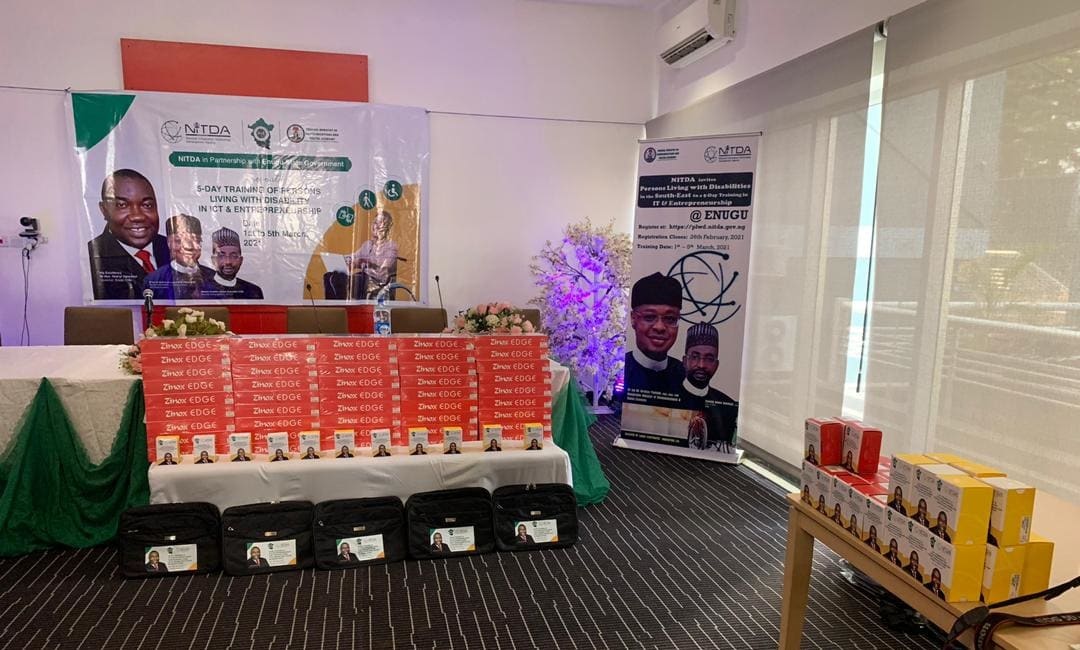
FMOCDE, NITDA conclude 5-Day digital skills training for 50 PLWDs in Enugu State
The Minister of Communications and Digital Economy, Dr. Isa Ali Ibrahim (Pantami) and the Director-General, National Information Technology Development Agency (NITDA), have showered encomiums on Enugu State Governor, His Excellency, Rt Hon. Ifeanyi Ugwuanyi, for the administration’s immense contributions towards empowering fifty Persons With Disabilities (PWDs) with digital tools.
Dr. Pantami speaking at the closing ceremony of the 5-Day digital skills training for the PLWDs in Enugu State said that the theme of the training “IT and Entrepreneurship” aptly captures a number of the pillars of the Ministry’s National Digital Economy Policy for a Digital Nigeria.
The training participants
The document was unveiled and launched by Mr. President, His Excellency, Muhammadu Buhari, GCFR, on the 28th of November, 2019. The Policy contains 8 pillars. The pillars on Digital Literacy and Skills (Pillar #2), Digital Society and Emerging Technologies (Pillar #5), and Digital Society and Emerging Technologies (Pillar #7).
The Minister said, “I wish to extend our special gratitude to His Excellency, Governor Ifeanyi Ugwuanyi, the Governor of Enugu, for his support towards the successful hosting of this training. I also want to commend the Director-General and CEO of the National Information Technology Development Agency (NITDA)- Kashifu Inuwa Abdullahi, CCIE, along with the Board and Management Team of the Agency for making the effort to reach out to the unreached people in the society by bringing this empowerment programme for PWDs to the South-East region of the country”.
Representative of Enugu State Governor and SA, ICT, Hon. Nnaemeka Ani reading the Governor’s Speech
“Pillar #7 also addresses the issue of Digital Inclusion which is the main thrust of this training. Promoting Digital Entrepreneurship among PWDs constitutes an important part of the Policy which treats entrepreneurship as a key component of smart, sustainable, and inclusive growth that strives to leave no one behind.
“Around 785 million (between 19% and 25%) of the world population of 15 years and older are People Living With Disabilities (PWDs), as reported by the World Health Organisation (WHO) in 2018.
“Therefore, there is a deliberate policy that seeks to improve labour market opportunities and support social inclusion for PLWDs as part of the National Digital Economy Policy for a Digital Nigeria. The essence of this programme is to assert that Disability should not be an impediment to digital and economic inclusion/success”.
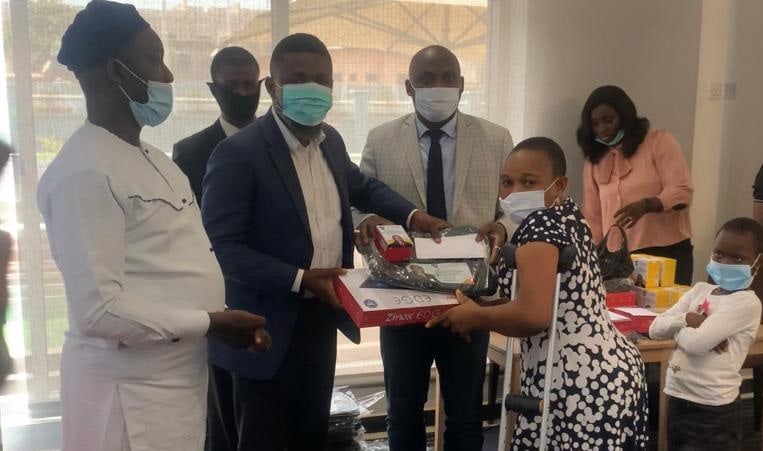
Presentation of digital equipment to participants
He said that with the training programme, the participants would have acquired hands-on skills that can help you to operate Small Scale IT business such as Business Centre Services, Document Editing Services, Internet Café, and Computer Training Services to mention but a few. “I, therefore, urge you to extend the knowledge acquired from this training to others within and beyond your clusters so as to facilitate digital inclusion and bridge the digital divide amongst PWDs”, Dr. Pantami said.
Earlier, the Director-General, National Information Technology Development Agency (NITDA), Kashifu Inuwa Abdullahi, said that nurturing entrepreneurship skills and creating desired social and economic outcomes by facilitating innovative, technology-driven economic growth, through the use of ICT among people with special needs are on top of NITDA’s agenda.
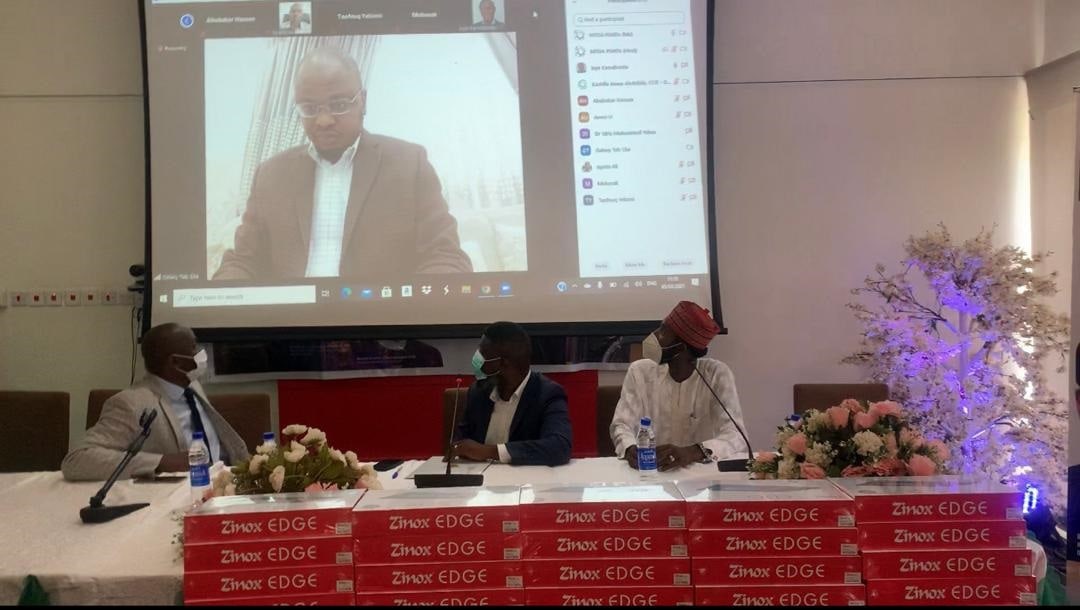
Minister of Communications and Digital Economy, Dr. Isa Pantami presenting his keynote at the closing ceremony
The NITDA boss, who was represented by the Director, Corporate Planning and Strategy department of the Agency, Dr. Agu Collins Agu, noted that the aim of empowering persons with special needs is for them to acquire ICT skills, digital literacy, and its applications and prop up their relationship with people and the world at large.
Governor Ifeanyi Ugwuanyi represented by his Special Assistant on ICT, Hon. Nnaemeka Ani, thanked the Honourable Minister and the Director-General of NITDA, for the successful completion of the specialised training for PWDs.
The Governor said that Enugu State Government will sustain this well-articulated programme, designed to afford Persons Living with Disabilities the opportunity to make meaningful contributions by building their Digital Literacy Skills and bridging the Digital Divide within and beyond the PWDs Clusters in line with the philosophy of digital inclusion.
Digital tools presented to the 50 PWDs
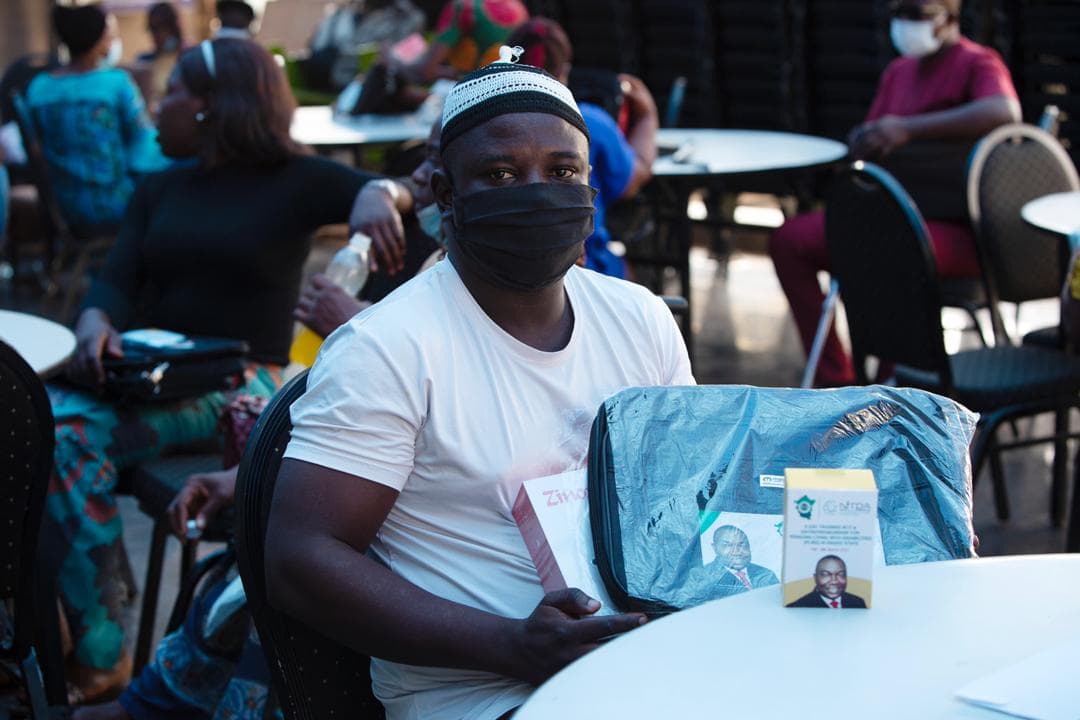
Meanwhile, apart from the laptop computer presented to the 50 participants, Enugu State Government also presented customized laptop rucksack bags, Internet dongles, and cash gifts to each of them for logistics.
To this end, Governor Ugwuanyi implored all the participants to make the best use of the opportunity to better their socio-economic wellbeing through the effective utilization of the provided tools.
On his part, Hon. Nnaemeka Ani said that it is noteworthy that capacity development programs in emerging technologies such as IoT, AI, Robotics, etc., will be further strengthened in the state through the adoption of education technology tools such as the Unity Board; facilitating the development of industry sought-after & marketable skills ensuring better preparedness to enter the workforce of the future.
A happy participants brandish the digital tools he received
“I will once more reiterate that Enugu State Government is willing to deepen the partnership with NITDA through the provision of the necessary infrastructure for the reactivation of NITDA’s South-East Zonal Office”, he said.
He added that Enugu State is open to collaborations with the private sector and various Parastatals under the Federal Ministry of Communications and Digital Economy in harnessing the full potentials of the Free Trade Zone in Enugu State to help achieve President Muhammadu Buhari’s vision of lifting 100 million Nigerians out of poverty.
“It is my hope that the National Information Technology Development Agency will bring further initiatives and interventions to Enugu State to drive the National Digital Economy Policy and Strategy”, Hon. Ani said.
In a time of social distancing and government-enforced lockdowns to curtail the spread of COVID-19, digital technology has enabled the continuation of work, education, and communication. But for millions of people who are unable to use technology, being offline is economically and socially isolating. COVID-19 has further illuminated the ‘digital divide’, which is even more pronounced in Nigeria (worse in poor rural clusters of Northern Nigeria). Therefore, it has become pertinent, especially on this path to the new normal for the focus to be on digital literacy, to capacitate vulnerable populations to leverage technology for commerce, education, and communication to improve their socio-economic recovery and pandemic resilience and build a more prosperous future.
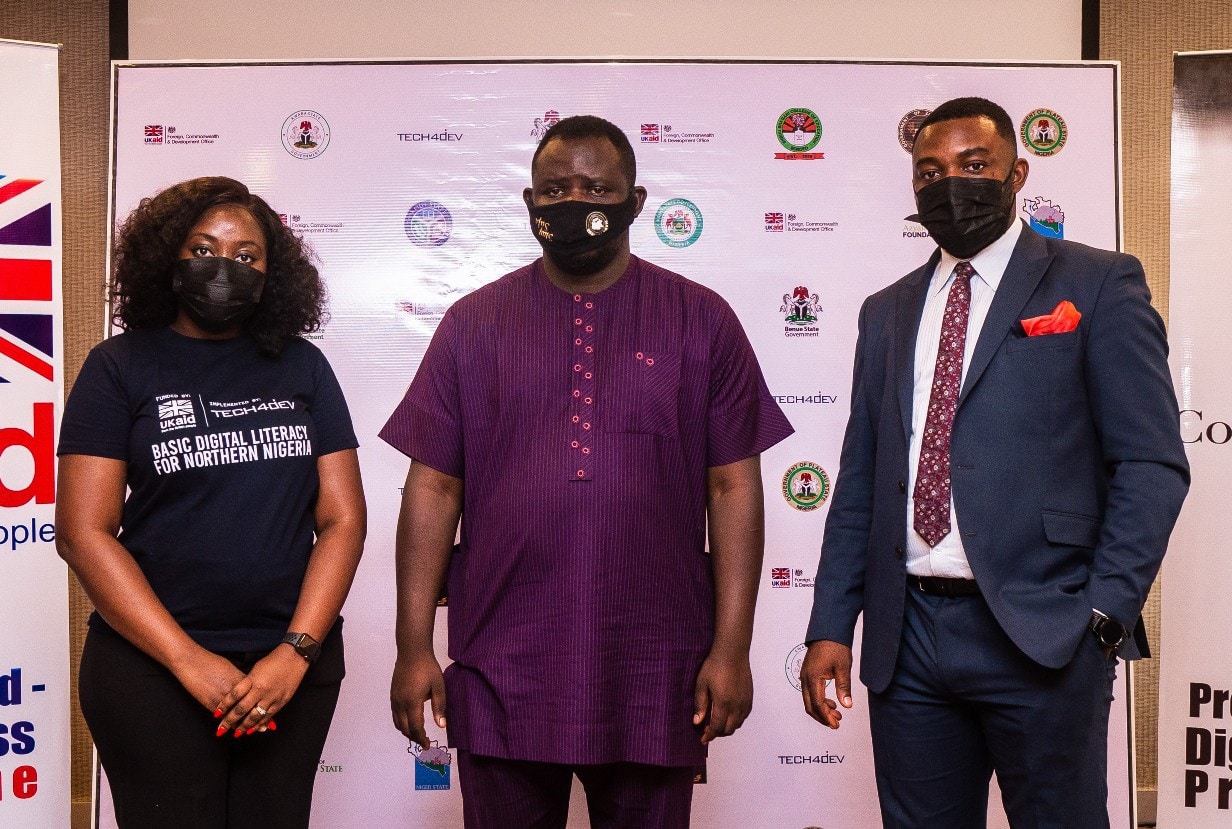
This and many more were the highlights of the Stakeholders’ Engagement Forum organised by Technology for Social Change and Development Initiative (Tech4Dev), a non-profit organization established to empower African communities with digital skills that will bridge the gap of unskilled labor needed for the future of work. This Forum served as part of activities to end weeks of training on the Basic Digital Literacy for Rural Clusters in Northern Nigeria. A project funded by the UK Foreign, Commonwealth & Development Office (FCDO), where a total of 1,338 beneficiaries were empowered with basic digital literacy; of which over 600 of these beneficiaries were girls/women and 400+ were Persons with Disabilities (PWDs), across 10 states in Northern Nigeria where this program took place namely; Zamfara, Kaduna, Kwara, Kogi, Benue, Sokoto, Jigawa, Nasarawa, Niger and Plateau states.
Stakeholders at the Basic Digital Literacy for Rural Clusters in Northern Nigeria Stakeholders’ Engagement event that held at Transcorp Hilton Abuja on Thursday. Left to right Diwura Oladepo, Executive Director, Tech4Dev; Jeffrey Udende, Senior Special Adviser to the Governor of Benue State on ICT, Idongesit Udoh, The Head, UK Digital Access Programme and Country Adviser
In her opening remarks, The Head of Prosperity Fund Nigeria, Martha Bostock, was delighted on the progress of the program and the impact of changed lives the initiative was able to achieve, especially the focus being on vulnerable women and girls, Persons with Disabilities (PWDs) and other vulnerable groups. She said that “The UK Government is committed to supporting the advancement of the use of technology in Nigeria through various programs it is implementing with partners.” She also placed emphasis on how technology has created opportunities and leverage for vulnerable groups especially considering the effects of the COVID-19 pandemic.
The Minister of Communications and Digital Economy, Dr Isa Pantami, has said that with adequate knowledge, skills and resources, persons with disabilities can be job employers, rather than job seekers.
The Minister made this call at the closing ceremony of the five-day training programme for People With Disabilities (PWDs) organised by the National Information Technology Development Agency at Enugu State. The 50 participants trained were all given laptops, internet dongles, laptop bags and cash.
Pantami, while giving the closing remark, said the population of persons with disabilities in the world is over 785 million, according to the World Health Organisation, which is almost four times the population of Nigeria as a country.
He, therefore, averred that a responsible society will give them priority and preference. He said that the training was in line with the National Digital Economy Policy and Strategy for a Digital Nigeria which was launched on the 28th November 2019, by President Muhammad Buhari.
He admonished all participants to consider the training as an opportunity because there are millions of people with disabilities in Nigeria who do not have the opportunity of being trained directly like them.
The Minister admonished the participants to take advantage of the facilities and support given to them through this training.
He advised them to keep them safe in order to continue working with it. “Consider the training to be a foundation of your becoming a digital entrepreneur,” the Minister added.
He cited examples of previous beneficiaries of the same training programme from Abuja, Oyo and Gombe states who have now established their own businesses through the knowledge acquired.
Pantami urged all participants to extend the knowledge and skills acquired at the training programme to train their family members which will make them job providers, rather than job seekers.
“I urge you to extend the knowledge and skills you have acquired here to your family, friends and associates thereby bridging the digital divide we have in Nigeria,” he said.
The Director-General of NITDA, Kashifu Abdullahi, while giving a welcome address earlier said; “the exclusion and marginalisation of Persons with disabilities is a human right violation as well as economic issue for the country.”
Abdullahi noted that on January 25, 2019, President Muhammadu Buhari, signed into law, the discrimination of persons with disabilities (prohibition) act and that the Minister of Communications and Digital Economy has been implementing the National Digital Economy Policy for Digital Nigeria.
“Digital technology can break traditional barriers to communication, interaction and access to information,” the DG stated. He told the participants that technology will make all their challenges possible and therefore urged them to use the knowledge they have acquired from the training to make all that was impossible for them, possible.
The Executive Governor of Enugu State who was represented by the Special Adviser to the Governor on ICT, Mr Emeka Ani, thanked the Honorable Minister of Communications and Digital Economy for the initiative and particularly thanked the Director-General of NITDA for the implementation of the initiative.
“Enugu State will continue to give all the support, cooperation and collaboration to NITDA and to the Ministry of Communications and Digital Economy,” he assured.
The Qualitative Magazine (TQM) a media outfit dedicated for persons with disabilities (PWDs) purposefully ensures that its brand of reportage and activities would be strategically positioned towards giving persons with disabilities sense of belonging, curb all forms of discrimination, stigmatisation and dehumanisation.
We are putting out a call to print our 3rd Voice Nigeria sponsored magazine.
Requirement: Must be a registered company with CAC
Job description: 800 copies of 40 pages full colour magazine with well laminated cover.
How to apply: Send your quotation in your company’s letterhead with your phone number and email. address it to the Executive Director, The Qualitative Magazine, Suite B04, Gouba Plaza, Utako , Abuja and forward it to: qualitativemagazine@yahoo.com
If you quotation is fair enough, you will be contacted to come with samples of previous works to ascertain quality of your works because we want high quality print.
Duration: The Deadline for the application is 5pm on Wednesday 10th March, 2020
Aishatu Yahaya, a blind woman from Dangi, in Kanam local
government of Plateau State. She is among nine children of her parents. She
lost her sight due to measles infection when she was eight years old. She is
married and a mother of four children.
In this interview, she
told our correspondents Bulus Izang and Joshua Yenle how she was not able to
acquire western education due to her parents ignorant about the importance of
western education.
TQM. You lost your
sight at school attending age, were you able to go to school as a child?
My parents were not enlightening enough to understand the
importance of western education in the life of a child, more especially, in the
life of a child with disability. For this reason, I did not have formal
education. However, I had small Islamic education.
TQM. You did not have
the privileged of having western education, are you creating that opportunity
for your children?
We (me and my husband) have provided opportunity for our
children to have western education. We are working hard to sponsor them, two of
the four have completed their secondary education, while two are still in
primary school.
TQM. Two of your
children have completed their secondary education, what are your plans for them?
It is my wish that they go for higher institutions but for
now, we don’t have the financial ability to enroll them. May be in the future
when God makes a way for us.
TQM. What work are
you engaged in to earn a living?
I process rice for people by cooking it and get paid for it.
I also run a small business of selling soup ingredients at home, items like,
salt, pepper, Maggi, dawa- dawa, etc.
TQM. How did you get
to fund your business from the start?
A woman who also was my neighbor, trained and empowered me,
she taught me how to cook rice and gave me some good numbers of measures to
start for some months, for about three months she allowed me to sale and keep
the profit. I used some of the profit to start my business.
TQM. Is your husband
a person with disability?
My husband is a Blind person.
TQM. What work is he
doing?
He is a retired local government worker.
TQM. As a woman with
disability, have your right been abused in any way, because of the disability, that
you would love to mention?
Yes, a co-tenant, a woman has a little misunderstanding with
my male child, as a mother, I was coming between them with the intention of
resolving the matter, rather than explaining to me and listening to me, she got
angry and hit me in the face, knowing very well, I cannot see her not to talk
of fight her.
TQM. How did you
respond to that?
I reported the matter to the police station, where the
matter was addressed well in my favor.
TQM. Lastly, you can
put a call for appeal to the public, if you have one.
I am appealing to the public to help me so that my two children could go to higher institution.
John Gochot Jaja is a person with physical disability, his
right leg was amputated. He is from Kabwir district of Kanke local government
of Plateau State. He attended RCM Primary School, Kabwir, after completion, He
proceeded to Government Secondary school Kabwir. He got married shortly after
the completion of my secondary education which put a stop to his formal
education. The marriage is blessed with five children.
In a chat with our
correspondents, Bulus Izang and Joshua Yenle when they visited Kabwir as part
of our Oxfam Voice project, Connecting Our Voices To The World, he spoke about
his amputation and how he coped after it.
TQM. What happened
that your leg got amputated?
In the year 2014, I was involved in a motorcycle accident on
my way to Pankshin from kabwir, which resulted to the amputation of my right
leg.
TQM. What work are
you doing to provide for your family, after the amputation?
I am now a cobbler, I mend shoes for people, sometimes, I make
new shoes.
TQM. How did you come
about doing this work?
After I became an amputee, I was privileged to be trained in
shoe making free at WAYE Foundation owned by the former first lady of Plateau
state, Ngo Talatu Jonah Jang. In 2015, I was given a starter pack to establish
the vocation I was trained on. And that is what I am doing up till now.
TQM. What other work are you doing apart from your work as a shoe cobbler?
I am not doing any other work outside this cobbler work.
TQM. You had a later
in life disability, do people discriminate against you because of the
disability?
Yes, some of my friends that we used to be very close before
the accident, we are no longer close because of the disability.
TQM. What is the
position of your children with regards to school?
My five children are schooling, the first one is in FCE Pankshin,
two are in secondary school and the last two are in primary school.
TQM. Who is paying
for their education?
I do pay and their mother is supporting me
TQM. Is your wife a
person with disability?
No.
TQM. What line of
work is she doing?
She is a business woman that deals on the sale of food
grains.
TQM. What form of
assistance have you ever received from either the government or other persons?
I have received help in form of training and finance from
WAYE Foundation and I am very grateful to them and to God for given me that
opportunity.
TQM. Lastly, what
appeal do you have to make to people who are reading your story?
My appeal is this, I should be help with the payment of my
children’s school fees and some tools like the machine that is use to file
shoes and a generator, this would enable me to be making new shoe for sales.
TQM. Thank you sir,
for you sharing your time and story with us.
“Research have shown that Women and girls with disabilities (WGWDs) are more vulnerable to GBV especially sexual violence due to the multiple barriers they face in accessing justice services due to lack of protective legislation, negative attitude of service providers, inaccessible facilities, poor knowledge of their rights and poverty. Most often, their experiences of violence remain unreported due to fear of increased stigma and verbal abuse”.
As part of Disability Rights Advocacy Center (DRAC)s Policy to Practice project which is supported by the Rule of Law and Anti-Corruption program, implemented by the British Council and funded by the European Union, DRAC organized a two-day stakeholders meeting for the validation of a toolkit for Disability-Inclusive Service Delivery (DISD) in Sexual and Gender-Based Violence Services.
In order to address the above concerns, DRAC kickstarted the process of developing a toolkit for DISD in SGBV services in Nigeria. They worked with various stakeholders through series of workshops, surveys, key interviews etc. where consensus was reached on the priorities, goals and objectives, and the main thrust of the toolkit. Consultants then worked independently to develop a first draft and subsequently a Technical Working Group meeting where a near-final draft was developed.
The Executive Director, DRAC, Dr. Irene Ojiugo Patrick-Ogbogu in her welcome remark said that women and girls with disabilities are faced with all sorts of SGBV and they are not visible because even when reported, many of the service providers are not equipped to respond to women and girls with disabilities. DRAC therefore carried out several consultations which involved interactions with persons with disabilities, especially women and girls and also service providers to better understand the current situation with regards to disability-inclusive SGBV service delivery and the desired outcomes when services related to SGBV are rendered.
She stated that that toolkit will be an important resource to all service providers and justice actors and will change the general approach to disability-related SGBV cases and improve access to justice for women and girls with disabilities who face violence.
“That is why we brought together stakeholders to look at the document, identify the gaps, check whether the document can address the issues it was initiated for, if it is what was agreed during the consultation meetings. Lets put in our best in reviewing and validating this toolkit, to ensure that when it is finalized and disseminated, persons with disabilities especially women and girls would be able to access services in an equal basis with others”. she concluded.
After a brief presentation of the toolkit, the consultants shared participants into thematic groups and assigned corresponding sections for their review.
After a tedious process of document review, participants then unanimously validated the document, certifying that the toolkit captures core details that would improve service delivery for women and girls with disabilities in SGBV settings while serving as a resource for all stakeholders.
DRAC, with the consultants will be working to finalize the document putting into consideration the submissions made by the stakeholders.
After finalization, the toolkit will then be launched and disseminated to the public. There are also robust plans to train service providers on the use of the toolkit.
Stakeholders at the validation meeting include representatives of some MDAs such as the Federal Ministries of Justice, Health, Education, Hospitals Management Board, FCT Health Secretariat, Social Development Secretariat, NAPTIP, National Human Rights Commission, Lagos State DVSRT, FCT SEB, UBEB, National Disability Commission, etc., Special Schools, OPDs and CSOs.